
2 months ago
Wall Street has spent years obsessing over when the Federal Reserve will lower interest rates, but billionaire investor Stanley Druckenmiller thinks investors may be asking the wrong question.
The senior macro investor argues that U.S. interest rates are already too low and that future rate cuts aren't essential, according to the Financial Times.
His argument comes at a critical period.
Treasury bonds have been under selling pressure amid inflation fears, growing U.S. public debt, and considerable bond issuance by artificial intelligence startups, CNBC noted. And it puts the focus of market chatter back on borrowing rates.
Druckenmiller's warning came at a Piper Sandler conference in New York, where he also targeted Federal Reserve officials who say current monetary policy is restrictive.
#reserve


2 months ago
Stanley Druckenmiller has quite a long and distinguished career as an investor. Much of this has to do with high-risk bets that have paid off enormously, such as when he and his boss, George Soros at Quantum Fund, shorted the U.K. pound for a handsome profit of what was reported to be around $1 billion.
For that reason, the trades Druckenmiller makes with his Duquesne family office matter, and his picks are taken seriously. One of the more intriguing ones is Duquesne's largest holding currently -- and for eight quarters now. It's not a famous name; rather, it's a next-generation healthcare diagnostics company that was once something of a sleeper. Here's a bit more about it.
Missed Nvidia in 2009? This Rare Signal Is Flashing Again. In 2009, a "Double Down" signal flashed for a little-known chipmaker called Nvidia. For the first time in years, that same "Total Conviction" signal is flashing for a company 1/100th the size of Nvidia. Continue »
This huge bet on the future is Natera (NASDAQ: NTRA), a medical diagnostics company that uses unique, state-of-the-art technology to evaluate a patient's blood sample. Natera isn't the only business providing these liquid biopsies, as they're known, but its personalized, tumor-informed approach makes it a best-in-class screener in numerous use cases.
The major one is oncology, which is hardly surprising given the prevalence of cancer. Natera has a set of tests for this, led by Signatera, a highly personalized one constructed from the patient's tumor profile. With this, it detects circulating tumor DNA in the blood. To say this is useful in cancer detection is an understatement, so it's hardly surprising that Natera processed roughly 296,700 oncology tests in the company's second quarter. That was up a highly impressive 57% year over year.
#tumor


2 months ago
Billionaire Stanley Druckenmiller made two very different-looking AI purchases in the second quarter that share one underlying thesis. Duquesne Family Office increased its Amazon.com, Inc. (NASDAQ:AMZN) position by 1,083% to 541,600 shares and opened a 72,900-share stake in Advanced Micro Devices, Inc. (NASDAQ:AMD). One company rents computing capacity through AWS; the other supplies accelerators and server processors. Together, the positions give Duquesne exposure to an AI infrastructure platform and a credible alternative chip supplier, although the filing does not disclose Druckenmiller's rationale.
Amazon.com, Inc. (NASDAQ:AMZN) offers the demand platform. AWS revenue grew 36.7% in the second quarter, while Amazon's capital-spending trajectory approached roughly $220 billion. The bull case is that its cloud customer relationships, custom silicon, and enormous infrastructure base let it capture AI usage across models and chips. The bear case is that depreciation, power, and construction costs arrive before utilization. Even strong cloud growth must eventually produce returns on a spending program larger than many national economies.
Advanced Micro Devices, Inc. (NASDAQ:AMD) offers more direct operating leverage. Its data-center revenue more than doubled, and customers want an alternative to Nvidia for accelerators and CPUs. If AMD's software improves and hyperscalers deploy Instinct at scale, revenue can grow faster than the broader infrastructure market. Yet it must compete against an entrenched platform while also funding an aggressive roadmap. A second-source narrative is valuable, but only sustained deployments turn it into durable margins.
The common exposure works because Amazon can profit from rising AI consumption regardless of which merchant chip gains share, while AMD can benefit if that consumption creates room for multiple suppliers. The risks also interact. Amazon's own chips could limit AMD's opportunity, and slower cloud utilization would pressure both the buyer of infrastructure and the seller of processors. Both positions could benefit if the market grows faster than those internal conflicts.
Hedge funds moved in the same direction. Amazon ownership rose to 369 funds in the second quarter from 353, while AMD ownership jumped to 164 from 134. Arrowstreet Capital increased its Amazon position 24% to 40.3 million shares, and Marshall Wace raised its AMD common-share stake 3% to 3.9 million shares. As of August 14, 40.1 million AMD shares were sold short, equal to 2.47% of the float and 1.5 days of trading volume. The modest short-interest snapshot shows limited reported short positioning in AMD; it does not resolve whether AMD can capture enough of the spending Amazon is helping unleash.
#amazon #shares

2 months ago
Checking in to see what billionaire investors are doing is a great way to source ideas for your own portfolio. One whom I follow is Stanley Druckenmiller, a former hedge fund manager who now runs the Duquesne Family Office. No later than 45 days after the end of each quarter, organizations that have more than $100 million under management are required to file a Form 13F with the SEC, which discloses their holdings at the end of that quarter. By comparing these forms with the prior ones, we can get some insights into what moves they made during the period.
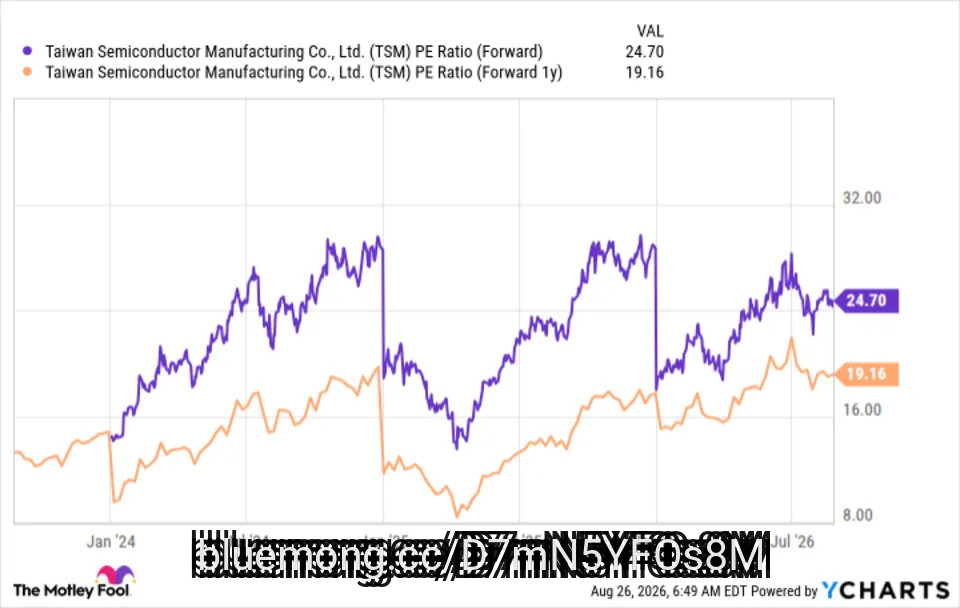
Druckenmiller made some major purchases in Q2, including boosting its stake in Taiwan Semiconductor (NYSE: TSM) by nearly 20%. The chip foundry giant is now the Duquesne Family Office's second-largest holding. However, those purchases all happened by June 30. So the question is: Is Taiwan Semiconductor stock still a buy now?
Missed Nvidia in 2009? This Rare Signal Is Flashing Again. In 2009, a "Double Down" signal flashed for a little-known chipmaker called Nvidia. For the first time in years, that same "Total Conviction" signal is flashing for a company 1/100th the size of Nvidia. Continue »
Because 13F forms only describe a fund's end-of-quarter holdings, Druckenmiller could have bought these new TSMC shares any time between April 1 and June 30. Right now, the stock is down by more than 10% from the high it established at the end of June, but it's up over 20% from April 1. So, depending on when Druckenmiller bought shares, today's price may or may not be cheaper than when he got in.
But that doesn't matter. What really matters is where Taiwan Semiconductor is heading, and I think the future looks bright for it.
#taiwan #semiconductor #quarter #family


2 months ago
The legendary billionaire macro trader, Stanley Druckenmiller, has built his career on a simple habit. When he finds a bet he believes in, he sizes it big and watches it closely.
Right now, that bet is a cancer-testing company most people have never heard of: Natera (NTRA), and the reason he keeps buying tells you something useful about where he thinks healthcare is going.
His family office holds more of it than any other stock, and he added to the position last quarter even as the shares traded near record highs.
Druckenmiller runs his money through the Duquesne Family Office, and his stock holdings show up every quarter in a public filing called a 13F.
A 13F is a report that large investors must file with the Securities and Exchange Commission, listing the U.S. stocks they own.
#druckenmiller #Stock #stanley #right


3 months ago
Stanley Druckenmiller has been active south of the U.S. border lately.
The billionaire investment manager's Duquesne Family Office bought $128 million of YPF SA (NYSE: YPF), Argentina's state-controlled oil producer, in the first quarter, pairing it with a purchase of BBB Foods (NYSE: TBBB), a Mexican discount grocer, and a new stake in the Global X MSCI Argentina ETF (NYSEMKT: ARGT), an exchange-traded fund (ETF) holding a basket of Argentine equities.
Missed Nvidia in 2009? This Rare Signal Is Flashing Again. In 2009, a "Double Down" signal flashed for a little-known chipmaker called Nvidia. For the first time in years, that same "Total Conviction" signal is flashing for a company 1/100th the size of Nvidia. Continue »
While all three of those names are up substantially over the past 12 months, Argentine equities suffered a sharp sell-off in September 2025 after President Javier Milei's party lost a key provincial vote, and the benchmark Merval index dipped again in early 2026, just before Druckenmiller loaded up.
So what is the famous macro investor banking on by buying these stocks?
#NVIDIA #first


3 months ago
Taiwan Semiconductor (NYSE: TSM) is one of the most widely held AI chip stocks among elite hedge funds and billionaire investors, the latest 13F filings for the second quarter show.
Insider Monkey data shows TSM appeared in 250 hedge fund portfolios by the end of the second quarter, sharply up from 236 in the first quarter. Fisher ***** et Management, run by Ken Fisher, is the largest holder with 18,866,198 shares worth $9,009,930,721, making up 2.68% of the fund's portfolio. Fisher added 2% to the position last quarter. Coatue Management, run by Philippe Laffont, holds 8,914,995 shares worth $4,257,534,162, or 8.76% of the fund's portfolio. Coatue trimmed the position by 4%. Tiger Global Management holds 4,881,008 shares of the company.
ARK Investment Management of Cathie Wood holds 482,286 shares worth $230,325,325, or 1.5% of the fund's portfolio. ARK cut the position sharply, down 24%.
Third Point, run by Dan Loeb, holds 460,000 shares worth $219,682,200, making up 4.69% of the fund's portfolio, after adding 68%.
Stanley Druckenmiller's Duquesne Capital holds TSM as its second-largest position, with 589,680 shares worth $281,613,000, or 5.4% of the fund's portfolio. Druckenmiller increased the position by 20% last quarter. Duquesne's total portfolio value stood at $5,210,860,000, up 1.54% for the quarter.
#quarter #holds

3 months ago
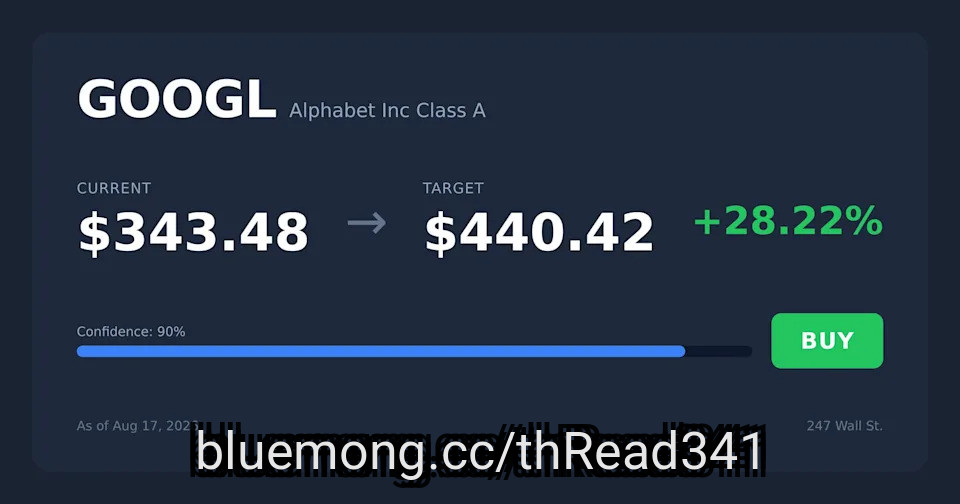
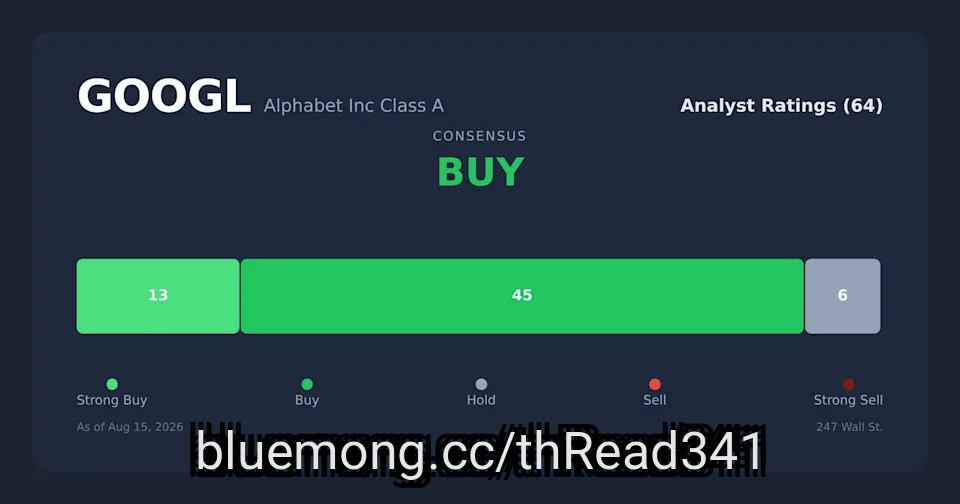
Druckenmiller, Klarman, Tepper, Loeb, and Berkshire all bought GOOGL in Q2 2026, a rare billionaire consensus in one Magnificent 7 stock.
GOOG and GOOGL trade at a 17x trailing P/E while Google Cloud surged 82%, but Q2 free cash flow turned negative and debt nearly doubled.
Act now: the ******* yst who called NVIDIA in 2010 just named his top 10 AI stocks — and Google didn't make the cut. Grab the names FREE today.
Between August 13 and 14, 2026, Q2 2026 13F filings landed and told a rare story: Stanley Druckenmiller, Seth Klarman, David Tepper, Dan Loeb, and Berkshire Hathaway all moved into Alphabet (NASDAQ:GOOGL) in the same quarter. Consensus buys of that magnitude across value, macro, and event-driven billionaires almost never happen simultaneously in a single mega-cap name.
The filings, which report positions as of June 30, 2026, show the following.
#loeb


3 months ago
Latest 13F filings show that billionaire Stanley Druckenmiller's family office fund and Brad Gerstner's Altimeter Capital both sold Broadcom Inc. (NASDAQ: AVGO) during the second quarter and opened new stakes in Lam Research Corporation (NASDAQ: LRCX) instead.
Bulls say Lam's multiple compression is due to the overall semiconductor selloff, not a fundamental issue. In fiscal Q4, the company beat earnings estimates and guided to a 52% gross margin for Q1, well above previous expectations. Wafer fab equipment demand remains strong, with memory and advanced packaging contributing more meaningfully. Industry-wide equipment spending guidance for fiscal 2027 was also raised. Advanced packaging growth guidance was raised. The company is expected to benefit from rising capex as companies spend to complete AI infrastructure buildouts.
However, bears point to risks that spending on wafer fab equipment will prove less durable. The company's EPS estimates ******* ume demand will stay strong, but customers can delay deliveries if memory prices weaken and utilization rates fall. Despite the multiple compression, its multiple of over 30x is still above the company's historical average, and cyclical volatility could create valuation issues if the AI capex cycle slows.
Brad Gerstner of Altimeter CapitalBroadcom Falling Out of Favor?
AVGO is up just about 13% so far this year. The stock recently wavered amid disclosure of a security vulnerability in VMware. In Q2, the company signed over $30 billion in AI orders during the quarter. For fiscal Q3, the company expects AI semiconductor revenue up 200% year over year. For fiscal 2027, Broadcom expects $100 billion in AI revenue.
#year #altimeter #broadcom


3 months ago
Latest 13F filings show that billionaire Stanley Druckenmiller's Duquesne Family Office increased its holding in United Airlines Holdings, Inc. (NASDAQ: UAL) by over 200%, ending the June quarter with 794,795 shares.
United Airlines Holdings, Inc. (NASDAQ: UAL) recent quarterly results showed revenue jumped 16% year over year. EPS also beat expectations, despite declines due to fuel cost pressures. Management said the company sees a recovery in fuel cost pressure in fiscal Q3, with full recovery by Q4.
Valuation
UAL trades at a forward P/E of 12.10, a 43% discount to the industrials sector median of 21.24. The stock looks even cheaper on a growth-adjusted basis: its forward PEG ratio of 0.68 is well below the sector median of 1.69, meaning the market is pricing in far less earnings growth than ****** ysts actually expect. Consensus estimates put UAL's P/E falling to 8.11 by 2027 and 6.93 by 2028, as EPS growth is projected to jump 49% in 2027 and another 17% in 2028, after a flat 2026. If the company hits those targets, the stock would look severely underpriced at today's $124.50, and that gap is what would eventually push the price higher as investors catch on.
Bull Case
#Growth #cost


3 months ago
Tech investors are back in record territory, but the relentless rally carries an expensive question.
The Nasdaq is up 15% in 2026, even as the AI arms race continues to accelerate, according to Reuters.
Consensus estimates put combined CapEx spending by five of the biggest U.S. hyperscalers near $730 billion this year, as per Reuters, prompting Wall Street to question whether cloud and AI revenue can continue to outpace the cash going into data centers.
Legendary fund manager Stanley Druckenmiller has hardly sounded euphoric.
Earlier this year, the billionaire investor said that AI was no longer playing the starring role in his illustrious portfolio, recalling that the trade had become "disturbingly heated" last summer.
#reuters #question


3 months ago
It can pay to track what the big investors on Wall Street are trading in quarterly 13-F filings. This quarter, legendary hedge fund manager Stanley Druckenmiller added to his largest stock position, buying more Natera (NASDAQ: NTRA) for his family office. The innovative genetic testing company now accounts for 18% of Druckenmiller's 13-F portfolio, which includes all his U.S.-listed stocks.
Should you follow Druckenmiller into Natera stock? Let's take a closer look at the numbers and find out.
Missed Nvidia in 2009? This Rare Signal Is Flashing Again. In 2009, a "Double Down" signal flashed for a little-known chipmaker called Nvidia. For the first time in years, that same "Total Conviction" signal is flashing for a company 1/100th the size of Nvidia. Continue »
Modern medicines and treatments have led to a growing demand for advanced patient diagnostics. To tailor medicines for patients in prenatal care or with cancer, you need to understand more about their bodies and specific genetic makeup.
Natera specializes in bridging the gap between doctors and patients, using innovative cell-free DNA testing to help diagnose outcomes. Specifically, it serves the prenatal and cancer testing markets. For pregnant patients, a doctor can use a Natera test to diagnose any problems with the fetus, all with minimal physical intervention. Its cancer testing has a variety of use cases, but an important one is checking for residual disease evidence in patients, which can be invaluable for someone dealing with cancer in remission.
#innovative


4 months ago
In late 2022 and early 2023, Stanley Druckenmiller's Duquesne Family Office built a massive stake in Nvidia (NASDAQ: NVDA) for a split-adjusted price of $22-24 per share. But in mid-to-late 2024, he sold his entire position at a blended average price of around $73.50.
Today, Nvidia's stock trades at about $190 per share. So even though Druckenmiller turned a $210-$220 million investment into roughly $655 million, that investment would be worth $1.7 billion today. Druckenmiller admits that selling Nvidia before the AI market exploded was a "big mistake", but he recently invested in another big AI name: Broadcom (NASDAQ: AVGO).
Missed Nvidia in 2009? This Rare Signal Is Flashing Again. In 2009, a "Double Down" signal flashed for a little-known chipmaker called Nvidia. For the first time in years, that same "Total Conviction" signal is flashing for a company 1/100th the size of Nvidia. Continue »
Druckenmiller traded in and out of Broadcom in 2023, 2024, and 2025, but he wasn't holding any shares at the end of 2025. In the first quarter of 2026, he initiated a new position by buying 196,000 shares for an average price of $330. Its stock is trading at $365 as of this writing. Let's see what that investment might mean for Broadcom's long-term investors.
Unlike Nvidia, which primarily produces general-purpose data center GPUs for training large language models (LLMs), Broadcom produces application-specific integrated circuits (ASICs) customized to accelerate AI inference (software accessing the trained data).


5 months ago
We just covered the 10 Best Non-AI Stocks to Buy According to Billionaire Stanley Druckenmiller. Option Care Health (NASDAQ:OPCH) ranks #6 (see 5 Best Non-AI Stocks to Buy According to Billionaire Stanley Druckenmiller).
Druckenmiller's Stake: $50,301,000
Option Care Health (NASDAQ:OPCH) provides home and outpatient infusion therapy services. It delivers medications like antibiotics and immune therapies directly to patients outside hospitals.
The stock has long-term potential because an aging population is increasing demand for ongoing treatments that don't require hospital stays, which supports this shift toward home-based care.
Health systems are trying to reduce costs by moving care out of hospitals, and infusion-at-home services are usually cheaper than inpatient treatment. This would bode well for Option Care Health (NASDAQ:OPCH).


5 months ago
We just covered the 10 Best Non-AI Stocks to Buy According to Billionaire Stanley Druckenmiller. NewAmsterdam Pharma Company N.V. (NASDAQ:NAMS) ranks #5 (see 5 Best Non-AI Stocks to Buy According to Billionaire Stanley Druckenmiller).
Druckenmiller's Stake: $98,275,000
Druckenmiller likes asymmetric bets where he can risk a small position for potentially large upside. NAMS falls in this category. It's a Netherlands-based biotech developing obicetrapib, an oral drug designed to lower bad cholesterol. The product is targeted towards people who are not able to reach target levels even after taking standard treatments like statins.
A lot of patients with cardiovascular disease or high cholesterol are still not able to reach LDL targets even with existing therapies, which creates a large unmet medical need for an easy-to-take oral option.
If approved, it could become a widely used add-on therapy with global demand; if it fails in key outcome trials or regulatory review, the downside is significant because there is little diversification in the pipeline.


5 months ago
We just covered the 10 Best Non-AI Stocks to Buy According to Billionaire Stanley Druckenmiller. Humana Inc. (NYSE:HUM) ranks #9 (see 5 Best Non-AI Stocks to Buy According to Billionaire Stanley Druckenmiller).
Druckenmiller's Stake: $23,842,000
Humana Inc. (NYSE:HUM) is a US health insurer focused mainly on Medicare Advantage plans for seniors. While the stock is up year to date and has also gained over the past year, it is down 28% over the past five years amid profitability pressure in the Medicare Advantage business.
The bull case for the long term is simple: the pressures are cyclical and partially fixable over time. Humana (NYSE:HUM) is targeting a return to at least a 3% Medicare Advantage margin by 2028, suggesting management expects profitability to recover as pricing, benefits, and utilization normalize. The company also expects earnings growth to resume after a 2026 "reset year," where current pressures are absorbed and restructured into new plan designs and pricing.
Membership trends still provide some support, with individual Medicare Advantage membership expected to grow by about 25% over 2026, driven by new sales and improved retention. This shows that despite margin pressure, demand for the product remains strong.



5 months ago
We just covered the 10 Best Non-AI Stocks to Buy According to Billionaire Stanley Druckenmiller. Alcoa (NYSE:AA) ranks #4 (see 5 Best Non-AI Stocks to Buy According to Billionaire Stanley Druckenmiller).
Druckenmiller's Stake: $99,057,000
Alcoa (NYSE:AA) is in the spotlight amid rising aluminium prices due to the ongoing Middle East conflict. Recently, UBS upgraded the stock and increased its price target. The firm believes supply disruptions cause aluminium prices to remain higher, which ultimately bodes well for Alcoa.
UBS aid Alcoa's (NYSE:AA) valuation is attractive and highlighted its strong cash flow potential.
But the core thesis isn't just about aluminium prices. Alcoa (NYSE:AA) has several secular growth catalysts. Aluminium is used in transportation, electricity infrastructure, construction, packaging, consumer durables, and machinery. Estimates suggest aluminium demand was estimated to rise by about 39% from 2020 through 2030. In the transportation sector, demand was estimated to jump a whopping 59%, thanks to the EV boom.

5 months ago
We just covered the
10 Best Non-AI Stocks to Buy According to Billionaire Stanley Druckenmiller. Natera, Inc. (NASDAQ:NTRA) ranks #1 (see 5 Best Non-AI Stocks to Buy According to Billionaire Stanley Druckenmiller).
Natera (NASDAQ:NTRA) develops genetic testing products used mainly in cancer detection, pregnancy screening, and organ health monitoring. Its key product is Signatera, a cancer testing platform that helps doctors monitor cancer recurrence.
Natera (NASDAQ:NTRA) says about 50% of oncologists are already ordering Signatera. In Q1, revenue rose about 38% year over year while test volumes jumped 18.5% year over year.
Some notable news for the stock includes FDA approvals like Signatera for bladder cancer, expanding Medicare reimbursement coverage, increasing adoption in international markets like **** an and expansion via acquisitions ( Foresight Diagnostics).