

2 hours ago
Generating $6,550 a month requires $2.25M at a 3.5% yield, $1.31M at 6%, or just $786,000 at 10%.
A blended portfolio of VYM, DIVO, VICI, JEPQ, ARCC, and SGOV yields 5.6%, requiring $1.4M while preserving some dividend growth.
A 3.5% yield growing 8% annually reaches $249,000 in income by year 15, while a static 10% yield stays flat and loses ground to inflation.
Read More: Learn 7 ways to generate income with a $1,000,000+ portfolio (sponsor)
A target of $6,550 a month equals $78,600 a year. For a 66-year-old, that income must cover housing, healthcare premiums, travel, and decades of other retirement expenses. The amount you need to invest to generate $78,600 from portfolio income alone varies widely by yield. Here's what the numbers look like at three yield levels, using six income holdings as examples.
#yield
A blended portfolio of VYM, DIVO, VICI, JEPQ, ARCC, and SGOV yields 5.6%, requiring $1.4M while preserving some dividend growth.
A 3.5% yield growing 8% annually reaches $249,000 in income by year 15, while a static 10% yield stays flat and loses ground to inflation.
Read More: Learn 7 ways to generate income with a $1,000,000+ portfolio (sponsor)
A target of $6,550 a month equals $78,600 a year. For a 66-year-old, that income must cover housing, healthcare premiums, travel, and decades of other retirement expenses. The amount you need to invest to generate $78,600 from portfolio income alone varies widely by yield. Here's what the numbers look like at three yield levels, using six income holdings as examples.
#yield


19 days ago
QQQI holders forfeited roughly $11 per share in total return versus QQQ over 31 months, equal to about $2,194 on a $10,000 stake.
Nearly 99% of QQQI's 2025 distributions were return of capital, meaning investors received their own money back, not income, with a shrinking cost basis.
QQQM and JEPQ serve as alternative ways to access the same underlying index.
Read More: Learn 7 secret wealth tips high net worth investors use that most investors miss (sponsor)
Every month, a NEOS Nasdaq-100 High Income ETF (NASDAQ:QQQI) holder gets a distribution check. In August 2026, it was $0.6518 per share. The annualized forward rate sits at $7.8216. The check feels like income, but the total-return record tells a different story. Since QQQI's first ex-dividend date, holders have quietly foregone roughly $10.97 per share in total return compared to a matching Nasdaq-100 position that costs a fraction to own.
#high
Nearly 99% of QQQI's 2025 distributions were return of capital, meaning investors received their own money back, not income, with a shrinking cost basis.
QQQM and JEPQ serve as alternative ways to access the same underlying index.
Read More: Learn 7 secret wealth tips high net worth investors use that most investors miss (sponsor)
Every month, a NEOS Nasdaq-100 High Income ETF (NASDAQ:QQQI) holder gets a distribution check. In August 2026, it was $0.6518 per share. The annualized forward rate sits at $7.8216. The check feels like income, but the total-return record tells a different story. Since QQQI's first ex-dividend date, holders have quietly foregone roughly $10.97 per share in total return compared to a matching Nasdaq-100 position that costs a fraction to own.
#high


1 month ago
JEPQ, DGRW, and JAAA together can convert a $250,000 life insurance lump sum into monthly deposits that replicate a working spouse's paycheck.
A $100,000 JEPQ allocation buys roughly 1,695 shares at $59, generating $8.46 annualized per share in monthly income with 18% yearly price gains.
JAAA's AAA-rated CLO holdings pay $2.70 per share annually with near-zero volatility, acting as the stable floor when equity markets drop.
Read More: Avoid these 13 retirement mistakes before they derail your future (sponsor)
Six weeks ago, the insurance company wired $250,000 into your checking account, and there it sits, earning almost nothing while you try to remember what day it is. That is fine. Life insurance death benefits are generally income-tax-free to the beneficiary, and no rule says grieving people have to make portfolio decisions on a schedule. When you are ready, though, three funds can turn that lump sum into a monthly deposit that behaves a lot like the paycheck your spouse used to bring home: JPMorgan Nasdaq Equity Premium Income ETF (NASDAQ:JEPQ), WisdomTree U.S. Quality Dividend Growth Fund (NASDAQ:DGRW), and Janus Henderson AAA CLO ETF (NYSEARCA:JAAA).
#life
A $100,000 JEPQ allocation buys roughly 1,695 shares at $59, generating $8.46 annualized per share in monthly income with 18% yearly price gains.
JAAA's AAA-rated CLO holdings pay $2.70 per share annually with near-zero volatility, acting as the stable floor when equity markets drop.
Read More: Avoid these 13 retirement mistakes before they derail your future (sponsor)
Six weeks ago, the insurance company wired $250,000 into your checking account, and there it sits, earning almost nothing while you try to remember what day it is. That is fine. Life insurance death benefits are generally income-tax-free to the beneficiary, and no rule says grieving people have to make portfolio decisions on a schedule. When you are ready, though, three funds can turn that lump sum into a monthly deposit that behaves a lot like the paycheck your spouse used to bring home: JPMorgan Nasdaq Equity Premium Income ETF (NASDAQ:JEPQ), WisdomTree U.S. Quality Dividend Growth Fund (NASDAQ:DGRW), and Janus Henderson AAA CLO ETF (NYSEARCA:JAAA).
#life


1 month ago
JEPQ's ~4.7% forward yield requires roughly $842,000 to generate $39,600 annually, nearly double the commonly cited $420,000 entry point.
A 30% Nasdaq-100 drawdown would shrink a $420,000 JEPQ stake to ~$294,000, while its floating distributions have already declined from 2023 highs.
JEPQ distributions are taxed as ordinary income, cutting the after-tax yield to ~7.4% for retirees in the 22% federal bracket.
Read More: Learn 7 ways to generate income with a $1,000,000+ portfolio (sponsor)
Let us say you are 68 and your goal is $3,300 a month in portfolio income. That works out to about $39,600 a year, which is close to what a single retiree typically gets from an average Social Security check plus a small pension. The real question is not just how much capital you need to park to hit that number, but what you have to sacrifice in exchange.
#distributions #Portfolio #learn #security
A 30% Nasdaq-100 drawdown would shrink a $420,000 JEPQ stake to ~$294,000, while its floating distributions have already declined from 2023 highs.
JEPQ distributions are taxed as ordinary income, cutting the after-tax yield to ~7.4% for retirees in the 22% federal bracket.
Read More: Learn 7 ways to generate income with a $1,000,000+ portfolio (sponsor)
Let us say you are 68 and your goal is $3,300 a month in portfolio income. That works out to about $39,600 a year, which is close to what a single retiree typically gets from an average Social Security check plus a small pension. The real question is not just how much capital you need to park to hit that number, but what you have to sacrifice in exchange.
#distributions #Portfolio #learn #security


2 months ago
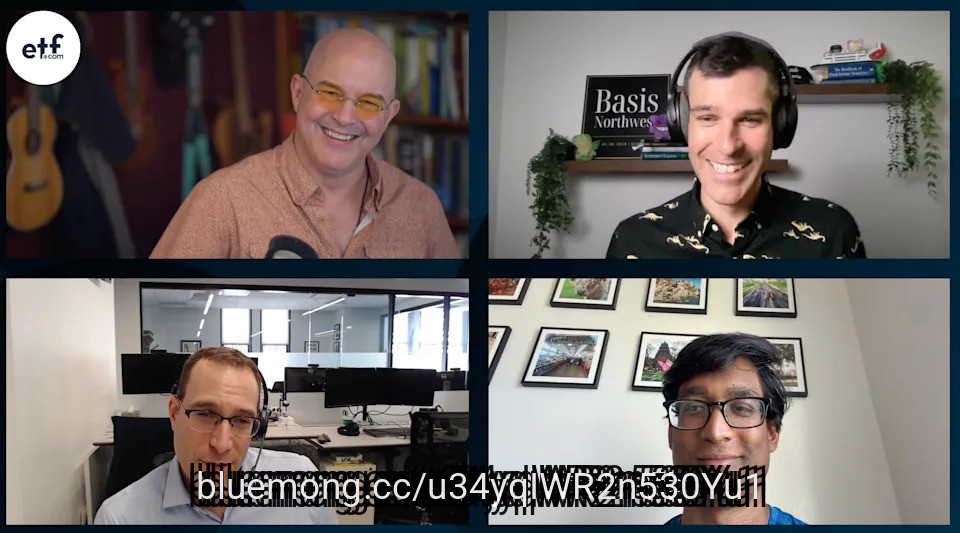
The tax man is coming for ETFs… eventually. This week's ETF Zoo digs into the recent action from the Treasury looking into newer ETF structures that include box spreads and 351 exchanges, what Goldman Sach's acquisition of NEOS says about the broader options income category, and why the struggling consumer matters less and less to markets. ETF.com hosts Dave Nadig, President and Director of Research, and Sumit Roy, Senior ETF ***** yst, are joined this week by Brent Sullivan, Editor of Tax Alpha Insider and Todd Sohn, Chief ETF Strategist at Baird Strategas.
You can also find this episode on our YouTube channel, as well as Spotify and Apple Podcasts.
Goldman Sachs just dropped $2.3 billion on NEOS, its second major ETF acquisition after Innovator, vaulting the bank into the top ten issuers with roughly $130 billion on platform. The Zoo crew believes it's a straight-up bet on retiring boomers hungry for income and downside protection. But the real intrigue is under the hood, where NEOS's covered-call funds lean heavily on return-of-capital distributions (untaxed, tax-efficient income) via 1256 contracts, a structure that's genuinely different from rivals like JEPI/JEPQ. While they're great products, tune in to find out what concerns the crew had.
From there the conversation zooms out to the bigger income-obsession story eating the market. Options income ETFs are going parabolic even as the S&P grinds higher and 30-year Treasury yields sit near multi-decade highs. Todd Sohn's theory: these products are quietly stealing market share from boring old dividend ETFs, especially with younger investors looking to add something more dynamic to their portfolios. Meanwhile, there's something strange happening in the market. Consumer stocks have practically vanished from index influence, with tech (and AI subscriptions) soaking up the wallet share that used to go to staples and discretionary names. Equal-weight and small-/mid-cap stocks are having a surprise moment, potentially riding the AI wave's downstream productivity gains rather than getting crushed by it.
The back half got spicier on taxes: Brent Sullivan previewed a coming reckoning as Treasury scrutinizes aggressive structures, including 351 exchanges, box spreads, dividend-avoidance ETFs. When the cards are on the table, we'll find out who's been bluffing. He expects enforcement to start with the most public, most obviously aggressive cases, though a timeline is anyone's guess. The group also piled on a Bloomberg feature that used Cliff Asness as the poster child for tax-aware long/short strategies, finding a strange scapegoat in Asness and the criticism unnecessarily pointed. Things then close on a cautionary tale of a Market Wizards-famous manager's ETF that's down a brutal 96-97% year-to-date after leaning into short-dated QQQ options. Investors would do well to remember that in this corner of the ETF world, someone's always selling you something.
#etfs #market #neos #brent
You can also find this episode on our YouTube channel, as well as Spotify and Apple Podcasts.
Goldman Sachs just dropped $2.3 billion on NEOS, its second major ETF acquisition after Innovator, vaulting the bank into the top ten issuers with roughly $130 billion on platform. The Zoo crew believes it's a straight-up bet on retiring boomers hungry for income and downside protection. But the real intrigue is under the hood, where NEOS's covered-call funds lean heavily on return-of-capital distributions (untaxed, tax-efficient income) via 1256 contracts, a structure that's genuinely different from rivals like JEPI/JEPQ. While they're great products, tune in to find out what concerns the crew had.
From there the conversation zooms out to the bigger income-obsession story eating the market. Options income ETFs are going parabolic even as the S&P grinds higher and 30-year Treasury yields sit near multi-decade highs. Todd Sohn's theory: these products are quietly stealing market share from boring old dividend ETFs, especially with younger investors looking to add something more dynamic to their portfolios. Meanwhile, there's something strange happening in the market. Consumer stocks have practically vanished from index influence, with tech (and AI subscriptions) soaking up the wallet share that used to go to staples and discretionary names. Equal-weight and small-/mid-cap stocks are having a surprise moment, potentially riding the AI wave's downstream productivity gains rather than getting crushed by it.
The back half got spicier on taxes: Brent Sullivan previewed a coming reckoning as Treasury scrutinizes aggressive structures, including 351 exchanges, box spreads, dividend-avoidance ETFs. When the cards are on the table, we'll find out who's been bluffing. He expects enforcement to start with the most public, most obviously aggressive cases, though a timeline is anyone's guess. The group also piled on a Bloomberg feature that used Cliff Asness as the poster child for tax-aware long/short strategies, finding a strange scapegoat in Asness and the criticism unnecessarily pointed. Things then close on a cautionary tale of a Market Wizards-famous manager's ETF that's down a brutal 96-97% year-to-date after leaning into short-dated QQQ options. Investors would do well to remember that in this corner of the ETF world, someone's always selling you something.
#etfs #market #neos #brent

2 months ago
A $100,000 stake in QYLD returned 170% over 12 years while QQQ gained 652%, leaving holders with a six-figure gap in realized wealth.
JEPQ and GPIQ use partial option coverage instead of QYLD's 100% overlay, preserving more NAV while sacrificing some monthly income.
QYLD's distributions have dropped 24% since 2021 and its NAV has gone sideways for a decade, quietly undermining the 12% headline yield.
It sounds nuts, but SoFi1 is giving new Active Invest users up to $3,000 in stock for a limited time, and all it takes is a $50 deposit to get started.2 See for yourself (Sponsor)
Twelve years of monthly distributions and a double-digit yield sound attractive. But for long-term holders of the Global X NASDAQ 100 Covered Call ETF (NASDAQ:QYLD), that income has come at a significant cost. The fund has generated plenty of cash, but its share price has barely moved. Compared with simply owning a plain Nasdaq-100 index fund, the opportunity cost now stretches well into six figures on a $100,000 investment.
#qyld #years
JEPQ and GPIQ use partial option coverage instead of QYLD's 100% overlay, preserving more NAV while sacrificing some monthly income.
QYLD's distributions have dropped 24% since 2021 and its NAV has gone sideways for a decade, quietly undermining the 12% headline yield.
It sounds nuts, but SoFi1 is giving new Active Invest users up to $3,000 in stock for a limited time, and all it takes is a $50 deposit to get started.2 See for yourself (Sponsor)
Twelve years of monthly distributions and a double-digit yield sound attractive. But for long-term holders of the Global X NASDAQ 100 Covered Call ETF (NASDAQ:QYLD), that income has come at a significant cost. The fund has generated plenty of cash, but its share price has barely moved. Compared with simply owning a plain Nasdaq-100 index fund, the opportunity cost now stretches well into six figures on a $100,000 investment.
#qyld #years
2 months ago
A 50/50 blend of SCHD and JEPQ produces a ~5.7% blended yield, requiring roughly $737,000 to generate $42,000 annually.
JEPQ's 8.5% yield ties to volatile Nasdaq option premiums, not growing earnings, making it a poor sole holding over a 25-year retirement.
Hold JEPQ inside an IRA or Roth since its distributions are taxed as ordinary income, while SCHD's qualified dividends face lower rates.
Are you ahead, or behind on retirement? SmartAsset's free tool can match you with a financial advisor in minutes to help you answer that today. Each advisor has been carefully vetted, and must act in your best interests. Don't waste another minute; learn more here.
A 61-year-old aiming to replace roughly $3,500 a month in take-home income is targeting $42,000 a year from a portfolio. That is the classic pre-Social-Security bridge number: enough to cover housing, healthcare premiums, and basic living costs for a household that has already paid down the mortgage. Two ETFs get most of the attention for this job, and the reason is simple: one prioritizes dividend growth, the other prioritizes cash yield today.
#Retirement #advisor #prioritizes
JEPQ's 8.5% yield ties to volatile Nasdaq option premiums, not growing earnings, making it a poor sole holding over a 25-year retirement.
Hold JEPQ inside an IRA or Roth since its distributions are taxed as ordinary income, while SCHD's qualified dividends face lower rates.
Are you ahead, or behind on retirement? SmartAsset's free tool can match you with a financial advisor in minutes to help you answer that today. Each advisor has been carefully vetted, and must act in your best interests. Don't waste another minute; learn more here.
A 61-year-old aiming to replace roughly $3,500 a month in take-home income is targeting $42,000 a year from a portfolio. That is the classic pre-Social-Security bridge number: enough to cover housing, healthcare premiums, and basic living costs for a household that has already paid down the mortgage. Two ETFs get most of the attention for this job, and the reason is simple: one prioritizes dividend growth, the other prioritizes cash yield today.
#Retirement #advisor #prioritizes


2 months ago
JEPQ's monthly payout surged from $0.47 to a record $0.71 during the 2026 Nasdaq correction, proving volatility spikes directly inflate covered-call income.
QQQ beat JEPQ by 6 percentage points last year, and 2022 proved the drawdown cushion is smaller than the 10% yield implies.
It sounds nuts, but SoFi1 is giving new Active Invest users up to $3,000 in stock for a limited time, and all it takes is a $50 deposit to get started.2 See for yourself (Sponsor)
The JPMorgan Nasdaq Equity Premium Income ETF (NASDAQ:JEPQ) exists to answer one question: can you own the Nasdaq without owning the full whiplash? JEPQ pairs a portfolio of large-cap Nasdaq names with a written-call overlay, converting a slice of upside into monthly cash.
JEPQ's roughly 10.9% trailing distribution rate is what keeps income investors interested. The useful test is what actually happens to the price and the checks when the index rolls over, because both halves of the trade are supposed to activate at exactly that moment.
#NASDAQ #jepq #income
QQQ beat JEPQ by 6 percentage points last year, and 2022 proved the drawdown cushion is smaller than the 10% yield implies.
It sounds nuts, but SoFi1 is giving new Active Invest users up to $3,000 in stock for a limited time, and all it takes is a $50 deposit to get started.2 See for yourself (Sponsor)
The JPMorgan Nasdaq Equity Premium Income ETF (NASDAQ:JEPQ) exists to answer one question: can you own the Nasdaq without owning the full whiplash? JEPQ pairs a portfolio of large-cap Nasdaq names with a written-call overlay, converting a slice of upside into monthly cash.
JEPQ's roughly 10.9% trailing distribution rate is what keeps income investors interested. The useful test is what actually happens to the price and the checks when the index rolls over, because both halves of the trade are supposed to activate at exactly that moment.
#NASDAQ #jepq #income


2 months ago
QQQI's 14% headline yield hides that roughly 98% of distributions are return of capital rather than income, meaning a deferred tax bill follows at sale.
JEPQ offers simpler tax treatment at lower cost, and QQQ outgained QQQI by 5 percentage points year-to-date as the call overlay surrendered upside.
Are you ahead, or behind on retirement? SmartAsset's free tool can match you with a financial advisor in minutes to help you answer that today. Each advisor has been carefully vetted, and must act in your best interests. Don't waste another minute; learn more here.
The NEOS Nasdaq-100 High Income ETF (NASDAQ:QQQI) sells one story on its factsheet: a monthly check tied to a roughly 14% distribution rate. What the headline yield leaves out is where the cash actually comes from, and how much upside a holder is quietly handing to option buyers every time the Nasdaq rips higher.
QQQI carries a 0.68% gross and net expense ratio, disclosed in the fund's May 2026 prospectus. That is $68 a year for every $10,000 invested, skimmed daily from NAV before a distribution ever lands in your account. Compounded over decades, that drag accumulates against the very NAV that generates the option income.
#NASDAQ #upside #advisor
JEPQ offers simpler tax treatment at lower cost, and QQQ outgained QQQI by 5 percentage points year-to-date as the call overlay surrendered upside.
Are you ahead, or behind on retirement? SmartAsset's free tool can match you with a financial advisor in minutes to help you answer that today. Each advisor has been carefully vetted, and must act in your best interests. Don't waste another minute; learn more here.
The NEOS Nasdaq-100 High Income ETF (NASDAQ:QQQI) sells one story on its factsheet: a monthly check tied to a roughly 14% distribution rate. What the headline yield leaves out is where the cash actually comes from, and how much upside a holder is quietly handing to option buyers every time the Nasdaq rips higher.
QQQI carries a 0.68% gross and net expense ratio, disclosed in the fund's May 2026 prospectus. That is $68 a year for every $10,000 invested, skimmed daily from NAV before a distribution ever lands in your account. Compounded over decades, that drag accumulates against the very NAV that generates the option income.
#NASDAQ #upside #advisor

2 months ago
VTI's 229% 10-year return powers long-term growth, while JEPQ delivers monthly income from covered calls before Social Security begins.
Parking 1 to 3 years of planned withdrawals in SGOV's short Treasury bills keeps cash accessible without forcing equity sales during downturns.
Are you ahead, or behind on retirement? SmartAsset's free tool can match you with a financial advisor in minutes to help you answer that today. Each advisor has been carefully vetted, and must act in your best interests. Don't waste another minute; learn more here.
You just hit age 59 1/2, and the 10% early withdrawal penalty on your 401(k) quietly evaporated overnight. The money is finally yours to touch without a tax slap. You now get to decide, deliberately, how to position the piece you might actually use in the next decade. Four funds do most of the heavy lifting for this exact moment: Vanguard Total Stock Market ETF (NYSEARCA:VTI), Vanguard Dividend Appreciation ETF (NYSEARCA:VIG), JPMorgan Nasdaq Equity Premium Income ETF (NASDAQ:JEPQ), and the iShares 0-3 Month Treasury Bond ETF (NYSEARCA:SGOV).
The benefit is emotional as much as financial. You may not be ready to retire, but you now have greater flexibility than you did a month ago. The danger is treating that newfound access as permission to take unnecessary risks.
#nysearca #vanguard #income
Parking 1 to 3 years of planned withdrawals in SGOV's short Treasury bills keeps cash accessible without forcing equity sales during downturns.
Are you ahead, or behind on retirement? SmartAsset's free tool can match you with a financial advisor in minutes to help you answer that today. Each advisor has been carefully vetted, and must act in your best interests. Don't waste another minute; learn more here.
You just hit age 59 1/2, and the 10% early withdrawal penalty on your 401(k) quietly evaporated overnight. The money is finally yours to touch without a tax slap. You now get to decide, deliberately, how to position the piece you might actually use in the next decade. Four funds do most of the heavy lifting for this exact moment: Vanguard Total Stock Market ETF (NYSEARCA:VTI), Vanguard Dividend Appreciation ETF (NYSEARCA:VIG), JPMorgan Nasdaq Equity Premium Income ETF (NASDAQ:JEPQ), and the iShares 0-3 Month Treasury Bond ETF (NYSEARCA:SGOV).
The benefit is emotional as much as financial. You may not be ready to retire, but you now have greater flexibility than you did a month ago. The danger is treating that newfound access as permission to take unnecessary risks.
#nysearca #vanguard #income

2 months ago
JEPQ's Nasdaq-100 volatility fuels a 7% yield and 17% one-year gain, roughly doubling JEPI's 8% return for income investors accepting AI concentration risk.
At 4.69%, the 10-year Treasury pressures income ETFs, but JEPI's low-beta S&P 500 sleeve could outperform SPY if mega-cap tech leadership rotates.
Don't wait: the **** yst who called NVIDIA in 2010 just revealed his top 10 AI stocks. See the full list FREE now.
Income investors comparing JPMorgan Equity Premium Income ETF (NYSEARCA:JEPI) and JPMorgan Nasdaq Equity Premium Income ETF (NASDAQ:JEPQ) are looking at the two largest actively managed ETFs in the country. Both use the same JPMorgan playbook: hold a defensive equity sleeve, generate extra cash through equity-linked notes that mimic an out-of-the-money covered call, and pay it out monthly. The mechanics rhyme, but the underlying exposure differs.
One fund leans on the S&P 500 with a low-volatility tilt. The other rides a Nasdaq-100 sleeve where implied volatility is structurally higher, feeding fatter option premiums into the monthly distribution. That single design difference is what makes the JEPI versus JEPQ debate meaningful for the back half of 2026.
#volatility
At 4.69%, the 10-year Treasury pressures income ETFs, but JEPI's low-beta S&P 500 sleeve could outperform SPY if mega-cap tech leadership rotates.
Don't wait: the **** yst who called NVIDIA in 2010 just revealed his top 10 AI stocks. See the full list FREE now.
Income investors comparing JPMorgan Equity Premium Income ETF (NYSEARCA:JEPI) and JPMorgan Nasdaq Equity Premium Income ETF (NASDAQ:JEPQ) are looking at the two largest actively managed ETFs in the country. Both use the same JPMorgan playbook: hold a defensive equity sleeve, generate extra cash through equity-linked notes that mimic an out-of-the-money covered call, and pay it out monthly. The mechanics rhyme, but the underlying exposure differs.
One fund leans on the S&P 500 with a low-volatility tilt. The other rides a Nasdaq-100 sleeve where implied volatility is structurally higher, feeding fatter option premiums into the monthly distribution. That single design difference is what makes the JEPI versus JEPQ debate meaningful for the back half of 2026.
#volatility


2 months ago
SPYI and QQQI deliver 12% and 14% monthly yields using Section 1256 index options, shielding most distributions from ordinary income tax rates.
JEPI and JEPQ distribute ordinary income from equity-linked notes, creating higher tax drag that compounds against taxable-account investors over time.
ISPY's daily call reset preserves more S&P 500 upside, delivering 17% total returns at a lower 4.6% yield than SPYI or QQQI.
Don't wait: the **** yst who called NVIDIA in 2010 just revealed his top 10 AI stocks. See the full list FREE now.
Covered call ETFs promise double-digit yields from a broad equity index. Three funds stand out for how they handle taxes: the NEOS S&P 500 High Income ETF (NASDAQ:SPYI), the NEOS Nasdaq-100 High Income ETF (NASDAQ:QQQI), and the ProShares S&P 500 High Income ETF (NASDAQ:ISPY).
#spyi #high
JEPI and JEPQ distribute ordinary income from equity-linked notes, creating higher tax drag that compounds against taxable-account investors over time.
ISPY's daily call reset preserves more S&P 500 upside, delivering 17% total returns at a lower 4.6% yield than SPYI or QQQI.
Don't wait: the **** yst who called NVIDIA in 2010 just revealed his top 10 AI stocks. See the full list FREE now.
Covered call ETFs promise double-digit yields from a broad equity index. Three funds stand out for how they handle taxes: the NEOS S&P 500 High Income ETF (NASDAQ:SPYI), the NEOS Nasdaq-100 High Income ETF (NASDAQ:QQQI), and the ProShares S&P 500 High Income ETF (NASDAQ:ISPY).
#spyi #high

3 months ago
JEPQ beats JEPI with a 24% one-year gain and a record $0.64 July payout, but its Nasdaq-100 concentration amplifies downside risk in a correction.
JEPI caps single holdings like NVDA and AAPL below 2%, spreading risk across sectors that shields NAV from individual stock blowups.
A VIX at 16, well below its 12-month average of 18, squeezes option premiums for both funds but punishes JEPI's quieter S&P 500 base harder.
Act now: the ****** yst who called NVIDIA in 2010 just named his top 10 AI stocks — and Apple didn't make the cut. Grab the names FREE today.
The battle between JPMorgan's two flagship covered-call income ETFs comes down to a simple trade-off: JPMorgan Equity Premium Income ETF (NYSEARCA:JEPI) offers the smoother ride, while JPMorgan Nasdaq Equity Premium Income ETF (NASDAQ:JEPQ) delivers the fatter distributions. In July 2026, that trade-off looks less balanced than usual, and the winner may not be the one income investors reflexively ****** ume.
JEPI caps single holdings like NVDA and AAPL below 2%, spreading risk across sectors that shields NAV from individual stock blowups.
A VIX at 16, well below its 12-month average of 18, squeezes option premiums for both funds but punishes JEPI's quieter S&P 500 base harder.
Act now: the ****** yst who called NVIDIA in 2010 just named his top 10 AI stocks — and Apple didn't make the cut. Grab the names FREE today.
The battle between JPMorgan's two flagship covered-call income ETFs comes down to a simple trade-off: JPMorgan Equity Premium Income ETF (NYSEARCA:JEPI) offers the smoother ride, while JPMorgan Nasdaq Equity Premium Income ETF (NASDAQ:JEPQ) delivers the fatter distributions. In July 2026, that trade-off looks less balanced than usual, and the winner may not be the one income investors reflexively ****** ume.


3 months ago
ULTY distributes between $0.34 and $0.52 weekly by selling calls on high-beta names like Coinbase and Rocket Lab, with payouts directly tracking VIX movement.
JEPQ delivers covered call income on the NASDAQ 100 with significantly less NAV volatility, making it the steadier alternative for income-focused investors.
Covered calls cap upside recovery in a drawdown, and ULTY's 1.24% expense ratio drags returns on a strategy already tied to volatile premiums.
Many financial professionals are salespeople paid on what they push, not whether you end up wealthier. A fiduciary is the opposite. The SEC legally requires them to put your interests first. Advisor.com's free matching tool pairs you with vetted fiduciaries from major national firms, all in under three minutes. See who you match with today.
YieldMax's Ultra Option Income Strategy ETF (NYSEARCA:ULTY) has become one of the most talked-about weekly income vehicles on the market, and the pitch is straightforward: sell options on the most volatile stocks in tech, crypto, and speculative growth, then hand the premiums to shareholders every Friday. ULTY has been distributing roughly $0.34 to $0.52 per share each week in 2026, funded almost entirely by option premium capture on a $2.5 billion book of high-beta names. The question every ULTY holder should be asking is whether that weekly check is durable, or whether it's slowly cannibalizing the principal that funds it.
JEPQ delivers covered call income on the NASDAQ 100 with significantly less NAV volatility, making it the steadier alternative for income-focused investors.
Covered calls cap upside recovery in a drawdown, and ULTY's 1.24% expense ratio drags returns on a strategy already tied to volatile premiums.
Many financial professionals are salespeople paid on what they push, not whether you end up wealthier. A fiduciary is the opposite. The SEC legally requires them to put your interests first. Advisor.com's free matching tool pairs you with vetted fiduciaries from major national firms, all in under three minutes. See who you match with today.
YieldMax's Ultra Option Income Strategy ETF (NYSEARCA:ULTY) has become one of the most talked-about weekly income vehicles on the market, and the pitch is straightforward: sell options on the most volatile stocks in tech, crypto, and speculative growth, then hand the premiums to shareholders every Friday. ULTY has been distributing roughly $0.34 to $0.52 per share each week in 2026, funded almost entirely by option premium capture on a $2.5 billion book of high-beta names. The question every ULTY holder should be asking is whether that weekly check is durable, or whether it's slowly cannibalizing the principal that funds it.


3 months ago
MSTY dropped roughly 70% over the past year as weekly distributions collapsed from $4.42 monthly in 2024 to just $0.1549 today.
MSTR's 75% price collapse crushed the option premiums funding MSTY's payouts; NAV-stable alternatives like JEPI or JEPQ offer more reliable income.
It sounds nuts, but SoFi is giving new active invest users up to $1,000 in stock for a limited time, and all it takes is a $50 deposit to get started. See for yourself (Sponsor)
The YieldMax MSTR Option Income Strategy ETF (NYSEARCA:MSTY) is the single-stock income product retail investors flocked to when MicroStrategy (now Strategy) was climbing alongside Bitcoin. MSTY promises weekly cash from selling options tied to MSTR exposure, and in 2024 it delivered headline yields north of 100%. The picture in 2026 looks very different: MSTY trades at $13.58 after falling roughly 70% over the past year, and the most recent weekly distribution came in at just $0.1549 per share. This piece walks through how the fund actually generates income and whether the payout is durable from here.
MSTY runs a synthetic covered-call strategy rather than holding MicroStrategy shares outright: buy call options and sell put options on MSTR to build a synthetic long position, then sell short-dated call options against that exposure. The premiums collected from writing those calls are what fund the distributions. Because MSTR is one of the most volatile large-cap names in the market, the options it sells trade at extremely rich premiums, which is the entire reason MSTY exists.
MSTR's 75% price collapse crushed the option premiums funding MSTY's payouts; NAV-stable alternatives like JEPI or JEPQ offer more reliable income.
It sounds nuts, but SoFi is giving new active invest users up to $1,000 in stock for a limited time, and all it takes is a $50 deposit to get started. See for yourself (Sponsor)
The YieldMax MSTR Option Income Strategy ETF (NYSEARCA:MSTY) is the single-stock income product retail investors flocked to when MicroStrategy (now Strategy) was climbing alongside Bitcoin. MSTY promises weekly cash from selling options tied to MSTR exposure, and in 2024 it delivered headline yields north of 100%. The picture in 2026 looks very different: MSTY trades at $13.58 after falling roughly 70% over the past year, and the most recent weekly distribution came in at just $0.1549 per share. This piece walks through how the fund actually generates income and whether the payout is durable from here.
MSTY runs a synthetic covered-call strategy rather than holding MicroStrategy shares outright: buy call options and sell put options on MSTR to build a synthetic long position, then sell short-dated call options against that exposure. The premiums collected from writing those calls are what fund the distributions. Because MSTR is one of the most volatile large-cap names in the market, the options it sells trade at extremely rich premiums, which is the entire reason MSTY exists.


3 months ago
GPIQ attracted $2 billion in 2025 inflows, paying a ~10% distribution yield that has grown steadily while its NAV doubled since inception.
GPIQ outpaces JEPQ on expense ratio and total return, though a fast Nasdaq rally could widen its performance gap versus QQQ.
Many financial professionals are salespeople paid on what they push, not whether you end up wealthier. A fiduciary is the opposite. The SEC legally requires them to put your interests first. Advisor.com's free matching tool pairs you with vetted fiduciaries from major national firms, all in under three minutes. See who you match with today.
The Goldman Sachs Nasdaq-100 Premium Income ETF (NASDAQ:GPIQ) has become one of the fastest-growing options-income products on the market, pulling in roughly $2.12 billion of net inflows in 2025 on the strength of a distribution yield that recently sat near 9.8% to 10%. GPIQ investors are buying a monthly paycheck backed by call premiums on the Nasdaq-100, and the question worth answering is whether that paycheck holds up when volatility fades and when the underlying index rolls over. The data suggests the distribution is durable, but the mechanics behind it deserve scrutiny.
GPIQ is an actively managed buy-write fund. It holds a portfolio of Nasdaq-100 stocks, then sells call options on Nasdaq-100 derivatives to convert future upside into current cash. What separates it from older covered-call ETFs is a 25% to 75% dynamic call coverage range, averaging about 50%. Goldman writes fewer calls when it wants more equity participation and more calls when it wants richer income.
GPIQ outpaces JEPQ on expense ratio and total return, though a fast Nasdaq rally could widen its performance gap versus QQQ.
Many financial professionals are salespeople paid on what they push, not whether you end up wealthier. A fiduciary is the opposite. The SEC legally requires them to put your interests first. Advisor.com's free matching tool pairs you with vetted fiduciaries from major national firms, all in under three minutes. See who you match with today.
The Goldman Sachs Nasdaq-100 Premium Income ETF (NASDAQ:GPIQ) has become one of the fastest-growing options-income products on the market, pulling in roughly $2.12 billion of net inflows in 2025 on the strength of a distribution yield that recently sat near 9.8% to 10%. GPIQ investors are buying a monthly paycheck backed by call premiums on the Nasdaq-100, and the question worth answering is whether that paycheck holds up when volatility fades and when the underlying index rolls over. The data suggests the distribution is durable, but the mechanics behind it deserve scrutiny.
GPIQ is an actively managed buy-write fund. It holds a portfolio of Nasdaq-100 stocks, then sells call options on Nasdaq-100 derivatives to convert future upside into current cash. What separates it from older covered-call ETFs is a 25% to 75% dynamic call coverage range, averaging about 50%. Goldman writes fewer calls when it wants more equity participation and more calls when it wants richer income.


3 months ago
SCHD and JEPI anchor a four-ETF stack targeting $4,000 a month, combining dividend growth with covered-call income from mega-cap blue chips.
Social Security's 2.8% COLA barely keeps pace with inflation, and projected reserve depletion by 2033 makes outside income non-negotiable for retirees.
It sounds nuts, but SoFi is giving new active invest users up to $1,000 in stock for a limited time, and all it takes is a $50 deposit to get started. See for yourself (Sponsor)
The 2026 Social Security cost-of-living adjustment came in at 2.8%, which barely keeps pace with what you actually spend at the grocery store. If you are counting on that check alone to fund the next 20 or 30 years of your life, you are gambling with the rent. The fix is simpler than it sounds: build a four-ETF income stack that does the heavy lifting your benefits cannot. The funds in question are Schwab U.S. Dividend Equity ETF (NYSEARCA:SCHD), JPMorgan Equity Premium Income ETF (NYSEARCA:JEPI), JPMorgan Nasdaq Equity Premium Income ETF (NASDAQ:JEPQ), and Vanguard High Dividend Yield ETF (NYSEARCA:VYM). Used together, they can realistically generate $4,000 a month for a well-sized portfolio, and each one plays a distinct role.
Stanford economists note that Social Security's reserves are on track to run short, with projections showing the surplus gone by 2033 unless something changes. Even if you delay claiming to age 70 for the roughly 8% annual ******* p, you still need outside income. A $4,000-a-month target equals $48,000 a year in cash distributions on top of whatever Social Security delivers. That is the gap these four ETFs are built to close, with different yields, different risk profiles, and enough overlap to smooth out bad quarters.
Social Security's 2.8% COLA barely keeps pace with inflation, and projected reserve depletion by 2033 makes outside income non-negotiable for retirees.
It sounds nuts, but SoFi is giving new active invest users up to $1,000 in stock for a limited time, and all it takes is a $50 deposit to get started. See for yourself (Sponsor)
The 2026 Social Security cost-of-living adjustment came in at 2.8%, which barely keeps pace with what you actually spend at the grocery store. If you are counting on that check alone to fund the next 20 or 30 years of your life, you are gambling with the rent. The fix is simpler than it sounds: build a four-ETF income stack that does the heavy lifting your benefits cannot. The funds in question are Schwab U.S. Dividend Equity ETF (NYSEARCA:SCHD), JPMorgan Equity Premium Income ETF (NYSEARCA:JEPI), JPMorgan Nasdaq Equity Premium Income ETF (NASDAQ:JEPQ), and Vanguard High Dividend Yield ETF (NYSEARCA:VYM). Used together, they can realistically generate $4,000 a month for a well-sized portfolio, and each one plays a distinct role.
Stanford economists note that Social Security's reserves are on track to run short, with projections showing the surplus gone by 2033 unless something changes. Even if you delay claiming to age 70 for the roughly 8% annual ******* p, you still need outside income. A $4,000-a-month target equals $48,000 a year in cash distributions on top of whatever Social Security delivers. That is the gap these four ETFs are built to close, with different yields, different risk profiles, and enough overlap to smooth out bad quarters.