
3 mins. ago
As of August 24, 2026, the average rate for a 30-year, fixed loan was 6.71% — up from the beginning of the year, and higher than the 2025 average of 6.66%.
Over the past four decades, the 30-year fixed rate ranged from a 2021 low of 2.65% to a 1981 high above 18%.
The average 30-year fixed rate bottomed in 2021 at just under 3%.
87% of all borrowers in 2025 paid more than the most competitive rate available to them, according to Bankrate's Hidden Homeownership Tax research — meaning rate history matters less to your bill than whether you actually shopped your own rate.
The residential mortgage as we know it today is less than a century old. In fact, until the Federal Housing Administration (FHA) was established in 1934, only one in 10 Americans even owned a home. That all changed with the introduction of the 30-year fixed-rate mortgage during the Great Depression, which made homeownership possible for millions.
#homeownership #mortgage
Over the past four decades, the 30-year fixed rate ranged from a 2021 low of 2.65% to a 1981 high above 18%.
The average 30-year fixed rate bottomed in 2021 at just under 3%.
87% of all borrowers in 2025 paid more than the most competitive rate available to them, according to Bankrate's Hidden Homeownership Tax research — meaning rate history matters less to your bill than whether you actually shopped your own rate.
The residential mortgage as we know it today is less than a century old. In fact, until the Federal Housing Administration (FHA) was established in 1934, only one in 10 Americans even owned a home. That all changed with the introduction of the 30-year fixed-rate mortgage during the Great Depression, which made homeownership possible for millions.
#homeownership #mortgage


1 day ago
As of August 24, 2026, the average rate for a 30-year, fixed loan was 6.71% — up from the beginning of the year, and higher than the 2025 average of 6.66%.
Over the past four decades, the 30-year fixed rate ranged from a 2021 low of 2.65% to a 1981 high above 18%.
The average 30-year fixed rate bottomed in 2021 at just under 3%.
87% of all borrowers in 2025 paid more than the most competitive rate available to them, according to Bankrate's Hidden Homeownership Tax research — meaning rate history matters less to your bill than whether you actually shopped your own rate.
The residential mortgage as we know it today is less than a century old. In fact, until the Federal Housing Administration (FHA) was established in 1934, only one in 10 Americans even owned a home. That all changed with the introduction of the 30-year fixed-rate mortgage during the Great Depression, which made homeownership possible for millions.
#fixed #average #homeownership #less
Over the past four decades, the 30-year fixed rate ranged from a 2021 low of 2.65% to a 1981 high above 18%.
The average 30-year fixed rate bottomed in 2021 at just under 3%.
87% of all borrowers in 2025 paid more than the most competitive rate available to them, according to Bankrate's Hidden Homeownership Tax research — meaning rate history matters less to your bill than whether you actually shopped your own rate.
The residential mortgage as we know it today is less than a century old. In fact, until the Federal Housing Administration (FHA) was established in 1934, only one in 10 Americans even owned a home. That all changed with the introduction of the 30-year fixed-rate mortgage during the Great Depression, which made homeownership possible for millions.
#fixed #average #homeownership #less


5 days ago
In 2025, 87% of borrowers paid higher than the best available mortgage rate for their credit profile — often because they didn't shop around, according to Bankrate's Hidden Homeownership Tax research.
Refinancing can lower your interest rate and cut thousands of dollars off the total cost of your loan.
Staying with your current lender out of convenience can mean paying a hidden "loyalty tax." Below, we break down when sticking with your lender pays off and when it costs you.
You can refinance with your current lender or switch to a new one — there's no rule requiring you to do either. The real question isn't whether you're allowed to change lenders (you are); it's whether it's the smarter move for your finances.
That decision comes down to more than just comparing your current lender's offer against the competition. Whether you're thinking of refinancing to tap into home equity or snag a lower rate, here's how to weigh the convenience of staying put against what you might be leaving on the table by not shopping around.
#rate #current #lender
Refinancing can lower your interest rate and cut thousands of dollars off the total cost of your loan.
Staying with your current lender out of convenience can mean paying a hidden "loyalty tax." Below, we break down when sticking with your lender pays off and when it costs you.
You can refinance with your current lender or switch to a new one — there's no rule requiring you to do either. The real question isn't whether you're allowed to change lenders (you are); it's whether it's the smarter move for your finances.
That decision comes down to more than just comparing your current lender's offer against the competition. Whether you're thinking of refinancing to tap into home equity or snag a lower rate, here's how to weigh the convenience of staying put against what you might be leaving on the table by not shopping around.
#rate #current #lender


19 days ago
When longtime mortgage loan officer Hillary Moussali worked at a local Chase bank branch, an elderly man walked in holding a mail advertisement with the bank's name, promising "super low" refinancing rates. Moussali took one look at the mailer and knew it wasn't sent from Chase.
"I read the fine print, which he probably couldn't even see," said Moussali, who worked as a loan officer for Chase from 2016 to 2021. "If he had just called the 1-800 number, who knows what they would have charged him."
There's a good chance they would've charged him thousands of extra dollars in unnecessary costs, according to new Bankrate research that finds a costly "Seniority Tax" is consistently imposed on older refinancers. The Seniority Tax is a targeted example of a wider Hidden Homeownership Tax revealed by our research — the systemic overpayment by American mortgage borrowers.
Read more about how the Seniority Tax plays out, along with similar overpayment consequences for other groups of people.
Full report
#worked #charged
"I read the fine print, which he probably couldn't even see," said Moussali, who worked as a loan officer for Chase from 2016 to 2021. "If he had just called the 1-800 number, who knows what they would have charged him."
There's a good chance they would've charged him thousands of extra dollars in unnecessary costs, according to new Bankrate research that finds a costly "Seniority Tax" is consistently imposed on older refinancers. The Seniority Tax is a targeted example of a wider Hidden Homeownership Tax revealed by our research — the systemic overpayment by American mortgage borrowers.
Read more about how the Seniority Tax plays out, along with similar overpayment consequences for other groups of people.
Full report
#worked #charged



20 days ago
Lender approvals ignore personal habits and savings goals. Buying less home than you qualify for delivers flexibility, lower stress, and real breathing room.
Property taxes, insurance, HOA fees, utilities, and surprise repairs can add hundreds or thousands monthly beyond what a mortgage statement shows.
Existing debt, a wiped-out emergency fund, and continued lifestyle inflation after closing combine to push new homeowners deep into financial strain.
Don't wait: the **** yst who called NVIDIA in 2010 just revealed his top 10 AI stocks. See the full list FREE now.
Buying a home is exciting, but no one should want to get into a house at the cost of stretching their budget too far. This can quickly turn homeownership into a financial burden. Being "house poor" means such a large portion of your income goes toward housing expenses that little room is left over for savings, recreational activities, emergencies, weekend trips, or everyday spending. Of course, few people become house poor on purpose. It happens gradually through small decisions that add up over time. Understanding the most common causes of falling into this trap can help you avoid it. That knowledge can lead you to a home that fits both your lifestyle and your financial goals.
#buying #poor
Property taxes, insurance, HOA fees, utilities, and surprise repairs can add hundreds or thousands monthly beyond what a mortgage statement shows.
Existing debt, a wiped-out emergency fund, and continued lifestyle inflation after closing combine to push new homeowners deep into financial strain.
Don't wait: the **** yst who called NVIDIA in 2010 just revealed his top 10 AI stocks. See the full list FREE now.
Buying a home is exciting, but no one should want to get into a house at the cost of stretching their budget too far. This can quickly turn homeownership into a financial burden. Being "house poor" means such a large portion of your income goes toward housing expenses that little room is left over for savings, recreational activities, emergencies, weekend trips, or everyday spending. Of course, few people become house poor on purpose. It happens gradually through small decisions that add up over time. Understanding the most common causes of falling into this trap can help you avoid it. That knowledge can lead you to a home that fits both your lifestyle and your financial goals.
#buying #poor


28 days ago
Homeownership is something many people aspire to and, in fact, 56% of adults describe owning your own property as a key part of the American Dream. Yet, many are struggling to buy a home of their own thanks to rising costs of both homes and mortgages.
But, what if you didn't buy a home but inherited one instead? For some, this may seem like a dream come true — but that's not the case in every situation. Let's pretend, for example, that Mika's grandmother, Enid, owns Mika's childhood home and wants Mika to inherit it.
Jeff Bezos backs a platform that lets anyone invest in rental homes for as little as $100 — 6 ways to build wealth like a landlord without actually being one
Dave Ramsey warns nearly 50% of Americans are making 1 big Social Security mistake — here's what it is and 3 simple steps to fix it ASAP
Millionaires under 43 hold only 25% of their wealth in stocks. Here's where their money is actually going
#actually
But, what if you didn't buy a home but inherited one instead? For some, this may seem like a dream come true — but that's not the case in every situation. Let's pretend, for example, that Mika's grandmother, Enid, owns Mika's childhood home and wants Mika to inherit it.
Jeff Bezos backs a platform that lets anyone invest in rental homes for as little as $100 — 6 ways to build wealth like a landlord without actually being one
Dave Ramsey warns nearly 50% of Americans are making 1 big Social Security mistake — here's what it is and 3 simple steps to fix it ASAP
Millionaires under 43 hold only 25% of their wealth in stocks. Here's where their money is actually going
#actually


1 month ago
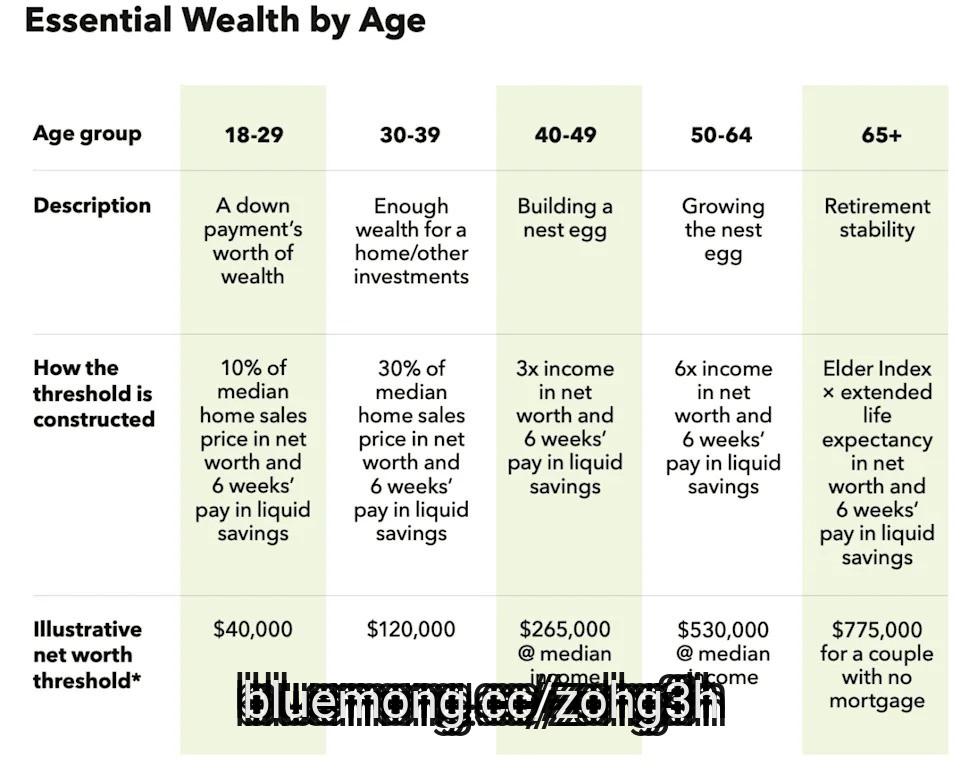
Nearly three out of four households in the U.S. fall short of having "essential wealth," or enough money to weather financial shocks; support their families' physical and mental health; and access such opportunities as education, homeownership and retirement savings that can build even more wealth over time, according to a new report by the Aspen Institute.
While many workers focus on their salaries, achieving financial well-being requires another "cushion that income alone cannot provide" — it requires wealth, including savings, investments and other ***** ets, according to the report.
World Cup-champion Spain just won $50 million — and the IRS gets a cut
Bond yields are sending a new signal about Fed rate hikes
19 (mostly) tech stocks that have fallen at least 25% in July
While many workers focus on their salaries, achieving financial well-being requires another "cushion that income alone cannot provide" — it requires wealth, including savings, investments and other ***** ets, according to the report.
World Cup-champion Spain just won $50 million — and the IRS gets a cut
Bond yields are sending a new signal about Fed rate hikes
19 (mostly) tech stocks that have fallen at least 25% in July


2 months ago
By Lucia Mutikani
WASHINGTON, July 9 (Reuters) - U.S. existing home sales unexpectedly fell in June as tight inventory boosted house prices to a record high and the Middle East conflict kept mortgage rates elevated, pushing potential buyers to the sidelines.
The report from the National **** ociation of Realtors on Thursday underscored the growing affordability hurdle faced by many young people pursuing the so-called American dream of homeownership. Still, economists expected the housing market to make a small contribution to economic growth in the second quarter for the first time in more than a year.
The U.S. Congress recently passed a bipartisan housing affordability bill, which includes measures to restrict single-family homeownership by investment firms and waive or speed up environmental reviews for construction projects. President Donald Trump has declined to sign the bill until a separate voting bill is passed.
"Affordability challenges are most acute for lower-income households and first-time buyers," said Nancy Vanden Houten, lead U.S. economist at Oxford Economics. "Homebuying is much more affordable for upper-income households, who are likely to be homeowners, than for younger, renter households."
WASHINGTON, July 9 (Reuters) - U.S. existing home sales unexpectedly fell in June as tight inventory boosted house prices to a record high and the Middle East conflict kept mortgage rates elevated, pushing potential buyers to the sidelines.
The report from the National **** ociation of Realtors on Thursday underscored the growing affordability hurdle faced by many young people pursuing the so-called American dream of homeownership. Still, economists expected the housing market to make a small contribution to economic growth in the second quarter for the first time in more than a year.
The U.S. Congress recently passed a bipartisan housing affordability bill, which includes measures to restrict single-family homeownership by investment firms and waive or speed up environmental reviews for construction projects. President Donald Trump has declined to sign the bill until a separate voting bill is passed.
"Affordability challenges are most acute for lower-income households and first-time buyers," said Nancy Vanden Houten, lead U.S. economist at Oxford Economics. "Homebuying is much more affordable for upper-income households, who are likely to be homeowners, than for younger, renter households."

2 months ago
Crystin Liboma's childhood dream was to own a home. At 26 years old, she moved out of her parents' house into her first home purchase in Delaware. Then, she was slammed with major home repairs that left her struggling to pay her mortgage and several thousand dollars in credit card debt.
Three years after buying her first home in 2017, Liboma found relief in the form of a mortgage refinance. By refinancing from a mid-4%, 30-year mortgage to a 3.38%, 20-year mortgage, Liboma set herself on stronger financial footing.
Now 35 years old, the healthcare consultant has learned a few lessons about dealing with unexpected costs, along with one thing you can control but might not realize — your mortgage rate.
There are many uncontrollable costs when it comes to homeownership, including maintenance, rising property taxes and high utility bills. Naomi Peden, a housing counselor at Money Management International, helps people who are struggling to pay their mortgage. But financial stability begins before move-in day.
"One of the benefits of being a homeowner is the fact that you're stabilizing a portion of your housing cost," she tells clients during pre-purchase counseling. "That portion is the principal and interest payment."
Three years after buying her first home in 2017, Liboma found relief in the form of a mortgage refinance. By refinancing from a mid-4%, 30-year mortgage to a 3.38%, 20-year mortgage, Liboma set herself on stronger financial footing.
Now 35 years old, the healthcare consultant has learned a few lessons about dealing with unexpected costs, along with one thing you can control but might not realize — your mortgage rate.
There are many uncontrollable costs when it comes to homeownership, including maintenance, rising property taxes and high utility bills. Naomi Peden, a housing counselor at Money Management International, helps people who are struggling to pay their mortgage. But financial stability begins before move-in day.
"One of the benefits of being a homeowner is the fact that you're stabilizing a portion of your housing cost," she tells clients during pre-purchase counseling. "That portion is the principal and interest payment."


2 months ago
Some offers on this page are from advertisers who pay us, which may affect which products we write about, but not our recommendations. See our Advertiser Disclosure.
It isn't easy being a first-time home buyer. Purchasing a house in 2026 takes a series of savvy financial moves, and you'll need a mortgage lender who can be a true partner in the process. Here are the best mortgage lenders to provide you with first-time buyer grants, loans, and more.
Why Rocket Mortgage stands out: Rocket helps renters make the leap to homeownership with a grant equal to a portion of rent paid.
Availability: All 50 states and Washington, D.C.
Loans for first-time buyers: Conventional, FHA, and VA loans
It isn't easy being a first-time home buyer. Purchasing a house in 2026 takes a series of savvy financial moves, and you'll need a mortgage lender who can be a true partner in the process. Here are the best mortgage lenders to provide you with first-time buyer grants, loans, and more.
Why Rocket Mortgage stands out: Rocket helps renters make the leap to homeownership with a grant equal to a portion of rent paid.
Availability: All 50 states and Washington, D.C.
Loans for first-time buyers: Conventional, FHA, and VA loans




2 months ago
Potential homebuyers tend to agonize over two things: mortgage rates and home prices. But that's not where the burden of homeownership ends. It's really just the beginning.
Buyers will lock in a rate, sign at closing, and ****** ume the hard part of buying a house is over, but many things can go wrong, and there are many hidden homeownership costs that not everyone stops to consider.
For example, a recent survey of 2,500 U.S. homeowners from Ownwell, a property tax appeal service, found 76% say their property taxes in recent years have run higher than they budgeted for—up 10 percentage points from just a year earlier. Nearly two-thirds said they were surprised or shocked by their most recent tax bill, and 9 in 10 said they're concerned about the long-term financial hit of rising property taxes. And even more startling is 40% said they had considered moving specifically because of them.
"Taxes have quietly joined insurance as one of the biggest affordability shocks after closing, especially in states with high property taxes like New York, Massachusetts, and Texas," Ownwell CEO Colton Pace told Fortune.
These new stats point to an affordability problem the usual housing conversation misses. While it's more accessible (albeit sometimes painful) to monitor mortgage rates and home prices, recurring expenses like taxes, insurance, maintenance, and other line items that ****** ody mentions at the closing table are quietly reshaping what it actually costs to keep a home.
Buyers will lock in a rate, sign at closing, and ****** ume the hard part of buying a house is over, but many things can go wrong, and there are many hidden homeownership costs that not everyone stops to consider.
For example, a recent survey of 2,500 U.S. homeowners from Ownwell, a property tax appeal service, found 76% say their property taxes in recent years have run higher than they budgeted for—up 10 percentage points from just a year earlier. Nearly two-thirds said they were surprised or shocked by their most recent tax bill, and 9 in 10 said they're concerned about the long-term financial hit of rising property taxes. And even more startling is 40% said they had considered moving specifically because of them.
"Taxes have quietly joined insurance as one of the biggest affordability shocks after closing, especially in states with high property taxes like New York, Massachusetts, and Texas," Ownwell CEO Colton Pace told Fortune.
These new stats point to an affordability problem the usual housing conversation misses. While it's more accessible (albeit sometimes painful) to monitor mortgage rates and home prices, recurring expenses like taxes, insurance, maintenance, and other line items that ****** ody mentions at the closing table are quietly reshaping what it actually costs to keep a home.


2 months ago
There's a lot weighing on Gen Z these days: landing a first job, navigating an AI-powered workplace, and figuring out whether traditional milestones like homeownership are still within reach. But instead of trying to come up with solutions to endless anxiety-inducing problems, Google CEO Sundar Pichai recently offered a simple antidote to the workforce's youngest members: take a chill pill.
"I'm going to let you in on a little secret: While these things matter in the moment, they are much less consequential than you might think," Pichai told Stanford University graduates earlier this month.
"You could have failed that biology test, skipped a class, never learned to play the tuba. And you'd still probably be here today."
It's a lesson Pichai learned first hand back when he too was a student at Stanford studying materials science and engineering. He admitted he was often obsessed over grades, career prospects, and mapping out his future. Then an unexpected road trip to Las Vegas shifted his perspective.
The soft-spoken tech leader recalled how a classmate once convinced him to skip a lecture and drive to Sin City—a move that felt wildly out of character for someone who had never missed class before. Along the way, he saw snow for the first time, learned to play blackjack, and discovered something even more valuable when ***** ody noticed his absence.
"I'm going to let you in on a little secret: While these things matter in the moment, they are much less consequential than you might think," Pichai told Stanford University graduates earlier this month.
"You could have failed that biology test, skipped a class, never learned to play the tuba. And you'd still probably be here today."
It's a lesson Pichai learned first hand back when he too was a student at Stanford studying materials science and engineering. He admitted he was often obsessed over grades, career prospects, and mapping out his future. Then an unexpected road trip to Las Vegas shifted his perspective.
The soft-spoken tech leader recalled how a classmate once convinced him to skip a lecture and drive to Sin City—a move that felt wildly out of character for someone who had never missed class before. Along the way, he saw snow for the first time, learned to play blackjack, and discovered something even more valuable when ***** ody noticed his absence.


2 months ago
When you reach the point in the homebuying process where a lender tells you how much you're eligible to borrow, it can feel like permission to spend. But eligibility and affordability are two very different things. It's a lesson Khyrunnessa Rabbini learned early on.
At 29 years old, Rabbini walked into her local bank in Cincinnati, Ohio, ready to buy her first home. On a $55,000 salary in 2008, she received a prequalification letter offering up to $250,000. "My gut told me that this wasn't a good idea," she says. So she bought for about half that amount instead — a decision that gave her the financial footing to eventually build a real estate investment portfolio spanning six properties over nearly two decades.
Now a seasoned homebuyer, Rabbini still feels thankful she got off on the right foot with homeownership, which gave her a strong foundation to build on. Here's what she's learned from her experience, and how you can use it in your own journey.
What Rabbini received from her bank was a prequalification letter, which is different from a preapproval. They seem similar, but are critically distinct from one another. Prequalification is a simpler process that relies primarily on your self-reported information. Preapprovals are more involved and offer a more exact loan amount and interest rate. Your lender will ask for documentation like pay stubs, bank returns, account statements and credit history. You typically receive a preapproval letter typically comes earlier on in the process, while a prequalification comes into play when you're ready to start making real offers.
Between the preapproval and prequalification, "the more accurate number is always going to be the preapproval," says Scott Lindner, national sales director for mortgage lending at TD Bank. He reminds borrowers that securing a prequalification letter is merely the starting line — not the finish line — of the homebuying process.
At 29 years old, Rabbini walked into her local bank in Cincinnati, Ohio, ready to buy her first home. On a $55,000 salary in 2008, she received a prequalification letter offering up to $250,000. "My gut told me that this wasn't a good idea," she says. So she bought for about half that amount instead — a decision that gave her the financial footing to eventually build a real estate investment portfolio spanning six properties over nearly two decades.
Now a seasoned homebuyer, Rabbini still feels thankful she got off on the right foot with homeownership, which gave her a strong foundation to build on. Here's what she's learned from her experience, and how you can use it in your own journey.
What Rabbini received from her bank was a prequalification letter, which is different from a preapproval. They seem similar, but are critically distinct from one another. Prequalification is a simpler process that relies primarily on your self-reported information. Preapprovals are more involved and offer a more exact loan amount and interest rate. Your lender will ask for documentation like pay stubs, bank returns, account statements and credit history. You typically receive a preapproval letter typically comes earlier on in the process, while a prequalification comes into play when you're ready to start making real offers.
Between the preapproval and prequalification, "the more accurate number is always going to be the preapproval," says Scott Lindner, national sales director for mortgage lending at TD Bank. He reminds borrowers that securing a prequalification letter is merely the starting line — not the finish line — of the homebuying process.


2 months ago
Bed Bath & Beyond Inc. (NASDAQ:BBBY) has entered a definitive agreement to acquire real estate services platform Fathom Holdings for approximately $53.38 million as it pushes deeper into the full homeownership lifecycle.
The deal calls for Fathom shareholders to receive 0.2236 shares of Bed Bath & Beyond common stock for each Fathom share held, subject to certain closing adjustments.
The acquisition adds Fathom's brokerage, mortgage, ****** le, insurance and homeowner financial services capabilities to Bed Bath & Beyond's growing "Everything Home" platform.
Bed Bath & Beyond said the combined company aims to build what it described as the nation's first end-to-end homeownership platform, connecting home buying, financing and furnishing under one roof.
The deal is expected to accelerate adoption of Fathom's intelliAgent technology platform and generate cross-selling opportunities across home services and products.
The deal calls for Fathom shareholders to receive 0.2236 shares of Bed Bath & Beyond common stock for each Fathom share held, subject to certain closing adjustments.
The acquisition adds Fathom's brokerage, mortgage, ****** le, insurance and homeowner financial services capabilities to Bed Bath & Beyond's growing "Everything Home" platform.
Bed Bath & Beyond said the combined company aims to build what it described as the nation's first end-to-end homeownership platform, connecting home buying, financing and furnishing under one roof.
The deal is expected to accelerate adoption of Fathom's intelliAgent technology platform and generate cross-selling opportunities across home services and products.

9 months ago
It hasn’t been easy to be a renter in the last five years. Rental prices surged in the aftermath of the pandemic, outstripping wage growth. But recently, renters have notched a small win: In much of the country, rents are falling.
Median monthly rent on units with up to two bedrooms fell 1.7% year-over-year in October to $1,696, according to Realtor.com. They’re now down about 3.6% from their 2022 peak.
Those lower prices are a win for many renters, and in some cases, they’re an incentive to keep renting for longer. While rents are falling, the cost of homeownership has continued to climb. M
Median monthly rent on units with up to two bedrooms fell 1.7% year-over-year in October to $1,696, according to Realtor.com. They’re now down about 3.6% from their 2022 peak.
Those lower prices are a win for many renters, and in some cases, they’re an incentive to keep renting for longer. While rents are falling, the cost of homeownership has continued to climb. M