2 months ago
Baidu announced on September 4 that its Hong Kong Class A shares are now included in both the Shanghai-Hong Kong and Shenzhen-Hong Kong Stock Connect programs, effective September 7.. The change gives eligible mainland investors direct access to the Hong Kong listing, potentially widening liquidity and the shareholder base. It does not alter the operating competition between Baidu, Inc. (NASDAQ:BIDU) and Alibaba Group Holding Limited (NYSE:BABA), which are pursuing AI through different mixes of models, cloud infrastructure, chips, and consumer distribution.
Baidu's bull case combines search traffic, its Ernie ecosystem, cloud services, and Kunlunxin chips. Stock Connect can make that story easier for mainland investors to own, while its dual-primary Hong Kong listing broadens access. The bear case is that improved trading access does not repair weak advertising, guarantee cloud share, or remove geopolitical and regulatory risk. The catalyst affects liquidity more directly than earnings.
Insider Monkey counted 49 hedge funds holding Baidu, Inc. (NASDAQ:BIDU) at June 30, down from 50 at March 31. David Tepper's Appaloosa Management disclosed 1,295,000 shares, 87% more than in Q1. That increase shows one manager's conviction, not a broad rise in fund participation.
Alibaba's June-quarter AI Cloud and Compute Services revenue reached $7.1 billion, up 45% year over year, while segment adjusted EBITA rose 133% to $830 million. Its bull case is a full stack spanning Qwen models, cloud, proprietary chips, and commerce distribution. The bear case is capital intensity, fierce domestic competition, exposure to consumer spending, and the possibility that fast AI growth remains too small to transform the larger group's valuation.
Ninety-seven hedge funds held Alibaba Group Holding Limited (NYSE:BABA) in Q2, down from 102 in Q1. Ken Fisher's Fisher **** et Management disclosed 5,096,418 shares after trimming the position by 0.5%.
#kong #holding


2 months ago
Baidu announced on September 4 that its Hong Kong Class A shares are now included in both the Shanghai-Hong Kong and Shenzhen-Hong Kong Stock Connect programs, effective September 7.. The change gives eligible mainland investors direct access to the Hong Kong listing, potentially widening liquidity and the shareholder base. It does not alter the operating competition between Baidu, Inc. (NASDAQ:BIDU) and Alibaba Group Holding Limited (NYSE:BABA), which are pursuing AI through different mixes of models, cloud infrastructure, chips, and consumer distribution.
Baidu's bull case combines search traffic, its Ernie ecosystem, cloud services, and Kunlunxin chips. Stock Connect can make that story easier for mainland investors to own, while its dual-primary Hong Kong listing broadens access. The bear case is that improved trading access does not repair weak advertising, guarantee cloud share, or remove geopolitical and regulatory risk. The catalyst affects liquidity more directly than earnings.
Insider Monkey counted 49 hedge funds holding Baidu, Inc. (NASDAQ:BIDU) at June 30, down from 50 at March 31. David Tepper's Appaloosa Management disclosed 1,295,000 shares, 87% more than in Q1. That increase shows one manager's conviction, not a broad rise in fund participation.
Alibaba's June-quarter AI Cloud and Compute Services revenue reached $7.1 billion, up 45% year over year, while segment adjusted EBITA rose 133% to $830 million. Its bull case is a full stack spanning Qwen models, cloud, proprietary chips, and commerce distribution. The bear case is capital intensity, fierce domestic competition, exposure to consumer spending, and the possibility that fast AI growth remains too small to transform the larger group's valuation.
Ninety-seven hedge funds held Alibaba Group Holding Limited (NYSE:BABA) in Q2, down from 102 in Q1. Ken Fisher's Fisher **** et Management disclosed 5,096,418 shares after trimming the position by 0.5%.
#kong #cloud


2 months ago
Reuters reported on August 14, 2026, that Apple Inc. (NASDAQ:AAPL) has trained its own large language model specifically for the China market, developed in partnership with and trained with support from Alibaba Group Holding Limited (NYSE:BABA), according to three people familiar with the matter. It is a departure from Apple's approach of relying on third-party Chinese AI models.
Apple has been losing ground in China's AI-equipped smartphone market to domestic rivals like Huawei. Hence, a China-specific model of its own would give Apple far more control than simply plugging into a partner's AI service.
That raises the real question: is this proprietary model a genuine technological leap for Apple in China, or just a more controlled version of the same dependence on local partners it already had?
A self-trained, China-tailored model would make Apple Inc. (NASDAQ:AAPL) the first foreign company approved by Beijing to offer a proprietary AI model in the country, notable given the trade and diplomatic rift between the US and China over AI. Apple Intelligence is expected to launch in China in the coming months following an iOS update, after the Cyberspace Administration of China registered Apple's generative AI service in July 2026. It cleared a regulatory process that took roughly a year and required co-developing features with both Alibaba Group Holding Limited (NYSE:BABA) and Baidu. That dual-track approach gives Apple a path through regulatory hurdles that have largely blocked other US tech firms in China. China remains critical to Apple's revenue, and the absence of AI features on Chinese iPhones has been cited as a factor pushing consumers toward domestic brands with built-in AI ***** istants.
Apple Inc. (NASDAQ:AAPL) has already reversed course once on how it plans to reach Chinese users: it published a Chinese-language guide just days earlier explaining how Mac users could connect Alibaba's Qwen to Siri and Writing Tools, then deleted that guide without explanation. Neither Apple nor Alibaba has confirmed the new self-trained model publicly, and it remains unclear what role it will play alongside the third-party Chinese models Apple already committed to using. The overall strategy has taken roughly a year and a half to reach this point since the Alibaba Group Holding Limited (NYSE:BABA) partnership was first confirmed in February 2025. It shows how contested Apple's path to a China AI launch has been.
#model #alibaba


2 months ago
The autonomous driving industry is moving rapidly towards commercialization, with competition intensifying as firms race to commercialize robotaxi services both domestically and overseas. China, in particular, is gaining growing recognition as a major player in the autonomous driving race.
Driverless vehicles are becoming a common sight in China, with companies including Baidu, Inc. (NASDAQ: BIDU), WeRide and Pony AI Inc. (NASDAQ:PONY) operating commercial robotaxi services within select areas. The country's self-driving industry stands apart because it builds around a network of companies.
Autonomous vehicles are being made by established carmakers, specialists develop the software, and use the same batteries, sensors, and chips and as electric cars. The government is backing up the initiative through pilot programs, and China's complex traffic environment helps generate vast amounts of data to improve software.
In its latest endeavor, Chinese autonomous driving company Pony.ai has announced a planned and potential overseas robotaxi deployments of more than 4,000 vehicles, aiming to expand beyond China. This macro setup remains favorable for long-term demand, but profitability inherently depends on factors such as regulatory approvals, vehicle economics, and utilization.
A driverless vehicle navigating city traffic, equipped with ADAS and safety features.
#driving #vehicles #industry


2 months ago
Shares in Unitree, one of China's largest manufacturers of humanoid robots, closed their first day of trading by more than 460%, showing strong investor appetite for China's robotics sector.
Unitree raised around $900 million in its IPO on Shanghai's STAR Market, the city's board for technology startups, at a valuation of $9 billion. After today's surge, Unitree is now worth around $66 billion, ahead of larger Chinese tech firms like Baidu and JD.com. It's also worth more than the most valuable U.S. robotics company, Figure AI, which got a $39 billion valuation in a September 2025 funding round.
Investors piling into Unitree represents the hype around China's robotics sector, which is responsible for almost all shipments of humanoid robots in the first half of the year. But ******* ysts views are mixed on how much potential companies like Unitree have: While the startup continues to push what their robots can do—recently, beyond human performance—continued struggles on the software side, as well as a recent U.S. ban on foreign-made robots, could weigh on the company's future.
Unitree reported 1.7 billion yuan ($252 million) in revenue in 2025, with almost 45% of that coming from overseas sales. It also generated 600 million yuan ($89 million) in profit last year. Most of Unitree's sales go towards research purposes, though some Chinese tech companies and state-owned enterprises are starting to explore using humanoid robots in their operations.
Unitree has been backed by fellow Hangzhou startup DeepSeek, as well as big tech firms like Alibaba, Ant Group and Tencent, as well as several state-backed investment funds.
Nomura, which gave a "buy" rating to Unitree shares on Wednesday, credited Unitree's "rapid product iteration and continuous innovation" as the foundation of a "first-mover advantage."
#billion #like


2 months ago
China's Baidu (NASDAQ:BIDU) reported its second-quarter results today, missing Wall Street estimates as continued weakness in its advertising business overshadowed growth in artificial intelligence.
Baidu reported second-quarter earnings per share of RMB7.22, missing the ****** yst estimate of RMB9.84. Meanwhile, revenue came in at RMB31.33 billion, down 4% year-over-year.
Baidu's traditional mainstay, online marketing revenue, was down 19% to 13.1 billion yuan compared to a year earlier due to cautious advertisers amid a stagnant macroeconomic environment.
Underneath the advertising decline, the company's AI-related businesses stood out. Baidu's AI Cloud Infrastructure revenue rose 50% year-over-year to RMB7.3 billion. GPU Cloud revenue within that segment shot up 283% year-over-year backed by rising demand for public cloud-based AI computing, up from 184% growth in the prior quarter.
AI applications rose 3% to 2.5 billion yuan, while AI marketing services were flat at 2.6 billion yuan. According to Baidu founder and CEO Robin Li Yanhong, the growing momentum in Baidu's core AI-powered business reaffirms its transition from an internet-centric company to an AI-first company.
#baidu #quarter #rmb7


2 months ago
Tepper's complete exit from SNDK and GLW has been validated by subsequent price action, with both stocks dropping 28% and 35% respectively since his Q2 close.
Tepper held $1.1 billion in Micron and added to Baidu, betting on highest-conviction single names over broad memory and China baskets.
Defense is the only theme Tepper exited without a replacement, making his RTX and L3Harris walkout the clearest directional bet of the quarter.
The most widely read finance newsletter on Substack isn't published by a bank, it's Doomberg, where 383,000+ readers get the energy and macro **** ysis the mainstream press misses. 24/7 Wall St. readers save 17% on their first year here.
David Tepper's Appaloosa Management closed out 12 positions entirely in the Q2 2026 13F filed August 14, 2026, and the pattern beneath the list reveals a fund narrowing sprawling thematic bets down to single-name conviction plays.
#conviction #sndk


3 months ago
Chinese tech giant Baidu (BIDU) is set to report its second-quarter results on Aug. 18, before the market opens. Ahead of the results, the company's stock is facing pressure from its legacy business. However, Baidu's other business segments have been surging, such as its AI-powered marketing business.
Moreover, Baidu's autonomous driving business is making inroads in Europe. Apollo Go, the company's autonomous ride-hailing platform, has started road-testing the platform's sixth-gen autonomous vehicle (RT6) in London, in a partnership with Freenow by Lyft (LYFT), with public rides expected next year. And, Baidu is eyeing a $50 billion IPO of its AI chip unit Kunlunxin. This is a big step for Kunlunxin, which has drawn interest from TikTok-owner ByteDance.
Billionaire Jensen Huang Says That When America Goes to War He Would Rather Not Be Asked About His Own Technology: 'I Would Really Appreciate Not Getting a Phone Call…'
Dear SanDisk Stock Fans, Mark Your Calendars for a Fresh Catalyst on August 13
As the Market Crashed in 1987, Paul Tudor Jones Made $100 Million in a Single Day: 'The Most Important Rule of Trading Is to Play Great Defense, Not Great Offense'
#baidu



3 months ago
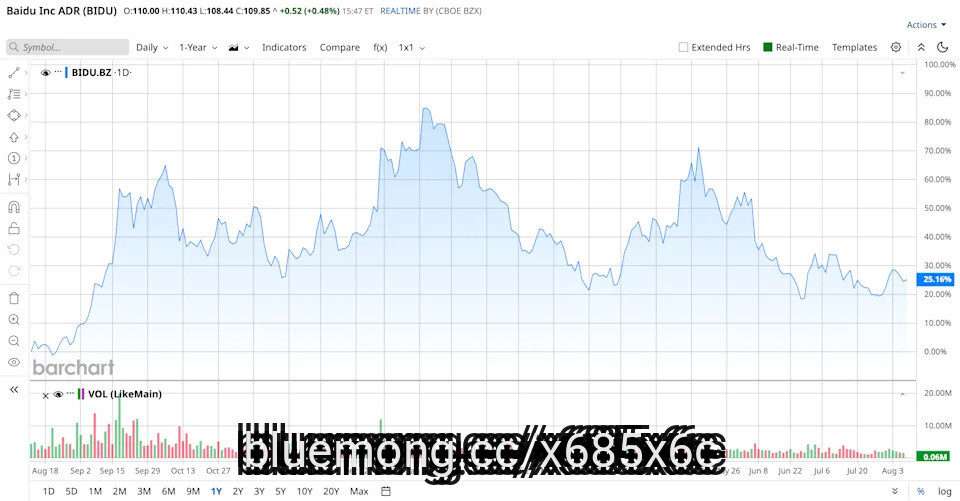
Apple (AAPL) has cleared one of the biggest obstacles to its artificial intelligence (AI) strategy. After months of regulatory delays, China's cyberspace regulator has approved Apple Intelligence for launch in the country, allowing Apple to bring its AI features to the world's largest smartphone market through a partnership with Alibaba Group Holding Limited (BABA). The Chinese version of Apple Intelligence will integrate Alibaba's Qwen large language model, while Baidu (BIDU) will also support certain localized AI capabilities to comply with China's strict AI regulations.
The approval could be far more significant than a routine product rollout. China remains one of Apple's most important markets, but intensifying competition from domestic smartphone makers offering advanced AI features has weighed on iPhone demand in recent years.
Alibaba Stock Just Got Apple's Biggest AI Endorsement. This Could Be a Game Changer for BABA.
Elon Musk Says If ******* eX Accomplishes Its Goals, 'It Will Be Worth More Than The Rest of Earth' — Though He's Also Said 'Money Will Stop Being Relevant'
AI Bubble Fears, Earnings and Other Can't Miss Items this Week



4 months ago
Concerned about an AI bubble? Sign up for The Daily Upside for smart and actionable market news, built for investors.
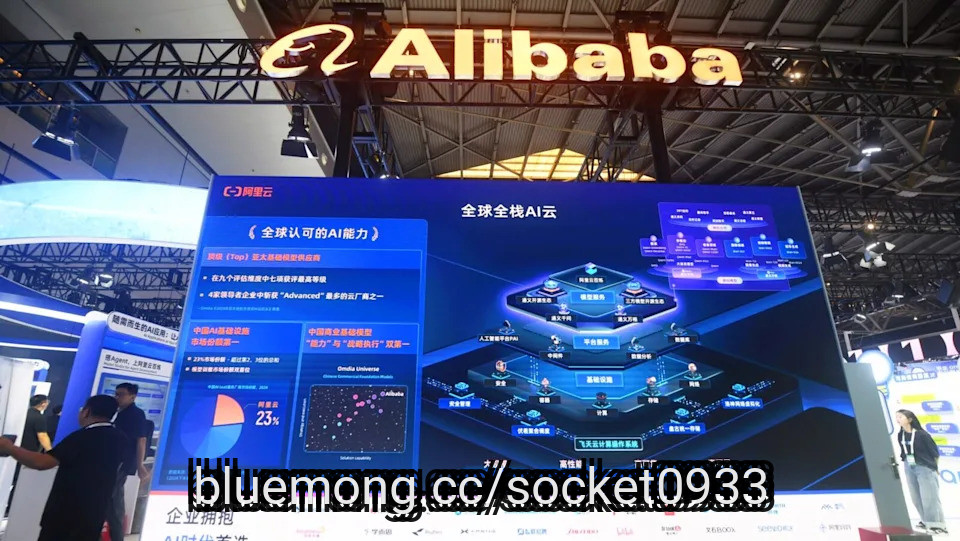
Bada bing, $BABA boom. Alibaba's shares surged last week after an earnings update that turned the heads of investors already starting to rotate toward Chinese AI.
The climb, the Hong Kong-listed stock's largest since September, created an updraft that buoyed rivals including Baidu, Tencent and JD.com. At the same time, US tech stocks had a rocky week, with the Nasdaq losing steam midweek before leveling out later. Nvidia's $1 trillion wipeout saw the stock trading about 17% off its May record before bouncing back.
Alibaba's applying a uniquely Chinese playbook in its efforts to win the world's AI-ttention.
Sign up for The Daily Upside at no cost for premium ****** ysis on all your favorite stocks.
4 months ago
Is BIDU a good stock to buy? We came across a bullish thesis on Baidu, Inc. on Baidu, Inc. on La Newsletter De Momentum's Substack by Momentum Financial. In this article, we will summarize the bulls' thesis on BIDU. Baidu, Inc.'s share was trading at $117.94 as of July 1st. BIDU's trailing and forward P/E were 78.19 and 25.91 respectively according to Yahoo Finance.
Gil C / Shutterstock.com
Baidu, Inc. provides internet content, value-added telecommunication-based, internet map, and online audio and video services in the People's Republic of China. BIDU is positioned as a leading Chinese technology company with its Apollo Go robotaxi platform emerging as the largest autonomous mobility network, placing it at the forefront of the expanding robotaxi market. While Tesla has dominated investor imagination in autonomy, Baidu has already operationalized large-scale deployments across more than 20 cities, benefiting from China's policy tailwinds, including national strategic prioritization of autonomous driving.
Read More: 15 AI Stocks That Are Quietly Making Investors Rich
Read More: Undervalued AI Stock Poised For Massive Gains: 10000% Upside Potential

4 months ago
(Corrects paragraph 7 to say Kunlunxin was founded in 2011, not 2012)
June 28 (Reuters) - Baidu's AI chip unit, Kunlunxin, is planning to go public in Hong Kong at a target valuation of $50 billion, The Information reported on Sunday, citing two sources.
Investors have been asked to buy chips with a value three to seven times the worth of their planned subscription in Kunlunxin's initial public offering shares, the report said.
Reuters could not immediately verify the report. Baidu did not immediately respond to a Reuters request for comment.
TikTok parent ByteDance was considering using Baidu's Kunlunxin chips, Reuters had reported this month, citing sources. Tencent is already a Kunlunxin chip customer, according to one of the sources.