2 months ago
Baidu announced on September 4 that its Hong Kong Class A shares are now included in both the Shanghai-Hong Kong and Shenzhen-Hong Kong Stock Connect programs, effective September 7.. The change gives eligible mainland investors direct access to the Hong Kong listing, potentially widening liquidity and the shareholder base. It does not alter the operating competition between Baidu, Inc. (NASDAQ:BIDU) and Alibaba Group Holding Limited (NYSE:BABA), which are pursuing AI through different mixes of models, cloud infrastructure, chips, and consumer distribution.
Baidu's bull case combines search traffic, its Ernie ecosystem, cloud services, and Kunlunxin chips. Stock Connect can make that story easier for mainland investors to own, while its dual-primary Hong Kong listing broadens access. The bear case is that improved trading access does not repair weak advertising, guarantee cloud share, or remove geopolitical and regulatory risk. The catalyst affects liquidity more directly than earnings.
Insider Monkey counted 49 hedge funds holding Baidu, Inc. (NASDAQ:BIDU) at June 30, down from 50 at March 31. David Tepper's Appaloosa Management disclosed 1,295,000 shares, 87% more than in Q1. That increase shows one manager's conviction, not a broad rise in fund participation.
Alibaba's June-quarter AI Cloud and Compute Services revenue reached $7.1 billion, up 45% year over year, while segment adjusted EBITA rose 133% to $830 million. Its bull case is a full stack spanning Qwen models, cloud, proprietary chips, and commerce distribution. The bear case is capital intensity, fierce domestic competition, exposure to consumer spending, and the possibility that fast AI growth remains too small to transform the larger group's valuation.
Ninety-seven hedge funds held Alibaba Group Holding Limited (NYSE:BABA) in Q2, down from 102 in Q1. Ken Fisher's Fisher **** et Management disclosed 5,096,418 shares after trimming the position by 0.5%.
#kong #holding


2 months ago
Baidu announced on September 4 that its Hong Kong Class A shares are now included in both the Shanghai-Hong Kong and Shenzhen-Hong Kong Stock Connect programs, effective September 7.. The change gives eligible mainland investors direct access to the Hong Kong listing, potentially widening liquidity and the shareholder base. It does not alter the operating competition between Baidu, Inc. (NASDAQ:BIDU) and Alibaba Group Holding Limited (NYSE:BABA), which are pursuing AI through different mixes of models, cloud infrastructure, chips, and consumer distribution.
Baidu's bull case combines search traffic, its Ernie ecosystem, cloud services, and Kunlunxin chips. Stock Connect can make that story easier for mainland investors to own, while its dual-primary Hong Kong listing broadens access. The bear case is that improved trading access does not repair weak advertising, guarantee cloud share, or remove geopolitical and regulatory risk. The catalyst affects liquidity more directly than earnings.
Insider Monkey counted 49 hedge funds holding Baidu, Inc. (NASDAQ:BIDU) at June 30, down from 50 at March 31. David Tepper's Appaloosa Management disclosed 1,295,000 shares, 87% more than in Q1. That increase shows one manager's conviction, not a broad rise in fund participation.
Alibaba's June-quarter AI Cloud and Compute Services revenue reached $7.1 billion, up 45% year over year, while segment adjusted EBITA rose 133% to $830 million. Its bull case is a full stack spanning Qwen models, cloud, proprietary chips, and commerce distribution. The bear case is capital intensity, fierce domestic competition, exposure to consumer spending, and the possibility that fast AI growth remains too small to transform the larger group's valuation.
Ninety-seven hedge funds held Alibaba Group Holding Limited (NYSE:BABA) in Q2, down from 102 in Q1. Ken Fisher's Fisher **** et Management disclosed 5,096,418 shares after trimming the position by 0.5%.
#kong #cloud


2 months ago
Reuters reported on August 14, 2026, that Apple Inc. (NASDAQ:AAPL) has trained its own large language model specifically for the China market, developed in partnership with and trained with support from Alibaba Group Holding Limited (NYSE:BABA), according to three people familiar with the matter. It is a departure from Apple's approach of relying on third-party Chinese AI models.
Apple has been losing ground in China's AI-equipped smartphone market to domestic rivals like Huawei. Hence, a China-specific model of its own would give Apple far more control than simply plugging into a partner's AI service.
That raises the real question: is this proprietary model a genuine technological leap for Apple in China, or just a more controlled version of the same dependence on local partners it already had?
A self-trained, China-tailored model would make Apple Inc. (NASDAQ:AAPL) the first foreign company approved by Beijing to offer a proprietary AI model in the country, notable given the trade and diplomatic rift between the US and China over AI. Apple Intelligence is expected to launch in China in the coming months following an iOS update, after the Cyberspace Administration of China registered Apple's generative AI service in July 2026. It cleared a regulatory process that took roughly a year and required co-developing features with both Alibaba Group Holding Limited (NYSE:BABA) and Baidu. That dual-track approach gives Apple a path through regulatory hurdles that have largely blocked other US tech firms in China. China remains critical to Apple's revenue, and the absence of AI features on Chinese iPhones has been cited as a factor pushing consumers toward domestic brands with built-in AI ***** istants.
Apple Inc. (NASDAQ:AAPL) has already reversed course once on how it plans to reach Chinese users: it published a Chinese-language guide just days earlier explaining how Mac users could connect Alibaba's Qwen to Siri and Writing Tools, then deleted that guide without explanation. Neither Apple nor Alibaba has confirmed the new self-trained model publicly, and it remains unclear what role it will play alongside the third-party Chinese models Apple already committed to using. The overall strategy has taken roughly a year and a half to reach this point since the Alibaba Group Holding Limited (NYSE:BABA) partnership was first confirmed in February 2025. It shows how contested Apple's path to a China AI launch has been.
#model #alibaba


3 months ago
Meta Platforms (NASDAQ:META) released a new open-weight AI model called Muse Glimmer on August 10, a compact system built for agentic tasks that can run on a Mac or PC with a single graphics card. CEO Mark Zuckerberg used the launch to press Washington for lighter rules on open-source AI, arguing that Chinese developers have pulled ahead. The release lands squarely inside the debate that has been rattling Meta's stock all summer: whether the company's AI ambitions are actually worth what they cost.
Muse Glimmer's design speaks to real demand. Businesses have grown uneasy about the size of their AI bills, and about a string of recent hacking incidents tied to models built by Anthropic, OpenAI and Meta itself. Open-weight systems answer both worries by running locally and staying cheap to operate. Hugging Face illustrated that shift last month, saying it deployed a Chinese-made open-weight system to fend off an attack traced to a rogue OpenAI model, since closed-source options are restricted from that kind of security work. If Meta can position Muse Glimmer as a trusted domestic alternative for that exact use case, the addressable market is not small.
None of this changes what still pays Meta's bills. Advertising brought in $114 billion in the first half of 2026, 97.7% of total sales, and Wall Street expects that business to keep compounding at a 21.6% annualized clip through 2028. Zuckerberg is also betting AI sharpens that ad targeting further, which is part of why Meta paired the Muse Glimmer release with a governance change, giving independent directors power to sign off on safety criteria before future models ship. Add in early plans to sell spare data center capacity to outside buyers, and Meta has more ways to monetize its AI buildout than the spending headlines usually suggest.
The launch does not erase the fact that Meta is behind in open-weight AI. By Zuckerberg's own account, Chinese labs including Moonshot's Kimi K3, Alibaba's Qwen3.8-Max and DeepSeek's V4-Flash already deliver performance that rivals top US systems, while Meta and its domestic peers remain boxed in by training-data rules Zuckerberg says put American developers at a disadvantage. Muse Glimmer is smaller and narrower than Meta's frontier ambitions, and Washington adds its own uncertainty: the Trump administration has said it will not subject open-weight systems to voluntary safety testing, leaving the ground rules for a technology already tied to hacking incidents unsettled.
#open


3 months ago
Alibaba Group Holding Limited (BABA) has returned to the spotlight after reports from China, first appeared on chinastarmarket.cn, suggest Tesla (TSLA) has started testing its flagship artificial intelligence (AI) model, Qwen, inside the company's infotainment system. Although neither company has verified the reports, investors embraced the conjecture, with Alibaba's shares up 9% in the last five trading sessions.
The software reportedly handles voice commands, navigation and basic vehicle functions. The reported roadmap extends well beyond voice ****** istance. Qwen could process complex voice requests, manage multiple tasks simultaneously, support end-to-end services such as ordering and payments, and power content, lifestyle, and commerce features through a cloud-based architecture.
Jeff Bezos Says He's Selling $1 Billion In Amazon Stock Every Year to Fund Blue Origin — 'It's The Most Important Work I'm Doing'
Apple's New CEO Is Bringing a Familiar Face Back From Retirement. The Shift Is Happening.
Nasdaq Futures Climb as Tech Rally Continues on Palantir Boost, U.S. JOLTS Report and ****** eX Earnings on Tap
#baba



3 months ago
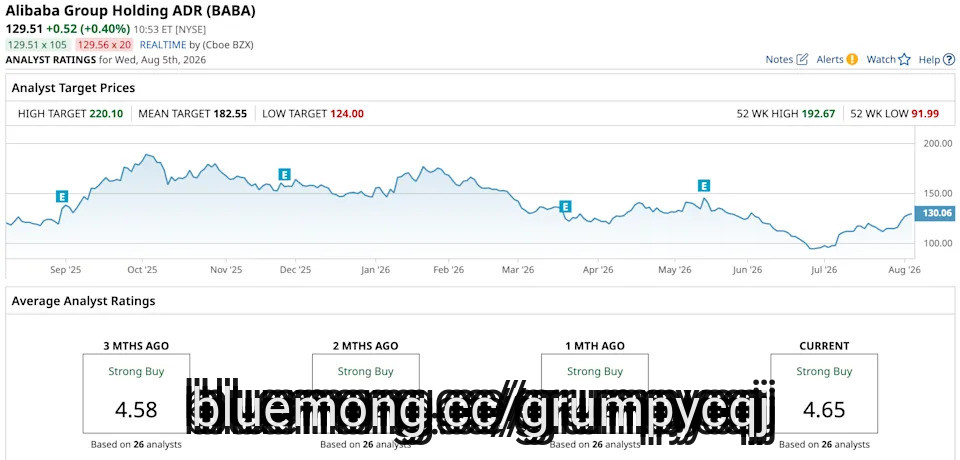
DeepSeek gave Alibaba Group Holding Limited (NYSE:BABA) and Alphabet Inc. (NASDAQ:GOOGL) a revealing price comparison on August 3. Artificial ***** ysis estimated that DeepSeek's V4-Flash averaged just $0.03 to complete each test in its benchmark suite while scoring 50 on its Intelligence Index, matching Google's Gemini 3.6 Flash.
Three cents is the average cost of completing each benchmark test, not a normal customer query, and the index combines nine coding, reasoning, and workplace tests. More capable models from Moonshot, OpenAI and Anthropic scored at least seven points higher. Still, V4-Flash costs $0.14 per million input tokens and $0.28 per million output tokens. That makes model intelligence cheap enough to pressure pricing for routine enterprise workloads.
Source: unsplash
Alibaba has two ways to monetize that pressure. Alibaba Cloud's AI Gateway already supports DeepSeek V4 APIs and can route workloads between DeepSeek and Qwen. Alibaba also unveiled its own 2.4-trillion-parameter Qwen3.8-Max on August 3, sending its Hong Kong shares up 7%. Its cloud revenue grew 38% in the March quarter, external cloud revenue rose 40%, and AI products reached 30% of external cloud sales. The catch is severe spending: group revenue rose only 3%, while Alibaba plans to exceed its earlier RMB380 billion three-year AI commitment and is treating margins as secondary.
What that creates is a demanding unit-economics test. Lower inference prices can pull customers into Alibaba Cloud, but revenue compounds only if workload volume grows faster than prices fall and those users also buy storage, networking and databases.
#flash #revenue #intelligence #index


3 months ago
Alibaba (BABA) shares gained pace this week after the Chinese tech giant confirmed a major update to its artificial intelligence push, one that ties its Qwen models directly to hundreds of millions of Apple (AAPL) devices in China. The Chinese tech giant has spent more than a year and billions of dollars building out its AI business, and this latest move shows that bet starting to pay off in a very visible way.
Over the past year, Alibaba has shifted its cloud division away from basic storage and computing services and toward artificial intelligence.
PayPal Says a $53 Billion Takeover Offer from Stripe Undervalues It. How to Play PYPL Stock Here.
Billionaire Jeff Bezos Called Amazon's Customer Service to Prove a Point But Waited in Silence for More Than 10 Minutes — 'It Was Really Long'
Micron Stock Is Near Bear-Market Territory. Here's Why ASML's Guidance Says Buy the Dip.
#Stock #Tech #artificial #baba



3 months ago
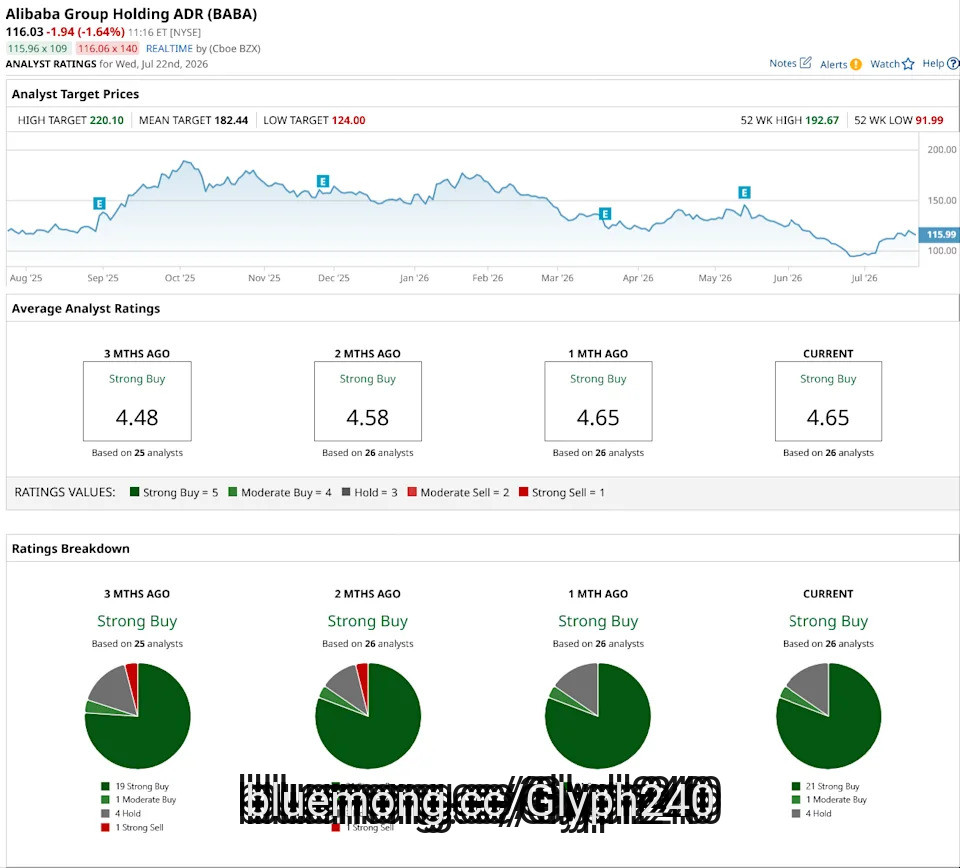
Alibaba (NYSE:BABA) has strengthened its position as one of China's most compelling artificial intelligence investment opportunities. In 2025, the company announced it would invest about $53 billion over three years to strengthen its AI and cloud infrastructure. More recently, it has indicated it plans to exceed the original investment as demand for AI computing continues to grow.
The investment drive underscores Alibaba's ambition to become China's leading AI infrastructure provider. A major catalyst arrived on July 15, when Apple secured regulatory approval to launch Apple Intelligence in China. Alibaba's Qwen large language model will power many Apple Intelligence capabilities in the country, including text generation, image understanding, and conversational AI. The partnership represents one of the strongest endorsements yet of Alibaba's AI technology.
Apple's strategic partnership is expected to enhance Alibaba's reputation as China's leading enterprise AI provider. It is also poised to position Alibaba at the center of Apple's AI rollout in one of the world's largest smartphone markets. In Mainland China, there are between 260 and 300 million active iOS devices that Alibaba can tap into with its AI Qwen Language.
The strategic partnership is also poised to accelerate the adoption of Alibaba Cloud AI services and enable it to generate additional AI-related revenue opportunities. Management expects AI products to contribute more than half of cloud revenue as commercialization expands.
Alibaba's fiscal fourth-quarter 2026 results already demonstrate the momentum in its AI business. While total revenue was up 3% in the fourth quarter of fiscal 2026, the increase was driven by accelerated performance in Cloud Intelligence Group. Cloud Intelligence revenue climbed 38%, with AI-related products accounting for 30% of external cloud revenue.
#revenue #qwen


3 months ago
Alibaba (NYSE:BABA) has strengthened its position as one of China's most compelling artificial intelligence investment opportunities. In 2025, the company announced it would invest about $53 billion over three years to strengthen its AI and cloud infrastructure. More recently, it has indicated it plans to exceed the original investment as demand for AI computing continues to grow.
The investment drive underscores Alibaba's ambition to become China's leading AI infrastructure provider. A major catalyst arrived on July 15, when Apple secured regulatory approval to launch Apple Intelligence in China. Alibaba's Qwen large language model will power many Apple Intelligence capabilities in the country, including text generation, image understanding, and conversational AI. The partnership represents one of the strongest endorsements yet of Alibaba's AI technology.
Apple's strategic partnership is expected to enhance Alibaba's reputation as China's leading enterprise AI provider. It is also poised to position Alibaba at the center of Apple's AI rollout in one of the world's largest smartphone markets. In Mainland China, there are between 260 and 300 million active iOS devices that Alibaba can tap into with its AI Qwen Language.
The strategic partnership is also poised to accelerate the adoption of Alibaba Cloud AI services and enable it to generate additional AI-related revenue opportunities. Management expects AI products to contribute more than half of cloud revenue as commercialization expands.
Alibaba's fiscal fourth-quarter 2026 results already demonstrate the momentum in its AI business. While total revenue was up 3% in the fourth quarter of fiscal 2026, the increase was driven by accelerated performance in Cloud Intelligence Group. Cloud Intelligence revenue climbed 38%, with AI-related products accounting for 30% of external cloud revenue.
#cloud

3 months ago
Alibaba (BABA) may have just received one of the strongest endorsements any artificial intelligence company could hope for. After nearly two years of regulatory delays, Apple (AAPL) has reportedly secured approval to launch Apple Intelligence in China, and Alibaba's Qwen large language model will power much of the AI experience.
For investors, this is more than another technology partnership. It positions Alibaba at the center of Apple's AI rollout in one of the world's largest smartphone markets while reinforcing the company's growing reputation in generative AI. The timing also comes as Alibaba tries to convince investors that it deserves to be valued as an AI leader rather than simply an e-commerce company.
Elon Musk Says If ******* eX Accomplishes Its Goals, 'It Will Be Worth More Than The Rest of Earth' — Though He's Also Said 'Money Will Stop Being Relevant'
AI Bubble Fears, Earnings and Other Can't Miss Items this Week
3 Numbers That Will Matter Most in IBM's Upcoming Q2 Earnings


3 months ago
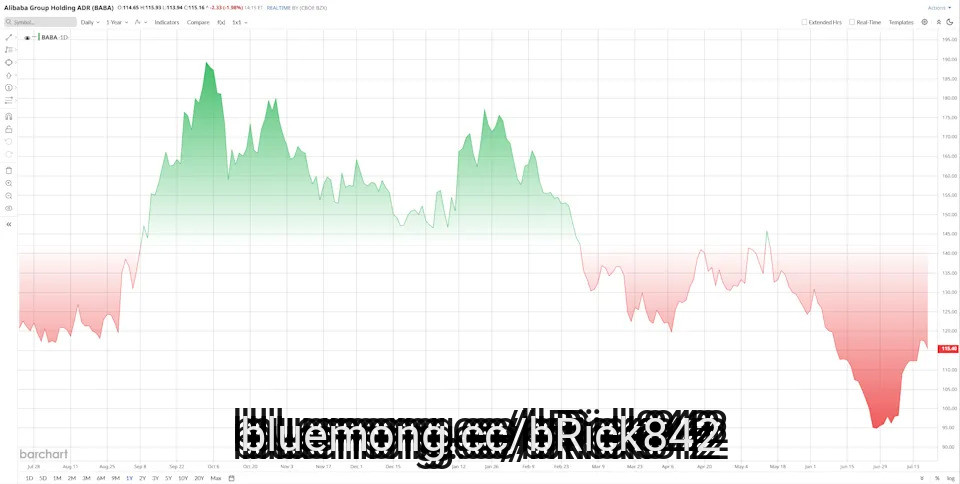
Apple (AAPL) has cleared one of the biggest obstacles to its artificial intelligence (AI) strategy. After months of regulatory delays, China's cyberspace regulator has approved Apple Intelligence for launch in the country, allowing Apple to bring its AI features to the world's largest smartphone market through a partnership with Alibaba Group Holding Limited (BABA). The Chinese version of Apple Intelligence will integrate Alibaba's Qwen large language model, while Baidu (BIDU) will also support certain localized AI capabilities to comply with China's strict AI regulations.
The approval could be far more significant than a routine product rollout. China remains one of Apple's most important markets, but intensifying competition from domestic smartphone makers offering advanced AI features has weighed on iPhone demand in recent years.
Alibaba Stock Just Got Apple's Biggest AI Endorsement. This Could Be a Game Changer for BABA.
Elon Musk Says If ******* eX Accomplishes Its Goals, 'It Will Be Worth More Than The Rest of Earth' — Though He's Also Said 'Money Will Stop Being Relevant'
AI Bubble Fears, Earnings and Other Can't Miss Items this Week



4 months ago
Anthropic is accusing Chinese tech giant Alibaba Group (BABA) waging a "large-scale effort to 'illicitly' access its Claude artificial intelligence model," according to a Bloomberg report. U.S.-listed Alibaba stock fell late Wednesday following the report and extended those losses into Thursday trades. A campaign by operators with links to Alibaba's Qwen AI lab targeted Claude's top capabilities, including software engineering…


4 months ago
The artificial intelligence (AI) race is rapidly expanding beyond chatbots and digital ***** istants into the physical world, where AI-powered robots could transform industries ranging from manufacturing and logistics to healthcare and consumer services. Against this backdrop, Chinese technology giant Alibaba Group Holding Limited (BABA) has taken another major step in its AI ambitions, unveiling a new suite of AI models designed specifically for robots.
Alibaba Group has launched the Qwen Robot Suite, a new set of AI models designed to help robots understand their surroundings, navigate complex environments, and perform real-world tasks using natural language instructions. Developed by Alibaba's Tongyi Lab, the suite includes models for robotic manipulation, navigation, and embodied AI applications. The company said the technology is already being tested with select Alibaba Cloud robotics customers, highlighting its push into the fast-growing Physical AI market amid intensifying competition.
Dear Microsoft Stock Fans, Mark Your Calendars for June 30
Dear Walmart Stock Fans, Mark Your Calendars for June 22
Nothing Seems to Be Going Right for Meta Platforms. How to Play META Stock Here.