3 days ago
Dividend-paying stocks are taking a beating as surging Treasury yields make bonds a more competitive income source, creating a difficult environment for baby boomers who lean on dividend funds and individual stocks to cover living expenses in retirement.
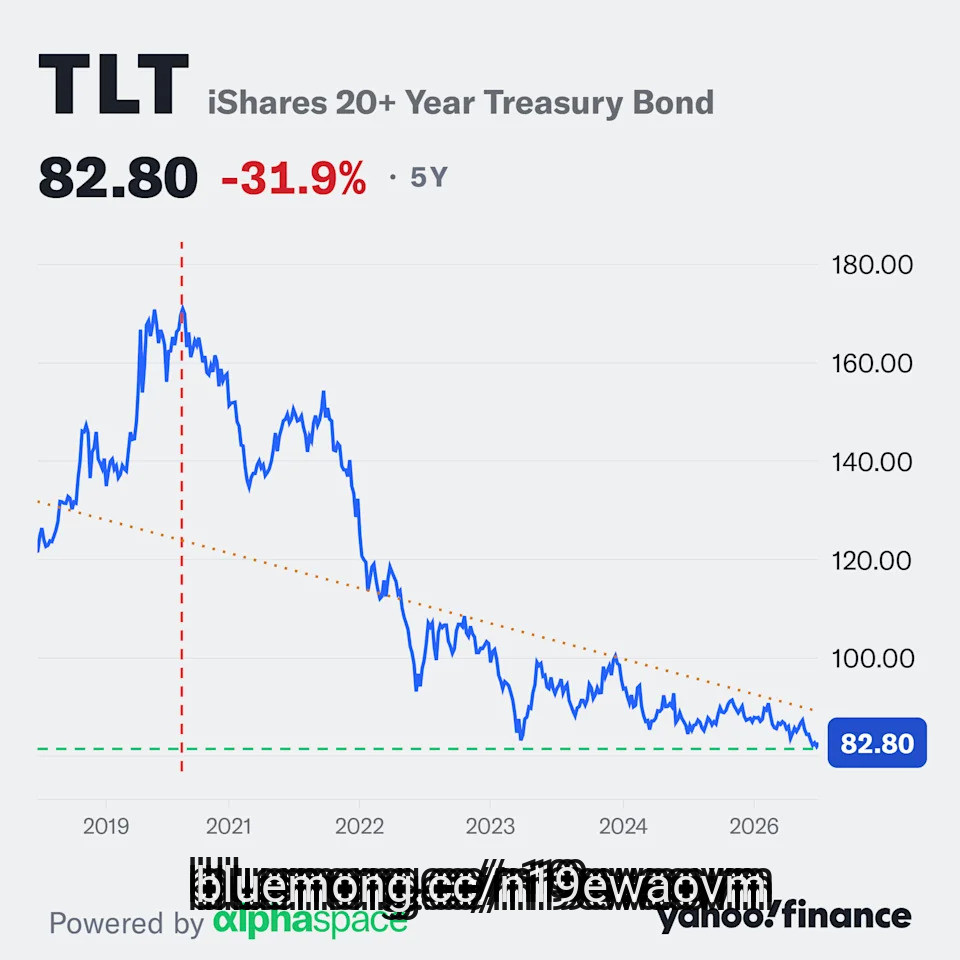
Utilities, real estate, and materials have all experienced share-price declines as climbing bond yields have drawn income-seeking investors away from dividend stocks. The 10-year Treasury yield has remained north of 5%, recently hovering between 5.2% and 5.3%, while the 20-year has hit 5.68% and the 30-year has reached 5.62% — marks last seen more than two decades ago, according to Benzinga.
The pain shows up clearly in fund performance. The Invesco S&P 500 High Dividend Low Volatility ETF (SPHD) lost 7.59% over the trailing month, and the iShares Select Dividend ETF (DVY) shed 6.02% in the same window, according to CNBC. The Vanguard High Dividend Yield Index ETF (VYM) gave back 3.85% over the past month. The WisdomTree U.S. Quality Dividend Growth Fund (DGRW) stands apart, with its heavy tilt toward technology helping limit its one-month loss to just 0.81%.
The Federal Reserve raised its overnight rate by a quarter percentage point on Sept. 16, and markets are pricing in additional increases, keeping pressure on rate-sensitive dividend sectors. The 10-year yield touched 5.342% and the 30-year reached 5.683%, their highest marks in 24 years, driven in part by rising public debt, geopolitical tensions, and the prospect of a prolonged high-rate environment.
Despite the pressure, financial advisors caution retirees against making reactive moves. "The worst thing that a retiree could do is sell a high-quality dividend payer at depressed prices to chase income somewhere else in the stock market just to get higher yield," Timothy Chubb, chief investment officer at Girard, a Univest Wealth Division, told CNBC. Chubb said he would rather own a company growing 4% to 5% annually with a 3% dividend yield than pursue an 8% yield from a deteriorating business.
#Dividend #yield #month #treasury
Utilities, real estate, and materials have all experienced share-price declines as climbing bond yields have drawn income-seeking investors away from dividend stocks. The 10-year Treasury yield has remained north of 5%, recently hovering between 5.2% and 5.3%, while the 20-year has hit 5.68% and the 30-year has reached 5.62% — marks last seen more than two decades ago, according to Benzinga.
The pain shows up clearly in fund performance. The Invesco S&P 500 High Dividend Low Volatility ETF (SPHD) lost 7.59% over the trailing month, and the iShares Select Dividend ETF (DVY) shed 6.02% in the same window, according to CNBC. The Vanguard High Dividend Yield Index ETF (VYM) gave back 3.85% over the past month. The WisdomTree U.S. Quality Dividend Growth Fund (DGRW) stands apart, with its heavy tilt toward technology helping limit its one-month loss to just 0.81%.
The Federal Reserve raised its overnight rate by a quarter percentage point on Sept. 16, and markets are pricing in additional increases, keeping pressure on rate-sensitive dividend sectors. The 10-year yield touched 5.342% and the 30-year reached 5.683%, their highest marks in 24 years, driven in part by rising public debt, geopolitical tensions, and the prospect of a prolonged high-rate environment.
Despite the pressure, financial advisors caution retirees against making reactive moves. "The worst thing that a retiree could do is sell a high-quality dividend payer at depressed prices to chase income somewhere else in the stock market just to get higher yield," Timothy Chubb, chief investment officer at Girard, a Univest Wealth Division, told CNBC. Chubb said he would rather own a company growing 4% to 5% annually with a 3% dividend yield than pursue an 8% yield from a deteriorating business.
#Dividend #yield #month #treasury

20 days ago
Most crypto wallets have functioned as a home for buying and selling speculative tokens. Caroline D. Pham, CEO of MoonPay Institutional and former acting chairman of the Commodity Futures Trading Commission (CFTC), thinks they are about to do something far more important for most investors.
"I do think that wallets are going to become the future, where you're going to have almost everything in your wallet," Pham said. "It's going to be your checking account, your savings account, your stablecoin wallet, your tokenized fund wallet. It's going to be your brokerage account."
Related: Duolingo beats Netflix by 80 spots in new power ranking
The first step came Sept. 17, when WisdomTree and MoonPay announced a collaboration to expand U.S. access to WTGXX, the WisdomTree Treasury Money Market Digital Fund, which holds short-term Treasuries.
WisdomTree said it is building an access point for its tokenized funds on MoonPay's technology, which reaches more than 35 million users. MoonPay also plans to use the fund in its stablecoin reserves.
#wisdomtree
"I do think that wallets are going to become the future, where you're going to have almost everything in your wallet," Pham said. "It's going to be your checking account, your savings account, your stablecoin wallet, your tokenized fund wallet. It's going to be your brokerage account."
Related: Duolingo beats Netflix by 80 spots in new power ranking
The first step came Sept. 17, when WisdomTree and MoonPay announced a collaboration to expand U.S. access to WTGXX, the WisdomTree Treasury Money Market Digital Fund, which holds short-term Treasuries.
WisdomTree said it is building an access point for its tokenized funds on MoonPay's technology, which reaches more than 35 million users. MoonPay also plans to use the fund in its stablecoin reserves.
#wisdomtree


1 month ago
JEPQ, DGRW, and JAAA together can convert a $250,000 life insurance lump sum into monthly deposits that replicate a working spouse's paycheck.
A $100,000 JEPQ allocation buys roughly 1,695 shares at $59, generating $8.46 annualized per share in monthly income with 18% yearly price gains.
JAAA's AAA-rated CLO holdings pay $2.70 per share annually with near-zero volatility, acting as the stable floor when equity markets drop.
Read More: Avoid these 13 retirement mistakes before they derail your future (sponsor)
Six weeks ago, the insurance company wired $250,000 into your checking account, and there it sits, earning almost nothing while you try to remember what day it is. That is fine. Life insurance death benefits are generally income-tax-free to the beneficiary, and no rule says grieving people have to make portfolio decisions on a schedule. When you are ready, though, three funds can turn that lump sum into a monthly deposit that behaves a lot like the paycheck your spouse used to bring home: JPMorgan Nasdaq Equity Premium Income ETF (NASDAQ:JEPQ), WisdomTree U.S. Quality Dividend Growth Fund (NASDAQ:DGRW), and Janus Henderson AAA CLO ETF (NYSEARCA:JAAA).
#life
A $100,000 JEPQ allocation buys roughly 1,695 shares at $59, generating $8.46 annualized per share in monthly income with 18% yearly price gains.
JAAA's AAA-rated CLO holdings pay $2.70 per share annually with near-zero volatility, acting as the stable floor when equity markets drop.
Read More: Avoid these 13 retirement mistakes before they derail your future (sponsor)
Six weeks ago, the insurance company wired $250,000 into your checking account, and there it sits, earning almost nothing while you try to remember what day it is. That is fine. Life insurance death benefits are generally income-tax-free to the beneficiary, and no rule says grieving people have to make portfolio decisions on a schedule. When you are ready, though, three funds can turn that lump sum into a monthly deposit that behaves a lot like the paycheck your spouse used to bring home: JPMorgan Nasdaq Equity Premium Income ETF (NASDAQ:JEPQ), WisdomTree U.S. Quality Dividend Growth Fund (NASDAQ:DGRW), and Janus Henderson AAA CLO ETF (NYSEARCA:JAAA).
#life


1 month ago
Large-cap value is beating the broader market in 2026, but VTV, COWZ, and DHS capture the rotation differently. VTV offers broad traditional value exposure, COWZ targets companies with high free-cash-flow yields, and DHS emphasizes high-dividend stocks.
COWZ offers the strongest quality-oriented value tilt. Its free-cash-flow methodology has helped it outperform while avoiding some weaknesses of traditional valuation screens, although investors pay a higher 0.49% expense ratio.
VTV and DHS fill clearer portfolio roles. VTV is the ultra-low-cost core option at 0.03%, while DHS offers the highest income focus with monthly distributions and a yield around 3%.
Read More: Learn 7 secret wealth tips high net worth investors use that most investors miss (sponsor)
Large-cap value has quietly outrun the broader market in 2026, and three exchange-traded funds capture that shift while paying meaningful dividends: the Vanguard Value ETF (NYSEARCA:VTV), the Pacer US Cash Cows 100 ETF (CBOE:COWZ), and the WisdomTree U.S. High Dividend Fund (NYSEARCA:DHS). Each is beating the S&P 500 year to date, but each defines "value" differently, which matters more than the shared headline.
#cowz #investors
COWZ offers the strongest quality-oriented value tilt. Its free-cash-flow methodology has helped it outperform while avoiding some weaknesses of traditional valuation screens, although investors pay a higher 0.49% expense ratio.
VTV and DHS fill clearer portfolio roles. VTV is the ultra-low-cost core option at 0.03%, while DHS offers the highest income focus with monthly distributions and a yield around 3%.
Read More: Learn 7 secret wealth tips high net worth investors use that most investors miss (sponsor)
Large-cap value has quietly outrun the broader market in 2026, and three exchange-traded funds capture that shift while paying meaningful dividends: the Vanguard Value ETF (NYSEARCA:VTV), the Pacer US Cash Cows 100 ETF (CBOE:COWZ), and the WisdomTree U.S. High Dividend Fund (NYSEARCA:DHS). Each is beating the S&P 500 year to date, but each defines "value" differently, which matters more than the shared headline.
#cowz #investors


1 month ago
DHS pays monthly at a 3.3% yield and owns high-dividend stocks SCHD's strict 10-year consecutive payment requirement screens out.
SCHD charges just 0.06% versus DHS's 0.38%, costing investors an extra $320 annually per $100,000. This expense gap is reflected in its $111 billion size advantage.
Don't wait: the ******* yst who called NVIDIA in 2010 just revealed his top 10 AI stocks. See the full list FREE now.
The Schwab U.S. Dividend Equity ETF (NYSEARCA:SCHD) has become the default answer for dividend investors. More than $110 billion now sits in the fund, and the combination of dividend growth, quality screens, and 0.06% expense ratio makes its popularity easy to understand. But SCHD is not the only way to build a portfolio around American dividend stocks.
The WisdomTree U.S. High Dividend Fund (NYSEARCA:DHS) takes a noticeably different approach, pays its distributions every month, and owns several high-yielding stocks that SCHD's methodology can leave behind. The surprising part is how little money has noticed. DHS holds only about $1.6 billion in ******* ets despite launching all the way back in 2006.
#Dividend #billion #pays #screens
SCHD charges just 0.06% versus DHS's 0.38%, costing investors an extra $320 annually per $100,000. This expense gap is reflected in its $111 billion size advantage.
Don't wait: the ******* yst who called NVIDIA in 2010 just revealed his top 10 AI stocks. See the full list FREE now.
The Schwab U.S. Dividend Equity ETF (NYSEARCA:SCHD) has become the default answer for dividend investors. More than $110 billion now sits in the fund, and the combination of dividend growth, quality screens, and 0.06% expense ratio makes its popularity easy to understand. But SCHD is not the only way to build a portfolio around American dividend stocks.
The WisdomTree U.S. High Dividend Fund (NYSEARCA:DHS) takes a noticeably different approach, pays its distributions every month, and owns several high-yielding stocks that SCHD's methodology can leave behind. The surprising part is how little money has noticed. DHS holds only about $1.6 billion in ******* ets despite launching all the way back in 2006.
#Dividend #billion #pays #screens

2 months ago
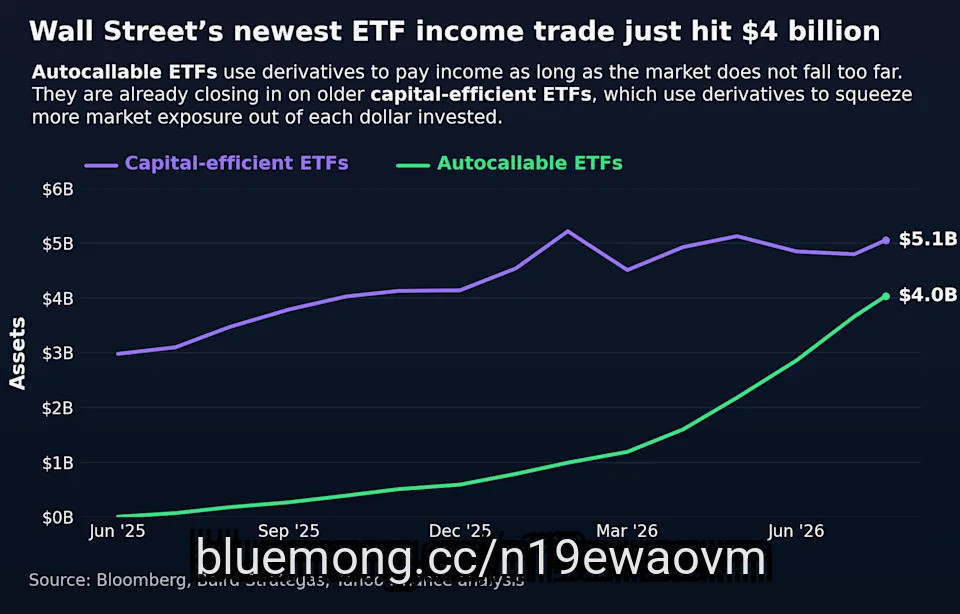
ETFs used to track markets. Now they're engineering outcomes.
That can mean stacking more exposure into each dollar, turning market moves into income, cushioning losses, or magnifying a bet.
Take the WisdomTree US Efficient Core Fund (NTSX). It allocates roughly 90% of its ******* ets to US stocks, using Treasury futures to add another 60% of bond exposure.
In effect, every $100 invested provides about $150 of market exposure — $90 in stocks and $60 in Treasurys.
The trick is that futures don't require the fund to put up the full value of the bonds. A smaller amount can serve as collateral, leaving most of the money available for stocks.
#stocks #market #futures #wisdomtree
That can mean stacking more exposure into each dollar, turning market moves into income, cushioning losses, or magnifying a bet.
Take the WisdomTree US Efficient Core Fund (NTSX). It allocates roughly 90% of its ******* ets to US stocks, using Treasury futures to add another 60% of bond exposure.
In effect, every $100 invested provides about $150 of market exposure — $90 in stocks and $60 in Treasurys.
The trick is that futures don't require the fund to put up the full value of the bonds. A smaller amount can serve as collateral, leaving most of the money available for stocks.
#stocks #market #futures #wisdomtree

2 months ago
DON pays monthly dividends sourced entirely from real mid-cap holdings, delivering a 2.26% yield that works out to roughly $2,260 annually on a $100,000 stake.
With financials at 24% and technology at just 5%, DON offers meaningful diversification away from mega-cap-heavy large-cap portfolios.
Don't wait: the ***** yst who called NVIDIA in 2010 just revealed his top 10 AI stocks. See the full list FREE now.
Most dividend portfolios start in the same place. Investors buy large-cap funds stuffed with familiar names, collect quarterly checks, and rarely look further down the market-cap ladder. The WisdomTree U.S. MidCap Dividend Fund (NYSEARCA:DON) takes the opposite approach. It targets dividend-paying companies outside the market's largest names, pays distributions monthly, and currently offers a 2.26% trailing-twelve-month yield. On a $100,000 investment, that works out to roughly $2,260 per year.
That yield alone is not enough to make DON a high-income ETF. Plenty of covered-call and high-dividend funds pay considerably more. The appeal is different. DON gives income investors access to a part of the market that tends to receive far less attention than the mega-cap stocks dominating the S&P 500, while still providing a diversified dividend stream and room for capital appreciation.
#yield #offers #large
With financials at 24% and technology at just 5%, DON offers meaningful diversification away from mega-cap-heavy large-cap portfolios.
Don't wait: the ***** yst who called NVIDIA in 2010 just revealed his top 10 AI stocks. See the full list FREE now.
Most dividend portfolios start in the same place. Investors buy large-cap funds stuffed with familiar names, collect quarterly checks, and rarely look further down the market-cap ladder. The WisdomTree U.S. MidCap Dividend Fund (NYSEARCA:DON) takes the opposite approach. It targets dividend-paying companies outside the market's largest names, pays distributions monthly, and currently offers a 2.26% trailing-twelve-month yield. On a $100,000 investment, that works out to roughly $2,260 per year.
That yield alone is not enough to make DON a high-income ETF. Plenty of covered-call and high-dividend funds pay considerably more. The appeal is different. DON gives income investors access to a part of the market that tends to receive far less attention than the mega-cap stocks dominating the S&P 500, while still providing a diversified dividend stream and room for capital appreciation.
#yield #offers #large

2 months ago
VIG and TDV delivered 21% and 27% one-year total returns while raising annual distributions, pairing consistent income growth with strong capital appreciation.
DGRW pays monthly rather than quarterly and screens for forward-looking quality metrics, making it the strongest fit for retirees who need smoother, steadier cash flow.
Don't wait: the ******* yst who called NVIDIA in 2010 just revealed his top 10 AI stocks. See the full list FREE now.
Dividend growth investing rewards patience with a real income raise year after year, but not every fund in the category delivers that promise the same way. Three ETFs stand out for pairing rising distributions with capital appreciation: the Vanguard Dividend Appreciation ETF (NYSEARCA:VIG), the WisdomTree U.S. Quality Dividend Growth Fund (NASDAQ:DGRW), and the ProShares S&P Technology Dividend Aristocrats ETF (TDV).
Each takes a different route to the same destination. VIG uses a strict multi-year track record filter, DGRW screens for forward-looking quality and pays monthly, and TDV concentrates the strategy inside the one sector most income investors avoid. All three have raised annual distributions recently while producing double-digit total returns over the past year.
#dgrw #appreciation
DGRW pays monthly rather than quarterly and screens for forward-looking quality metrics, making it the strongest fit for retirees who need smoother, steadier cash flow.
Don't wait: the ******* yst who called NVIDIA in 2010 just revealed his top 10 AI stocks. See the full list FREE now.
Dividend growth investing rewards patience with a real income raise year after year, but not every fund in the category delivers that promise the same way. Three ETFs stand out for pairing rising distributions with capital appreciation: the Vanguard Dividend Appreciation ETF (NYSEARCA:VIG), the WisdomTree U.S. Quality Dividend Growth Fund (NASDAQ:DGRW), and the ProShares S&P Technology Dividend Aristocrats ETF (TDV).
Each takes a different route to the same destination. VIG uses a strict multi-year track record filter, DGRW screens for forward-looking quality and pays monthly, and TDV concentrates the strategy inside the one sector most income investors avoid. All three have raised annual distributions recently while producing double-digit total returns over the past year.
#dgrw #appreciation


2 months ago
The WisdomTree Quantum Computing Fund (WQTM), which debuted less than a year ago, is not the first quantum computing ETF. However, it is my favorite when I need a snapshot of where quantum computing stocks are headed.
Perhaps unsurprisingly, WQTM is AI-driven and has been to the moon and back in just the past few months.
Billionaire Jensen Huang Says That When America Goes to War He Would Rather Not Be Asked About His Own Technology: 'I Would Really Appreciate Not Getting a Phone Call…'
SanDisk Just Unveiled the First High-Bandwidth Flash Standard. What That Means for SNDK Stock.
As the Market Crashed in 1987, Paul Tudor Jones Made $100 Million in a Single Day: 'The Most Important Rule of Trading Is to Play Great Defense, Not Great Offense'
#fund #however
Perhaps unsurprisingly, WQTM is AI-driven and has been to the moon and back in just the past few months.
Billionaire Jensen Huang Says That When America Goes to War He Would Rather Not Be Asked About His Own Technology: 'I Would Really Appreciate Not Getting a Phone Call…'
SanDisk Just Unveiled the First High-Bandwidth Flash Standard. What That Means for SNDK Stock.
As the Market Crashed in 1987, Paul Tudor Jones Made $100 Million in a Single Day: 'The Most Important Rule of Trading Is to Play Great Defense, Not Great Offense'
#fund #however



3 months ago
This article was originally published on ETFTrends.com.
To the dismay of advisors and fixed income investors, the words "clear" and "overt" seem to have left the Federal Reserve's lexicon. However, there are avenues for investors looking for the combination of elevated income and reduced rate risk.
The WisdomTree Interest Rate Hedged High Yield Bond Fund (HYZD) is one of the ETF's that accomplishes those objectives. The $260.2 million HYZD, tracks the WisdomTree U.S. High Yield Corporate Bond, Zero Duration Index. It could be a valuable tool as new Fed Chairman Kevin Warsh scrutinizes the central bank's data inputs, balance sheet, and commentary on rates.
"In terms of forward guidance, investors have already witnessed the Chairman's plans where the goal is to essentially remove this form of communication to the markets," observed WisdomTree. "Some clear-cut examples were the scaled back, just the facts, Greenspan-esque, June FOMC policy statement as well as Warsh's non-participation in the dot plot. The balance sheet question will take longer to resolve, but the examination of the data the Fed uses to set policy deserves some attention."
HYZD turns 13 years old in December. It carries a 30-day SEC yield of 6% and an effective duration of 0.30 years. For many investors, that high yield and low duration would be enough. No further examination required. However, it is worth digging deeper into HYZD.
#duration #income
To the dismay of advisors and fixed income investors, the words "clear" and "overt" seem to have left the Federal Reserve's lexicon. However, there are avenues for investors looking for the combination of elevated income and reduced rate risk.
The WisdomTree Interest Rate Hedged High Yield Bond Fund (HYZD) is one of the ETF's that accomplishes those objectives. The $260.2 million HYZD, tracks the WisdomTree U.S. High Yield Corporate Bond, Zero Duration Index. It could be a valuable tool as new Fed Chairman Kevin Warsh scrutinizes the central bank's data inputs, balance sheet, and commentary on rates.
"In terms of forward guidance, investors have already witnessed the Chairman's plans where the goal is to essentially remove this form of communication to the markets," observed WisdomTree. "Some clear-cut examples were the scaled back, just the facts, Greenspan-esque, June FOMC policy statement as well as Warsh's non-participation in the dot plot. The balance sheet question will take longer to resolve, but the examination of the data the Fed uses to set policy deserves some attention."
HYZD turns 13 years old in December. It carries a 30-day SEC yield of 6% and an effective duration of 0.30 years. For many investors, that high yield and low duration would be enough. No further examination required. However, it is worth digging deeper into HYZD.
#duration #income


3 months ago
This article was originally published on ETFTrends.com.
According to Bankrate's Mortgage Rates, the national average for a 30-year fixed mortgage is 6.61%. That's uncomfortably high and a major headwind to many prospective homebuyers, particularly those in the first-time category. But it's not all bad news in the mortgage market. Confirming opportunity abounds for fixed income investors with ETFs such as the WisdomTree Mortgage Plus Bond Fund (MTGP), some experts view mortgage-backed securities (MBS) as one of the more fundamentally sturdy corners of the bond market.
The actively managed MTGP, which turns seven years old in November, sports a 30-day SEC yield of 4.31%. That's impressive when considering the scant credit risk typically ***** ociated with MBS. The case for the WisdomTree ETF is fortified by a robust fundamental outlook.
"Agency mortgage-backed securities fundamentals remain supported by a combination of elevated mortgage rates, limited refinancing incentives, constrained housing turnover, and low net supply," noted BNP Paribas.
As noted above, high mortgage rates are drags on residential real estate activity. Those rates are barriers to entry for many buyers, which morphs into a problem for sellers. However, that situation can be a boon for MBS.
#market
According to Bankrate's Mortgage Rates, the national average for a 30-year fixed mortgage is 6.61%. That's uncomfortably high and a major headwind to many prospective homebuyers, particularly those in the first-time category. But it's not all bad news in the mortgage market. Confirming opportunity abounds for fixed income investors with ETFs such as the WisdomTree Mortgage Plus Bond Fund (MTGP), some experts view mortgage-backed securities (MBS) as one of the more fundamentally sturdy corners of the bond market.
The actively managed MTGP, which turns seven years old in November, sports a 30-day SEC yield of 4.31%. That's impressive when considering the scant credit risk typically ***** ociated with MBS. The case for the WisdomTree ETF is fortified by a robust fundamental outlook.
"Agency mortgage-backed securities fundamentals remain supported by a combination of elevated mortgage rates, limited refinancing incentives, constrained housing turnover, and low net supply," noted BNP Paribas.
As noted above, high mortgage rates are drags on residential real estate activity. Those rates are barriers to entry for many buyers, which morphs into a problem for sellers. However, that situation can be a boon for MBS.
#market


3 months ago
This article was originally published on ETFTrends.com.
Gold prices posted impressive weekly gains last week, fostering hope for better things for the commodity in the second half of 2026, following a trying first half of the year. Of course, a more substantive rally will benefit ETFs such as the WisdomTree Efficient Gold Plus Equity Strategy Fund (GDE). The actively managed ETF combines exposure to gold futures and large-cap domestic stocks. As some experts point out, bullion could be primed for a bounce, potentially benefiting GDE along the way, because markets may have mispriced the extent to which the Federal Reserve can be hawkish this year.
A prime example of that mispricing may well be the June jobs report, out last week. It wasn't terrible, but it wasn't as strong as expected, indicating that the Fed may do well to consider lowering borrowing costs. At a minimum, a slow jobs market makes it difficult for the central bank to consider tightening, which would pinch gold prices.
When interest rates are high, gold suffers because bonds look more attractive by comparison. Perhaps to the delight of GDE investors, that situation could change for the better in the second half.
"I think markets have fundamentally mispriced the Fed's next move," said deVere Group CEO Nigel Green. "The consensus view has become dangerously one-dimensional. "Investors have spent months pricing for a world of persistently high rates, a strong dollar and continued economic resilience. The risk now is that this entire framework begins to unravel."
Gold prices posted impressive weekly gains last week, fostering hope for better things for the commodity in the second half of 2026, following a trying first half of the year. Of course, a more substantive rally will benefit ETFs such as the WisdomTree Efficient Gold Plus Equity Strategy Fund (GDE). The actively managed ETF combines exposure to gold futures and large-cap domestic stocks. As some experts point out, bullion could be primed for a bounce, potentially benefiting GDE along the way, because markets may have mispriced the extent to which the Federal Reserve can be hawkish this year.
A prime example of that mispricing may well be the June jobs report, out last week. It wasn't terrible, but it wasn't as strong as expected, indicating that the Fed may do well to consider lowering borrowing costs. At a minimum, a slow jobs market makes it difficult for the central bank to consider tightening, which would pinch gold prices.
When interest rates are high, gold suffers because bonds look more attractive by comparison. Perhaps to the delight of GDE investors, that situation could change for the better in the second half.
"I think markets have fundamentally mispriced the Fed's next move," said deVere Group CEO Nigel Green. "The consensus view has become dangerously one-dimensional. "Investors have spent months pricing for a world of persistently high rates, a strong dollar and continued economic resilience. The risk now is that this entire framework begins to unravel."

3 months ago
This article was originally published on ETFTrends.com.
One of the persistent themes in the first half of 2026 has been international exposure. With potentially overstretched valuations in U.S mega-cap names and higher-for-longer inflation devaluing the U.S. dollar, more investors have been looking overseas for a greater opportunity set. At a recent TMX VettaFi Midyear Market Outlook Symposium, Cinthia Murphy, Director of Research at VettaFi, sat down with Jeremy Schwartz, Global Chief Investment Officer at WisdomTree.
The firm was recently named ETF Provider of the Year by InvestmentNews, marking 20 years since the firm launched its first cohort of ETFs. Heading into the second half of 2026, international exposure was one of the investing themes discussed.
Japan is a high-conviction tactical play as global tech conglomerates build out its semiconductor supply chain to diversify away from Taiwan.
The WisdomTree ***** an Hedged Equity Fund (DXJ) avoids currency drag by stripping out yen exposure, while the WisdomTree ***** an Opportunities Fund (OPPJ) offers broad sector exposure across tech, industrials, and financials.
One of the persistent themes in the first half of 2026 has been international exposure. With potentially overstretched valuations in U.S mega-cap names and higher-for-longer inflation devaluing the U.S. dollar, more investors have been looking overseas for a greater opportunity set. At a recent TMX VettaFi Midyear Market Outlook Symposium, Cinthia Murphy, Director of Research at VettaFi, sat down with Jeremy Schwartz, Global Chief Investment Officer at WisdomTree.
The firm was recently named ETF Provider of the Year by InvestmentNews, marking 20 years since the firm launched its first cohort of ETFs. Heading into the second half of 2026, international exposure was one of the investing themes discussed.
Japan is a high-conviction tactical play as global tech conglomerates build out its semiconductor supply chain to diversify away from Taiwan.
The WisdomTree ***** an Hedged Equity Fund (DXJ) avoids currency drag by stripping out yen exposure, while the WisdomTree ***** an Opportunities Fund (OPPJ) offers broad sector exposure across tech, industrials, and financials.


4 months ago
This article was originally published on ETFTrends.com.
In broad terms, developing world stocks are delivering the goods for investors this year, with the widely followed MSCI Emerging Markets Index up 26%. Count India stocks among the emerging markets laggards, because the MSCI India Index is off 8.52%.
To be sure, that's a discouraging showing by stocks in one of Asia's largest economies, but the slump may also be a harbinger of opportunity with ETFs such as the WisdomTree India Earnings Fund (EPI) and the WisdomTree India Hedged Equity Fund (INDH). To their credit, EPI and INDH are outperforming the MSCI India Index year-to-date.
Tactical investors may want to evaluate the WisdomTree ETFs over the near-term. Despite the struggles of India stocks this year, experts view the country's macroeconomic data as largely encouraging, signaling a growth trajectory that could support upside for risk ****** ets in the country.
Catalysts that could facilitate rebounds by EPI and INDH include strength in India's banking system. Chetan Ahya, Morgan Stanley's Chief Asia Economist, recently mentioned solid credit growth in the banking system there.
In broad terms, developing world stocks are delivering the goods for investors this year, with the widely followed MSCI Emerging Markets Index up 26%. Count India stocks among the emerging markets laggards, because the MSCI India Index is off 8.52%.
To be sure, that's a discouraging showing by stocks in one of Asia's largest economies, but the slump may also be a harbinger of opportunity with ETFs such as the WisdomTree India Earnings Fund (EPI) and the WisdomTree India Hedged Equity Fund (INDH). To their credit, EPI and INDH are outperforming the MSCI India Index year-to-date.
Tactical investors may want to evaluate the WisdomTree ETFs over the near-term. Despite the struggles of India stocks this year, experts view the country's macroeconomic data as largely encouraging, signaling a growth trajectory that could support upside for risk ****** ets in the country.
Catalysts that could facilitate rebounds by EPI and INDH include strength in India's banking system. Chetan Ahya, Morgan Stanley's Chief Asia Economist, recently mentioned solid credit growth in the banking system there.


7 months ago
Bitcoin 'Not Digital Gold,' Says WisdomTree CEO, Sees Crypto Winter Opportunity
Key Takeaways
WisdomTree CEO Jonathan Steinberg rejected the “digital gold” narrative.
Steinberg said the current market downturn offers investors a chance to enter Bitcoin.
Institutional flows signal growing confidence.
WisdomTree CEO Jonathan Steinberg said on Tuesday that Bitcoin should not be viewed as “digital gold,” adding that a recent downturn in crypto markets could present buying opportunities for investors, as the ****** et class continues to mature.
https://finance.yahoo.com/...
Key Takeaways
WisdomTree CEO Jonathan Steinberg rejected the “digital gold” narrative.
Steinberg said the current market downturn offers investors a chance to enter Bitcoin.
Institutional flows signal growing confidence.
WisdomTree CEO Jonathan Steinberg said on Tuesday that Bitcoin should not be viewed as “digital gold,” adding that a recent downturn in crypto markets could present buying opportunities for investors, as the ****** et class continues to mature.
https://finance.yahoo.com/...