
24 days ago
In the longer format, patience and discipline are traditional routes to building an innings. The beauty lies in embracing that challenge when the situation demands it.
South Zone found themselves in a similar situation on Monday. At 80/5, they were staring at the prospect of conceding first-innings lead to North Zone, who had posted 195 in their Duleep Trophy semifinal at the BCCI Centre of Excellence here.
What followed over the next 271 minutes was an exhibition of restraint and disciplined batsmanship as Tilak Varma (106 batting, 225b, 7x4) and Shreyas Gopal (87, 169b, 11x4) took centre stage with a 175-run sixth-wicket partnership. Their stand eventually turned the tide, helping South secure a first-innings lead. They were 285/9 at stumps, 90 runs ahead on the second day.
South, who resumed on 40/2, were rocked by the brilliance of pacer Gurnoor Brar (4/70), who arrived in the city from the Sri Lanka tour on Friday. Making the most of windy conditions, Brar produced a peach in his fifth delivery of the day to disturb Narayan Jagadeesan's stumps. He struck again soon after, producing a similar delivery to castle R Smaran's off stump before dismissing Kodimela Himateja for a duck.
With their backs against the wall, Tilak and Shreyas joined hands and tested the North bowlers' patience.
The Karnataka all-rounder brought up his first four off the 42nd ball he faced. Tilak did not find the boundary again until his 154th delivery, with that four taking South into the lead. Having curbed his instincts and reached his fifty without a boundary, the Hyderabad batter gradually shifted gears.
Shreyas, meanwhile, completed his fifty in 107 ******* and looked in control as he appeared on course for his seventh first-class hundred. But pacer Arshdeep Singh ended his vigil when he edged one through to stand-in wicketkeeper Abdul Samad.
With South's tail beginning to crumble, Tilak was in danger of missing out on a deserved century. The Hyderabad batter, though, held his nerve, smashing two successive fours off Gurnoor to bring up his eighth first-class hundred in 219 ******* .
Interestingly, all seven of Tilak's fours came after he reached his fifty — a reflection of the restraint that underpinned his innings. With South nine down, he will be eager to carry that momentum into the third day and stretch their lead into three figures and beyond.
Brief scores: North Zone 195 vs South Zone 285/9 in 94 overs (o/n: 40/2) (Narayan Jagadeesan 36, Tilak Varma 106 batting, Shreyas Gopal 87; Arshdeep Singh 2-59, Anshul Kamboj 2-53, Gurnoor Brar 4-70).
#lead
South Zone found themselves in a similar situation on Monday. At 80/5, they were staring at the prospect of conceding first-innings lead to North Zone, who had posted 195 in their Duleep Trophy semifinal at the BCCI Centre of Excellence here.
What followed over the next 271 minutes was an exhibition of restraint and disciplined batsmanship as Tilak Varma (106 batting, 225b, 7x4) and Shreyas Gopal (87, 169b, 11x4) took centre stage with a 175-run sixth-wicket partnership. Their stand eventually turned the tide, helping South secure a first-innings lead. They were 285/9 at stumps, 90 runs ahead on the second day.
South, who resumed on 40/2, were rocked by the brilliance of pacer Gurnoor Brar (4/70), who arrived in the city from the Sri Lanka tour on Friday. Making the most of windy conditions, Brar produced a peach in his fifth delivery of the day to disturb Narayan Jagadeesan's stumps. He struck again soon after, producing a similar delivery to castle R Smaran's off stump before dismissing Kodimela Himateja for a duck.
With their backs against the wall, Tilak and Shreyas joined hands and tested the North bowlers' patience.
The Karnataka all-rounder brought up his first four off the 42nd ball he faced. Tilak did not find the boundary again until his 154th delivery, with that four taking South into the lead. Having curbed his instincts and reached his fifty without a boundary, the Hyderabad batter gradually shifted gears.
Shreyas, meanwhile, completed his fifty in 107 ******* and looked in control as he appeared on course for his seventh first-class hundred. But pacer Arshdeep Singh ended his vigil when he edged one through to stand-in wicketkeeper Abdul Samad.
With South's tail beginning to crumble, Tilak was in danger of missing out on a deserved century. The Hyderabad batter, though, held his nerve, smashing two successive fours off Gurnoor to bring up his eighth first-class hundred in 219 ******* .
Interestingly, all seven of Tilak's fours came after he reached his fifty — a reflection of the restraint that underpinned his innings. With South nine down, he will be eager to carry that momentum into the third day and stretch their lead into three figures and beyond.
Brief scores: North Zone 195 vs South Zone 285/9 in 94 overs (o/n: 40/2) (Narayan Jagadeesan 36, Tilak Varma 106 batting, Shreyas Gopal 87; Arshdeep Singh 2-59, Anshul Kamboj 2-53, Gurnoor Brar 4-70).
#lead


1 month ago
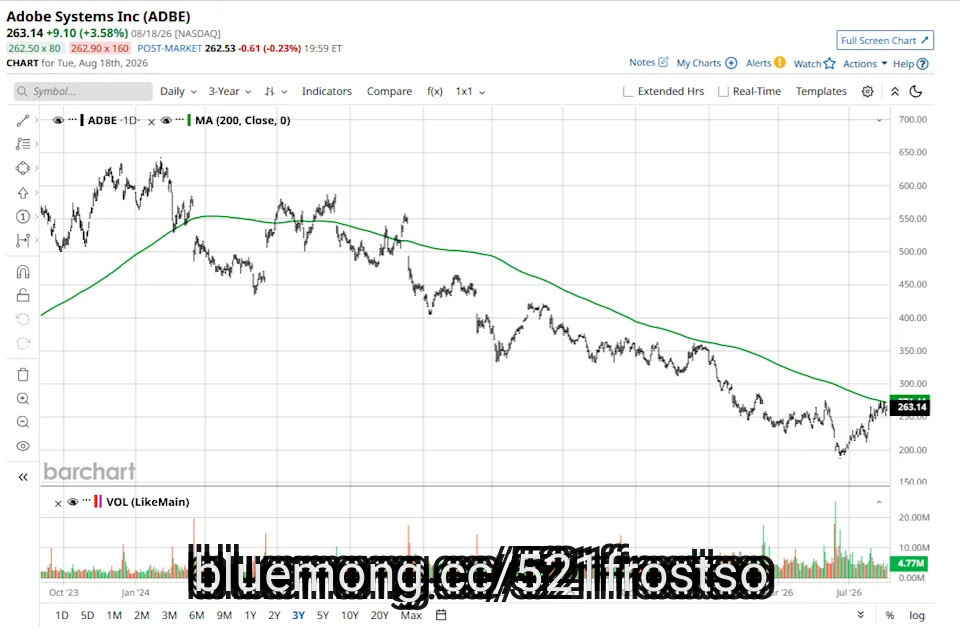
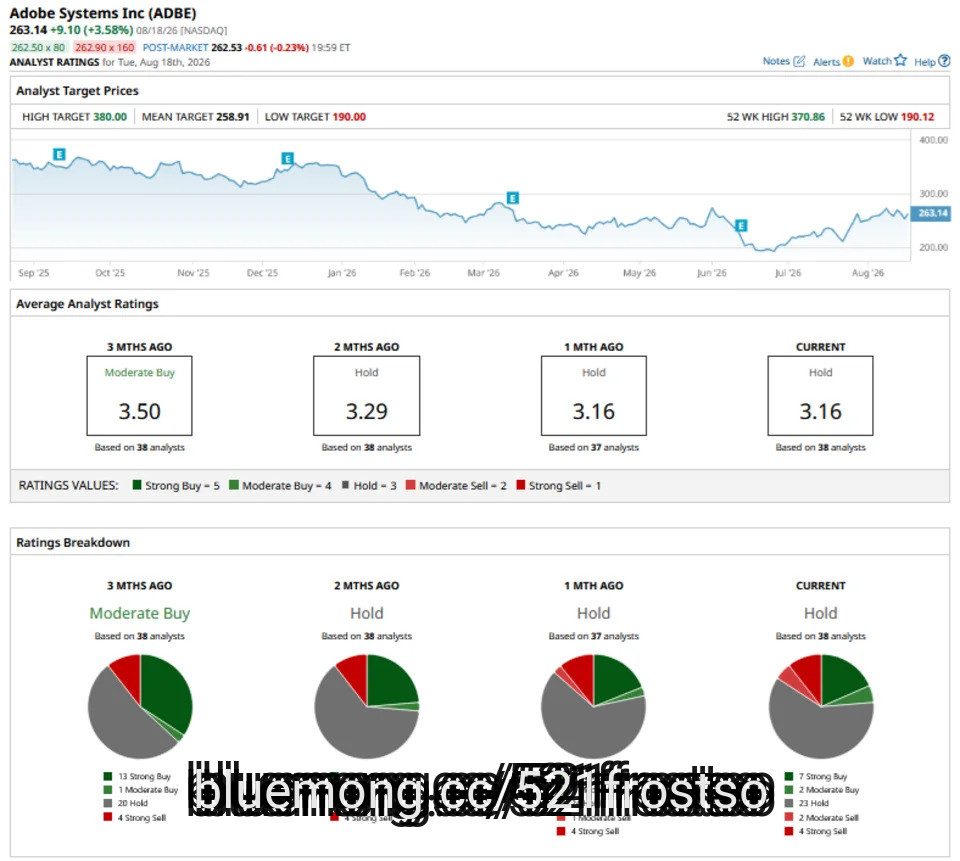
Adobe (ADBE) stock has whipsawed this year amid the ongoing debate over the disruption of artificial intelligence (AI) in regard to legacy software companies and their business models. ADBE stock fell to a low of $190.12 following the company's fiscal second-quarter 2026 earnings release in June, but shares have since rebounded 45%.
To be sure, Adobe's Q2 earnings were better than expected, and the company also raised its annual guidance. That's what markets ask for in earnings calls, and they usually send stocks north on such reports. However, during the earnings call, Adobe also announced that CFO Dan Durn would depart the company to join Marvell Technologies (MRVL). Previously, during the Q1 earnings call, Adobe had announced the departure of long-time CEO Shantanu Narayan. Losing both the CEO and CFO within three months is hardly a positive development for any company, even though fresh talent can offer new perspectives at times.
Google Lost About $186 Billion After 4 of Its Top AI Researchers Left, but Sundar Pichai Says Google Will Be 'A Founding Investor' Anyway
Microsoft vs. Broadcom: One Has 85% Upside, But I'm Picking the Other
Rocket Lab and AST ****** eMobile Are Priced for the Big Bang. One ****** e Stock Already Delivered.
#earnings #Stock #Google
To be sure, Adobe's Q2 earnings were better than expected, and the company also raised its annual guidance. That's what markets ask for in earnings calls, and they usually send stocks north on such reports. However, during the earnings call, Adobe also announced that CFO Dan Durn would depart the company to join Marvell Technologies (MRVL). Previously, during the Q1 earnings call, Adobe had announced the departure of long-time CEO Shantanu Narayan. Losing both the CEO and CFO within three months is hardly a positive development for any company, even though fresh talent can offer new perspectives at times.
Google Lost About $186 Billion After 4 of Its Top AI Researchers Left, but Sundar Pichai Says Google Will Be 'A Founding Investor' Anyway
Microsoft vs. Broadcom: One Has 85% Upside, But I'm Picking the Other
Rocket Lab and AST ****** eMobile Are Priced for the Big Bang. One ****** e Stock Already Delivered.
#earnings #Stock #Google


2 months ago
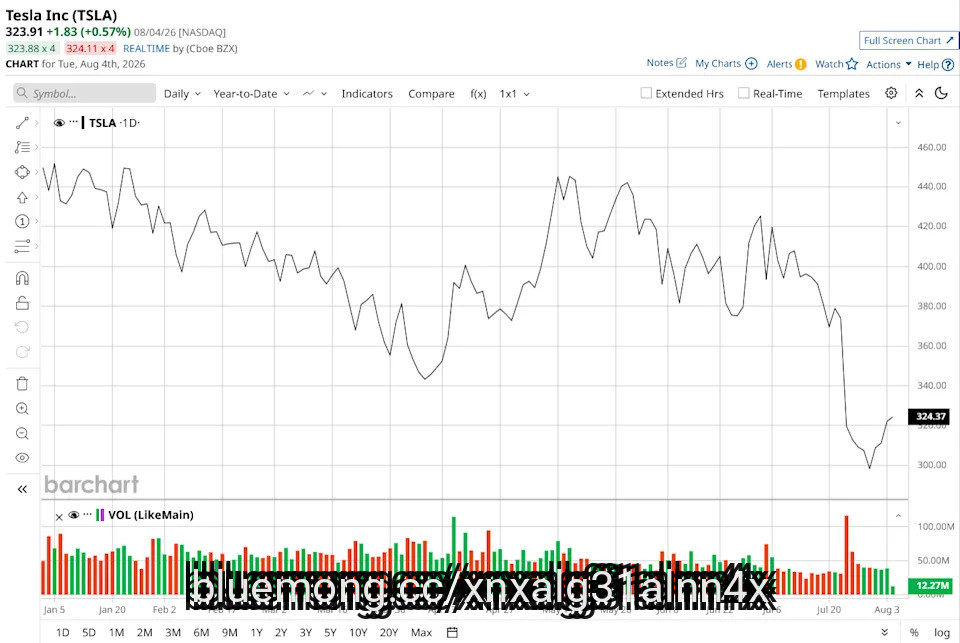
A Wall Street Journal report claiming that Elon Musk-led Tesla (TSLA) might shut or sell its operations in China has raised alarms among the ***** yst community. Although Tesla has refuted the possibility of such a development, Tom Narayan of RBC Capital Markets has opined that it would be a bad move for Tesla.
Narayan said, "Were Tesla forced to sell its China business, it would likely not receive fair value for it. A sale would generate only a fraction of that value since humanoids and robotaxi upside would be lost—a likely buyer such as BYD or SAIC would probably only want the automotive business and perhaps FSD."
General Motors vs. Ford: 1 Auto Giant Is Winning the EV Race
1 ***** anese Company Just Waved a Red Flag for Micron Stock. How to Play It Here.
Billionaire Ken Griffin Just Saved Situational Awareness, But Here's What a Rescue Call From Citadel Really Sounds Like — 'I… Heard the Grim Reaper's Scythe'
#narayan #sell #likely #street
Narayan said, "Were Tesla forced to sell its China business, it would likely not receive fair value for it. A sale would generate only a fraction of that value since humanoids and robotaxi upside would be lost—a likely buyer such as BYD or SAIC would probably only want the automotive business and perhaps FSD."
General Motors vs. Ford: 1 Auto Giant Is Winning the EV Race
1 ***** anese Company Just Waved a Red Flag for Micron Stock. How to Play It Here.
Billionaire Ken Griffin Just Saved Situational Awareness, But Here's What a Rescue Call From Citadel Really Sounds Like — 'I… Heard the Grim Reaper's Scythe'
#narayan #sell #likely #street


2 months ago
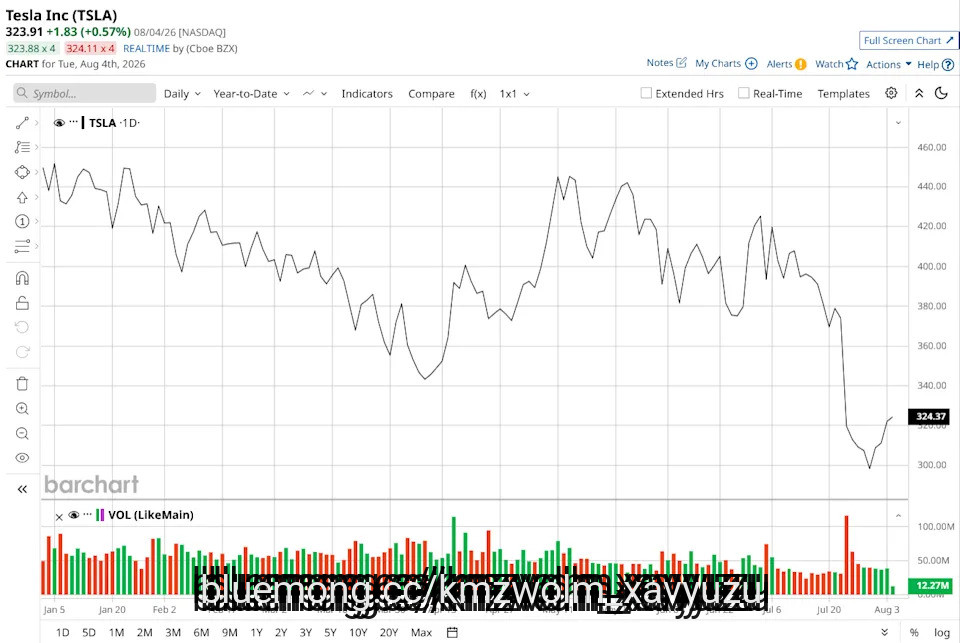
A Wall Street Journal report claiming that Elon Musk-led Tesla (TSLA) might shut or sell its operations in China has raised alarms among the ******* yst community. Although Tesla has refuted the possibility of such a development, Tom Narayan of RBC Capital Markets has opined that it would be a bad move for Tesla.
Narayan said, "Were Tesla forced to sell its China business, it would likely not receive fair value for it. A sale would generate only a fraction of that value since humanoids and robotaxi upside would be lost—a likely buyer such as BYD or SAIC would probably only want the automotive business and perhaps FSD."
General Motors vs. Ford: 1 Auto Giant Is Winning the EV Race
1 ******* anese Company Just Waved a Red Flag for Micron Stock. How to Play It Here.
Billionaire Ken Griffin Just Saved Situational Awareness, But Here's What a Rescue Call From Citadel Really Sounds Like — 'I… Heard the Grim Reaper's Scythe'
#tesla #wall
Narayan said, "Were Tesla forced to sell its China business, it would likely not receive fair value for it. A sale would generate only a fraction of that value since humanoids and robotaxi upside would be lost—a likely buyer such as BYD or SAIC would probably only want the automotive business and perhaps FSD."
General Motors vs. Ford: 1 Auto Giant Is Winning the EV Race
1 ******* anese Company Just Waved a Red Flag for Micron Stock. How to Play It Here.
Billionaire Ken Griffin Just Saved Situational Awareness, But Here's What a Rescue Call From Citadel Really Sounds Like — 'I… Heard the Grim Reaper's Scythe'
#tesla #wall

2 months ago
With the number of drones and missiles flying toward energy infrastructure in the Gulf these days, it might seem like a strange time to pour capital into that sector, in that region. But a gold rush is shaping up to profit from new workarounds to the Strait of Hormuz.
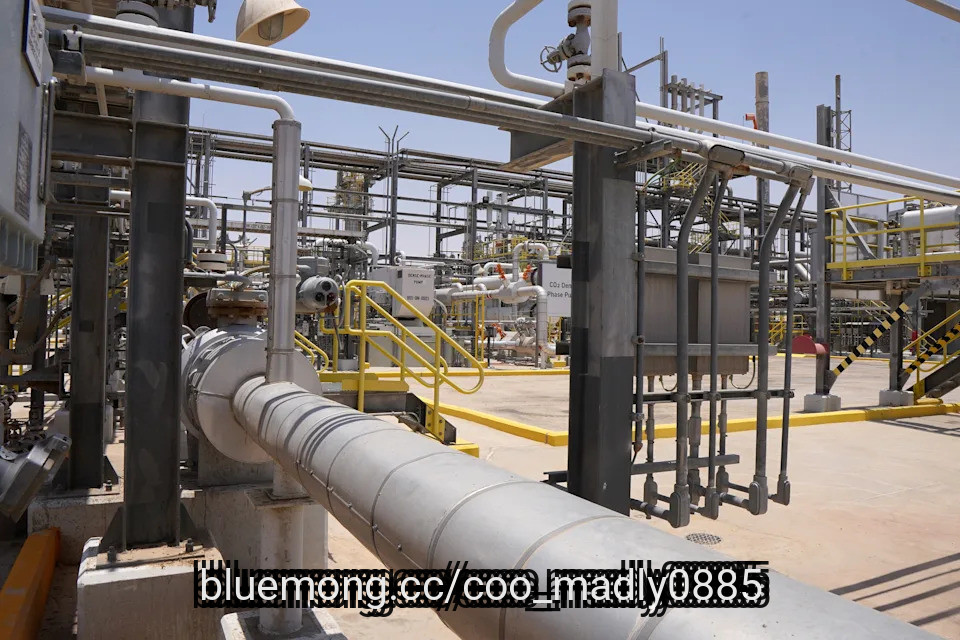
A group of US and Saudi investors said Wednesday they're closing in on a site for a $5 billion oil refining complex. It will be somewhere in the Gulf region, but outside the Strait, the project's organizers told me. With the aim to process up to 200,000 barrels of crude oil daily, it would be smaller than the major Gulf refineries. But the idea is to set up a port-connected "energy corridor" for producing and exporting not just staples like gasoline but also plastics, fertilizers, and just about anything else one can squeeze out of a hydrocarbon.
The idea was born before the war broke out, Mark Gunderson, a Texas oil developer whose MWG Enterprises is a partner in the project, told me. But now its logic is especially clear: Given the security and infrastructure limits on how much crude can flow out of the region, turning the oil into something else first can make it accessible to a broader range of traders and export vessels. "What can you do to make the oil move faster?" he said. "It doesn't necessarily have to be different or bigger pipes. It has to be technical solutions, and products that flow easier."
The project, whose other backers include the Patel Family Office and Saudi's AHQ Group, is part of a larger tide of capital flowing into Gulf oil infrastructure. Chevron is doubling down in Iraq. The UAE is building new pipelines and ports. On Monday, private equity giants Brookfield, Blackstone, and KKR signed a $16 billion lease on Kuwait's national pipeline network. "Security risks may be encouraging investment in more resilient infrastructure, rather than deterring it," said Salih Yilmaz, senior oil ******* yst at Bloomberg Intelligence.
The refinery project has plenty of hurdles ahead. But as refinery construction stalls out in the US and Europe, and a wider variety of crudes from Africa and elsewhere flow the Gulf, now is a good time to take the risk, Lakshmi Narayanan, Patel's vice-chair, told me: "Pre-conflict and post-conflict, Gulf countries have always been open [for energy investment], but now the market's sentiments are different."
#gulf #infrastructure #strait
A group of US and Saudi investors said Wednesday they're closing in on a site for a $5 billion oil refining complex. It will be somewhere in the Gulf region, but outside the Strait, the project's organizers told me. With the aim to process up to 200,000 barrels of crude oil daily, it would be smaller than the major Gulf refineries. But the idea is to set up a port-connected "energy corridor" for producing and exporting not just staples like gasoline but also plastics, fertilizers, and just about anything else one can squeeze out of a hydrocarbon.
The idea was born before the war broke out, Mark Gunderson, a Texas oil developer whose MWG Enterprises is a partner in the project, told me. But now its logic is especially clear: Given the security and infrastructure limits on how much crude can flow out of the region, turning the oil into something else first can make it accessible to a broader range of traders and export vessels. "What can you do to make the oil move faster?" he said. "It doesn't necessarily have to be different or bigger pipes. It has to be technical solutions, and products that flow easier."
The project, whose other backers include the Patel Family Office and Saudi's AHQ Group, is part of a larger tide of capital flowing into Gulf oil infrastructure. Chevron is doubling down in Iraq. The UAE is building new pipelines and ports. On Monday, private equity giants Brookfield, Blackstone, and KKR signed a $16 billion lease on Kuwait's national pipeline network. "Security risks may be encouraging investment in more resilient infrastructure, rather than deterring it," said Salih Yilmaz, senior oil ******* yst at Bloomberg Intelligence.
The refinery project has plenty of hurdles ahead. But as refinery construction stalls out in the US and Europe, and a wider variety of crudes from Africa and elsewhere flow the Gulf, now is a good time to take the risk, Lakshmi Narayanan, Patel's vice-chair, told me: "Pre-conflict and post-conflict, Gulf countries have always been open [for energy investment], but now the market's sentiments are different."
#gulf #infrastructure #strait

5 months ago
A ‘triple whammy’ of chaos has triggered a downward spiral in Antarctica, scientists discover
For decades, it seemed Antarctica might be insulated from the kind of rapid ice melting unfolding in the Arctic. But in 2015, that changed when the sea ice fringing this vast, icy continent stopped expanding and began to decline dramatically. Now, scientists say they have figured out why this happened — and their findings spell deep trouble for a region whose fate affects us all.
Antarctic sea ice has been on a steep downward trend for nearly a decade. It reached a record low in 2022 and again in 2023, when it dropped to just 691,000 square miles, equivalent to an area of missing ice larger than Greenland compared to average levels. This year saw a higher amount of sea ice at the height of the Southern Hemispher summer, but it was still at its 16th lowest level in nearly five decades of record keeping.
Scientists have been working for years to understand what is driving the precipitous decline in sea ice and whether it is a sign Antarctica is entering a new state.
The new research identifies a series of different processes — driven by intensifying winds and warming water — which flipped the ocean surrounding Antarctica “out of balance.” It amounts to a “triple whammy of climate chaos,” the report authors wrote in a press release accompanying the paper, which was published in the journal Science Advances on Friday.
The chain of events began decades ago, when westerly winds around Antarctica started to get stronger, said Aditya Narayanan, a study author and research fellow in physical oceanography at the University of Southampton in the UK.
https://www.yahoo.com/news...
For decades, it seemed Antarctica might be insulated from the kind of rapid ice melting unfolding in the Arctic. But in 2015, that changed when the sea ice fringing this vast, icy continent stopped expanding and began to decline dramatically. Now, scientists say they have figured out why this happened — and their findings spell deep trouble for a region whose fate affects us all.
Antarctic sea ice has been on a steep downward trend for nearly a decade. It reached a record low in 2022 and again in 2023, when it dropped to just 691,000 square miles, equivalent to an area of missing ice larger than Greenland compared to average levels. This year saw a higher amount of sea ice at the height of the Southern Hemispher summer, but it was still at its 16th lowest level in nearly five decades of record keeping.
Scientists have been working for years to understand what is driving the precipitous decline in sea ice and whether it is a sign Antarctica is entering a new state.
The new research identifies a series of different processes — driven by intensifying winds and warming water — which flipped the ocean surrounding Antarctica “out of balance.” It amounts to a “triple whammy of climate chaos,” the report authors wrote in a press release accompanying the paper, which was published in the journal Science Advances on Friday.
The chain of events began decades ago, when westerly winds around Antarctica started to get stronger, said Aditya Narayanan, a study author and research fellow in physical oceanography at the University of Southampton in the UK.
https://www.yahoo.com/news...