1 month ago
(Widens distribution)
By Parisa Hafezi and Angus McDowall
DUBAI, Sept 3 (Reuters) - A U.S. campaign to throttle Iran's economy by blockading its oil exports and stopping sanctions evasion is growing increasingly difficult to withstand, three senior Iranian sources said.
Washington has in recent weeks sought to ratchet up the economic pressure on Tehran, in an effort to extract concessions in any future negotiation that six months of conflict have so far failed to secure.
Although Iran's clerical rulers managed to bypass sanctions for decades, the latest U.S. moves have left them in a far more sensitive position, with few remaining channels to secure foreign currency or buy goods, the sources said.
#widens
By Parisa Hafezi and Angus McDowall
DUBAI, Sept 3 (Reuters) - A U.S. campaign to throttle Iran's economy by blockading its oil exports and stopping sanctions evasion is growing increasingly difficult to withstand, three senior Iranian sources said.
Washington has in recent weeks sought to ratchet up the economic pressure on Tehran, in an effort to extract concessions in any future negotiation that six months of conflict have so far failed to secure.
Although Iran's clerical rulers managed to bypass sanctions for decades, the latest U.S. moves have left them in a far more sensitive position, with few remaining channels to secure foreign currency or buy goods, the sources said.
#widens


2 months ago
By Parisa Hafezi and Angus McDowall
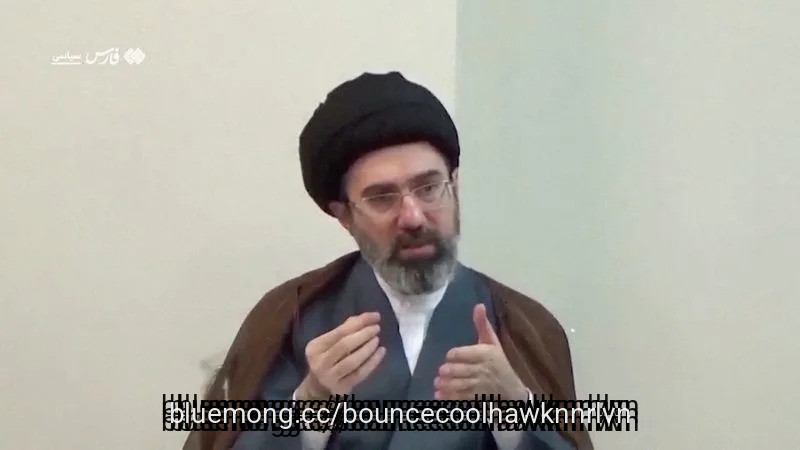
DUBAI, Aug 28 (Reuters) - Six months after the airstrikes that began the war and propelled a badly wounded Mojtaba Khamenei into the role of Iran's supreme leader, he remains entirely unseen and unheard by Iranians — a vacuum at the heart of his country's leadership.
Questions over his condition and role are growing increasingly fraught, with Iran facing critical decisions over a war that has set the Middle East aflame while trashing the country's already fragile economy.
Iranian officials and other senior sources in the country say Khamenei remains in control, ruling from the shadows for security reasons as he recovers from disfiguring wounds while delegating broad daily authority to a coterie of top figures.
But with no photograph, video or audio message released since his appointment a week into the war, Iranians are ever more sceptical about his position in an Islamic Republic in which the leader's voice is meant to be absolute.
#khamenei #hafezi #angus
DUBAI, Aug 28 (Reuters) - Six months after the airstrikes that began the war and propelled a badly wounded Mojtaba Khamenei into the role of Iran's supreme leader, he remains entirely unseen and unheard by Iranians — a vacuum at the heart of his country's leadership.
Questions over his condition and role are growing increasingly fraught, with Iran facing critical decisions over a war that has set the Middle East aflame while trashing the country's already fragile economy.
Iranian officials and other senior sources in the country say Khamenei remains in control, ruling from the shadows for security reasons as he recovers from disfiguring wounds while delegating broad daily authority to a coterie of top figures.
But with no photograph, video or audio message released since his appointment a week into the war, Iranians are ever more sceptical about his position in an Islamic Republic in which the leader's voice is meant to be absolute.
#khamenei #hafezi #angus



2 months ago
By Parisa Hafezi and Katharine Jackson
DUBAI/WASHINGTON, Aug 18 (Reuters) - U.S. President Donald Trump said on Tuesday no talks were taking place with Iran and insisted the Strait of Hormuz was open, contradicting Iran's **** ertion that the critical waterway remained shut to shipping.
The receding prospects of a deal to end the nearly six-month conflict drove up oil prices again on Tuesday, while stock markets sagged and borrowing costs for major economies including the U.S. hit multi-decade highs, amid concerns about the long-term inflationary and fiscal impact of the crisis.
A temporary ceasefire agreement expired on Monday and a senior Iranian official told Reuters that his country was moving to a "fully offensive" military posture due to the diplomatic stalemate, though there were no reports of fresh strikes by either side on Tuesday.
"There are no talks or conversations going on, or scheduled, with the Islamic Republic of Iran," Trump said in a post on Truth Social.
#talks #parisa #Dubai
DUBAI/WASHINGTON, Aug 18 (Reuters) - U.S. President Donald Trump said on Tuesday no talks were taking place with Iran and insisted the Strait of Hormuz was open, contradicting Iran's **** ertion that the critical waterway remained shut to shipping.
The receding prospects of a deal to end the nearly six-month conflict drove up oil prices again on Tuesday, while stock markets sagged and borrowing costs for major economies including the U.S. hit multi-decade highs, amid concerns about the long-term inflationary and fiscal impact of the crisis.
A temporary ceasefire agreement expired on Monday and a senior Iranian official told Reuters that his country was moving to a "fully offensive" military posture due to the diplomatic stalemate, though there were no reports of fresh strikes by either side on Tuesday.
"There are no talks or conversations going on, or scheduled, with the Islamic Republic of Iran," Trump said in a post on Truth Social.
#talks #parisa #Dubai



2 months ago
By Parisa Hafezi
DUBAI, Aug 17 (Reuters) - Iran will escalate tensions in the Strait of Hormuz and beyond, and launch an attack if the U.S. fails to implement an interim peace deal fully in a matter of weeks, a senior Iranian official told Reuters on Monday.
If the U.S. does not meet that deadline and diplomacy fails, Tehran would conduct a "timely and precise" military attack to break the U.S. naval blockade on the Islamic Republic, the official added.
Diplomatic efforts to bring Tehran and Washington back to talks under a June agreement have stalled in recent weeks.
Iran's foreign minister has said the Strait of Hormuz will not reopen until the U.S. first returns to the deal, while the U.S. Treasury Secretary has warned of unprecedented economic isolation for Iran.
#Iran #tehran #fails
DUBAI, Aug 17 (Reuters) - Iran will escalate tensions in the Strait of Hormuz and beyond, and launch an attack if the U.S. fails to implement an interim peace deal fully in a matter of weeks, a senior Iranian official told Reuters on Monday.
If the U.S. does not meet that deadline and diplomacy fails, Tehran would conduct a "timely and precise" military attack to break the U.S. naval blockade on the Islamic Republic, the official added.
Diplomatic efforts to bring Tehran and Washington back to talks under a June agreement have stalled in recent weeks.
Iran's foreign minister has said the Strait of Hormuz will not reopen until the U.S. first returns to the deal, while the U.S. Treasury Secretary has warned of unprecedented economic isolation for Iran.
#Iran #tehran #fails



2 months ago
By Parisa Hafezi
DUBAI, Aug 17 (Reuters) - Even as Iran projects resilience in the war with the United States, its leaders are worried that a threat of more economic punishment by Donald Trump could increase hardships, reignite unrest and further erode the Islamic Republic's legitimacy.
The U.S. president vowed on Friday to hit Iran hard economically, a day after Treasury Secretary Scott Bessent said Washington would impose measures on Tehran that have "never been seen" as early as next week. Washington has not said what those measures will entail.
For all the bravado of Iran's leaders after holding out in nearly six months of conflict and effectively closing the Strait of Hormuz, a vital global oil supply route, they face mounting pressure at home that could result in nationwide unrest, according to three Iranian officials.
The officials, two political insiders, a former Iranian official and a dozen ordinary Iranians spoke to Reuters for this story on condition of anonymity, either for fear of retribution or because they are not authorised to speak to media.
#officials
DUBAI, Aug 17 (Reuters) - Even as Iran projects resilience in the war with the United States, its leaders are worried that a threat of more economic punishment by Donald Trump could increase hardships, reignite unrest and further erode the Islamic Republic's legitimacy.
The U.S. president vowed on Friday to hit Iran hard economically, a day after Treasury Secretary Scott Bessent said Washington would impose measures on Tehran that have "never been seen" as early as next week. Washington has not said what those measures will entail.
For all the bravado of Iran's leaders after holding out in nearly six months of conflict and effectively closing the Strait of Hormuz, a vital global oil supply route, they face mounting pressure at home that could result in nationwide unrest, according to three Iranian officials.
The officials, two political insiders, a former Iranian official and a dozen ordinary Iranians spoke to Reuters for this story on condition of anonymity, either for fear of retribution or because they are not authorised to speak to media.
#officials

2 months ago
By Parisa Hafezi and Katharine Jackson
DUBAI/WASHINGTON, Aug 17 (Reuters) - Iran has decided to shift its policy from defensive to "fully offensive" due to the deadlock in efforts to agree a permanent end to its war with the United States, a senior Iranian official told Reuters on Monday.
Progress towards peace talks and a resumption of oil tanker traffic through the strategic Strait of Hormuz has ground to a halt, with no sign that the warring parties are moving towards ending the conflict that the U.S. and Israel launched on February 28.
"Iranian entities must be prepared to escalate tensions in the Strait of Hormuz and wider region, as Iran will be ready to make decisions and take action on difficult decisions," the Iranian official said, adding that Tehran would conduct a "timely and precise" military attack to break the U.S. naval blockade if diplomacy failed.
There was no immediate response to those comments from Washington, but U.S. President Donald Trump said in a phone interview with Fox News on Monday that Iran "should put up the white flag of surrender".
#Iran #washington #Monday #hormuz
DUBAI/WASHINGTON, Aug 17 (Reuters) - Iran has decided to shift its policy from defensive to "fully offensive" due to the deadlock in efforts to agree a permanent end to its war with the United States, a senior Iranian official told Reuters on Monday.
Progress towards peace talks and a resumption of oil tanker traffic through the strategic Strait of Hormuz has ground to a halt, with no sign that the warring parties are moving towards ending the conflict that the U.S. and Israel launched on February 28.
"Iranian entities must be prepared to escalate tensions in the Strait of Hormuz and wider region, as Iran will be ready to make decisions and take action on difficult decisions," the Iranian official said, adding that Tehran would conduct a "timely and precise" military attack to break the U.S. naval blockade if diplomacy failed.
There was no immediate response to those comments from Washington, but U.S. President Donald Trump said in a phone interview with Fox News on Monday that Iran "should put up the white flag of surrender".
#Iran #washington #Monday #hormuz


2 months ago
By Parisa Hafezi
DUBAI, Aug 12 (Reuters) - There have been no talks on extending a ceasefire between Iran and the U.S. under an interim deal, with Iran saying that Washington must return to the pact and define a timeframe to implement its commitments, a senior Iranian source told Reuters on Wednesday.
The source's comments came after Turkey's Anadolu news agency, citing Pakistani government sources, reported that Tehran and Washington had agreed to extend a 60-day ceasefire under their Memorandum of Understanding (MoU).
"One of the issues that is being discussed via mediators is the U.S. returning to the interim agreement and defining a timeframe for implementing its commitments. There has been absolutely no progress on this issue," the source said.
The interim deal signed in June between Tehran and Washington declared an "immediate and permanent termination of military operations on all fronts", but quickly unravelled, with U.S. President Donald Trump saying on July 7 that the pact was "over". Tehran has repeatedly accused Washington of consistently violating its commitments.
#interim #Iran #ceasefire #deal
DUBAI, Aug 12 (Reuters) - There have been no talks on extending a ceasefire between Iran and the U.S. under an interim deal, with Iran saying that Washington must return to the pact and define a timeframe to implement its commitments, a senior Iranian source told Reuters on Wednesday.
The source's comments came after Turkey's Anadolu news agency, citing Pakistani government sources, reported that Tehran and Washington had agreed to extend a 60-day ceasefire under their Memorandum of Understanding (MoU).
"One of the issues that is being discussed via mediators is the U.S. returning to the interim agreement and defining a timeframe for implementing its commitments. There has been absolutely no progress on this issue," the source said.
The interim deal signed in June between Tehran and Washington declared an "immediate and permanent termination of military operations on all fronts", but quickly unravelled, with U.S. President Donald Trump saying on July 7 that the pact was "over". Tehran has repeatedly accused Washington of consistently violating its commitments.
#interim #Iran #ceasefire #deal
2 months ago
By Parisa Hafezi and Samia Nakhoul
Aug 6 (Reuters) - Iran has made a concerted diplomatic push with Gulf states, warning them explicitly that Tehran will hit their oil, power and water plants unless they convince Donald Trump to end U.S. strikes on Iran and instead seek a negotiated end to the war.
The warning envisaged attacks on the energy facilities, oil fields, refineries, electricity grids, water infrastructure, transport networks and other strategic **** ets of Washington's closest Arab allies, according to a senior Iranian official.
The message, part of a broader Iranian effort to deter further U.S. military action by raising the prospect of severe economic disruption across the Gulf, was delivered through a flurry of high-level diplomatic contacts after Trump threatened on July 28 to strike Iran's energy network and infrastructure, the sources said.
Two senior Iranian officials, two Gulf sources and a senior regional diplomat with knowledge of the discussions said Iranian Foreign Minister Abbas Araqchi spoke with his Saudi, Turkish and Qatari counterparts, as well as Pakistan's army chief. All spoke on condition of anonymity because of the sensitivity of the matter.
#Trump #diplomatic
Aug 6 (Reuters) - Iran has made a concerted diplomatic push with Gulf states, warning them explicitly that Tehran will hit their oil, power and water plants unless they convince Donald Trump to end U.S. strikes on Iran and instead seek a negotiated end to the war.
The warning envisaged attacks on the energy facilities, oil fields, refineries, electricity grids, water infrastructure, transport networks and other strategic **** ets of Washington's closest Arab allies, according to a senior Iranian official.
The message, part of a broader Iranian effort to deter further U.S. military action by raising the prospect of severe economic disruption across the Gulf, was delivered through a flurry of high-level diplomatic contacts after Trump threatened on July 28 to strike Iran's energy network and infrastructure, the sources said.
Two senior Iranian officials, two Gulf sources and a senior regional diplomat with knowledge of the discussions said Iranian Foreign Minister Abbas Araqchi spoke with his Saudi, Turkish and Qatari counterparts, as well as Pakistan's army chief. All spoke on condition of anonymity because of the sensitivity of the matter.
#Trump #diplomatic


2 months ago
By Steve Holland, Elwely Elwelly and Parisa Hafezi
ABOARD AIR FORCE ONE/DUBAI, Aug 3 (Reuters) - Iran said on Monday there were no talks under way with the United States and no plans for any meetings, contradicting U.S. President Donald Trump who had cited talks he said would take place that afternoon as justification for calling off attacks.
Over the weekend Trump repeated a pattern that has emerged throughout the past five months: announcing plans for "massive attacks" on Iran, only to cancel them at the last minute.
"Would I rather make a deal? I'm not looking to kill people," Trump said aboard Air Force One on Sunday.
"Now what we're doing is talking to them, in the form of a negotiation. It begins tomorrow afternoon," he said, without identifying a venue or participants for such talks.
#attacks
ABOARD AIR FORCE ONE/DUBAI, Aug 3 (Reuters) - Iran said on Monday there were no talks under way with the United States and no plans for any meetings, contradicting U.S. President Donald Trump who had cited talks he said would take place that afternoon as justification for calling off attacks.
Over the weekend Trump repeated a pattern that has emerged throughout the past five months: announcing plans for "massive attacks" on Iran, only to cancel them at the last minute.
"Would I rather make a deal? I'm not looking to kill people," Trump said aboard Air Force One on Sunday.
"Now what we're doing is talking to them, in the form of a negotiation. It begins tomorrow afternoon," he said, without identifying a venue or participants for such talks.
#attacks


3 months ago
By Jonathan Saul, Parisa Hafezi, Timour Azhari and Chen Aizhu
LONDON/DUBAI, July 28 (Reuters) - China has held direct talks with Yemen's Houthi movement to enable its tankers to sail through the southern Red Sea without being attacked after the Iran-aligned militia pledged to prevent access to Saudi ports, six sources with knowledge of the matter have said.
The Houthis declared their blockade on July 20, opening a new front against the U.S. and its allies in the Iran war and expanding attacks on tankers carrying energy and other supplies to markets beyond the Middle East.
Beijing has asked the Houthis directly to promise safe passage for its tankers, according to the sources, who included a senior Iranian official.
China was among the first countries to contact the Houthis directly about transits through Bab el-Mandeb, the strait at the southern end of the Red Sea with Yemen on its eastern bank, said the sources, who declined to be identified due to the sensitivity of the matter.
#tankers
LONDON/DUBAI, July 28 (Reuters) - China has held direct talks with Yemen's Houthi movement to enable its tankers to sail through the southern Red Sea without being attacked after the Iran-aligned militia pledged to prevent access to Saudi ports, six sources with knowledge of the matter have said.
The Houthis declared their blockade on July 20, opening a new front against the U.S. and its allies in the Iran war and expanding attacks on tankers carrying energy and other supplies to markets beyond the Middle East.
Beijing has asked the Houthis directly to promise safe passage for its tankers, according to the sources, who included a senior Iranian official.
China was among the first countries to contact the Houthis directly about transits through Bab el-Mandeb, the strait at the southern end of the Red Sea with Yemen on its eastern bank, said the sources, who declined to be identified due to the sensitivity of the matter.
#tankers


3 months ago
By Maggie Michael and Parisa Hafezi
July 23 (Reuters) - Iran flew Islamic Revolutionary Guard Corps (IRGC) commanders, military advisers and missile- and drone-related equipment into Yemen this month, according to four sources, in a move that suggests Tehran is seeking to strengthen the ability of its Houthi allies to threaten Red Sea shipping.
Four sources familiar with the matter, including two Iranian sources, Yemen's information minister and a regional security ****** yst, said Iran transferred the IRGC personnel and military-related equipment on a flight from Tehran to Yemen on July 13, a development that has not been previously reported.
The two Iranian sources told Reuters that between 10 and 21 IRGC personnel, including senior commanders, were on the Mahan Air flight.
The plane was originally bound for the Houthi-controlled capital Sanaa, but diverted to the Red Sea port city of Hodeidah after the airport came under attack by the Saudi-backed Yemeni government.
#sources #yemen
July 23 (Reuters) - Iran flew Islamic Revolutionary Guard Corps (IRGC) commanders, military advisers and missile- and drone-related equipment into Yemen this month, according to four sources, in a move that suggests Tehran is seeking to strengthen the ability of its Houthi allies to threaten Red Sea shipping.
Four sources familiar with the matter, including two Iranian sources, Yemen's information minister and a regional security ****** yst, said Iran transferred the IRGC personnel and military-related equipment on a flight from Tehran to Yemen on July 13, a development that has not been previously reported.
The two Iranian sources told Reuters that between 10 and 21 IRGC personnel, including senior commanders, were on the Mahan Air flight.
The plane was originally bound for the Houthi-controlled capital Sanaa, but diverted to the Red Sea port city of Hodeidah after the airport came under attack by the Saudi-backed Yemeni government.
#sources #yemen


3 months ago
By Parisa Hafezi, Samia Nakhoul and Jonathan Saul
DUBAI, July 16 (Reuters) - Iran has asked Yemen's Houthi movement to stand ready to close the Red Sea oil route if the United States strikes Iranian power infrastructure, three sources told Reuters on Thursday, posing a potent new threat to global energy supplies.
The idea has been discussed within the Islamic Republic's leadership, and the message has been conveyed to Iran's Houthi allies, two senior Iranian sources and a regional source familiar with the matter said, speaking on condition of anonymity.
The sources said the Houthis had been informed recently of Tehran's request, which has not been previously reported.
They did not give further details on how it had been conveyed or whether it was after U.S. President Donald Trump's threat to attack Iranian power infrastructure on Tuesday.
DUBAI, July 16 (Reuters) - Iran has asked Yemen's Houthi movement to stand ready to close the Red Sea oil route if the United States strikes Iranian power infrastructure, three sources told Reuters on Thursday, posing a potent new threat to global energy supplies.
The idea has been discussed within the Islamic Republic's leadership, and the message has been conveyed to Iran's Houthi allies, two senior Iranian sources and a regional source familiar with the matter said, speaking on condition of anonymity.
The sources said the Houthis had been informed recently of Tehran's request, which has not been previously reported.
They did not give further details on how it had been conveyed or whether it was after U.S. President Donald Trump's threat to attack Iranian power infrastructure on Tuesday.


4 months ago
By Steve Holland, Parisa Hafezi and Yomna Ehab
EVIAN-LES-BAINS, France/DUBAI, June 17 (Reuters) - The U.S. and Iran released the text of an interim agreement their presidents have signed to end their war on Wednesday, with U.S. President Donald Trump threatening to resume attacks and kill Iranian officials if they failed to honour their commitments.
Trump, attending the G7 with other leaders in France, also withdrew at least one of his stated rationales for attacking Iran in the first place, saying it would be "unfair" for Tehran not to have ballistic missiles, having previously vowed to obliterate them.
"We're going to bomb the **** out of them if they violate the agreement," Trump said of Iran at a press conference. "I don't want them to. I want them to honor the agreement." He also called Iranians "smart people" as U.S. and Iranian negotiators work on a permanent truce over the coming 60 days, which Trump said he hoped would usher in peace in the Middle East and lower oil prices.
Earlier, he had said: "If I don't like it, if they don't behave, we'll go right back to dropping bombs right smack in the middle of their head, OK?"
EVIAN-LES-BAINS, France/DUBAI, June 17 (Reuters) - The U.S. and Iran released the text of an interim agreement their presidents have signed to end their war on Wednesday, with U.S. President Donald Trump threatening to resume attacks and kill Iranian officials if they failed to honour their commitments.
Trump, attending the G7 with other leaders in France, also withdrew at least one of his stated rationales for attacking Iran in the first place, saying it would be "unfair" for Tehran not to have ballistic missiles, having previously vowed to obliterate them.
"We're going to bomb the **** out of them if they violate the agreement," Trump said of Iran at a press conference. "I don't want them to. I want them to honor the agreement." He also called Iranians "smart people" as U.S. and Iranian negotiators work on a permanent truce over the coming 60 days, which Trump said he hoped would usher in peace in the Middle East and lower oil prices.
Earlier, he had said: "If I don't like it, if they don't behave, we'll go right back to dropping bombs right smack in the middle of their head, OK?"


4 months ago
By Andrew Mills, Maha El Dahan and Parisa Hafezi
DUBAI, June 16 (Reuters) - A $300 billion private fund designed to trigger investment into Iran is outlined in the U.S.-Iran framework agreement and more than half that sum has already been committed, a source with direct knowledge of the deal told Reuters.
The fund is designed to give both sides an economic incentive to conclude a final deal to end the war, said the source, who spoke on condition of anonymity because the plan has not yet been announced as Washington and Tehran prepare to sign on Friday.
The fund's existence has been previously reported but Reuters is revealing for the first time that more than half of the amount has already been committed and that it will be comprised entirely of private-sector funds.
U.S. and Iranian officials said on Sunday they had agreed on a framework to end their war, which began when U.S. and Israeli forces attacked Iran on February 28, halt the U.S. blockade of Iran and reopen the Strait of Hormuz, a key supply route for global oil and gas.
DUBAI, June 16 (Reuters) - A $300 billion private fund designed to trigger investment into Iran is outlined in the U.S.-Iran framework agreement and more than half that sum has already been committed, a source with direct knowledge of the deal told Reuters.
The fund is designed to give both sides an economic incentive to conclude a final deal to end the war, said the source, who spoke on condition of anonymity because the plan has not yet been announced as Washington and Tehran prepare to sign on Friday.
The fund's existence has been previously reported but Reuters is revealing for the first time that more than half of the amount has already been committed and that it will be comprised entirely of private-sector funds.
U.S. and Iranian officials said on Sunday they had agreed on a framework to end their war, which began when U.S. and Israeli forces attacked Iran on February 28, halt the U.S. blockade of Iran and reopen the Strait of Hormuz, a key supply route for global oil and gas.

4 months ago
By Parisa Hafezi and Angus McDowall
DUBAI/LONDON, June 15 (Reuters) - Iran's theocratic rulers have seen off a U.S. military campaign but their real problems may be about to begin: managing the competing demands of hardliners buoyed by surviving the onslaught and those of an impoverished, angry people.
Iran's powerful hardliners are energized by a three-month confrontation they feel Iran has won. They want the leadership to take a tough stance in coming talks with the U.S. and prioritise rearming, confident they can halt any internal dissent with force.
Ordinary Iranians, however, are desperate for any peace dividend or financial relief to be used in raising living standards and offering better prospects after a destructive war that has followed years of painful sanctions.
Both camps have high expectations, conflicting demands and little patience. Looming in the background is the spectre of renewed mass protests like the unrest authorities quashed in January by killing thousands of demonstrators.
DUBAI/LONDON, June 15 (Reuters) - Iran's theocratic rulers have seen off a U.S. military campaign but their real problems may be about to begin: managing the competing demands of hardliners buoyed by surviving the onslaught and those of an impoverished, angry people.
Iran's powerful hardliners are energized by a three-month confrontation they feel Iran has won. They want the leadership to take a tough stance in coming talks with the U.S. and prioritise rearming, confident they can halt any internal dissent with force.
Ordinary Iranians, however, are desperate for any peace dividend or financial relief to be used in raising living standards and offering better prospects after a destructive war that has followed years of painful sanctions.
Both camps have high expectations, conflicting demands and little patience. Looming in the background is the spectre of renewed mass protests like the unrest authorities quashed in January by killing thousands of demonstrators.

4 months ago
By Steve Holland, Parisa Hafezi and Maayan Lubell
EVIAN-LES-BAINS, France/DUBAI/JERUSALEM, June 15 (Reuters) - U.S. President Donald Trump said on Monday a preliminary agreement to end the war in the Gulf has already been signed by the United States and Iran, though details have yet to be made public.
"The deal's all signed," Trump said after he arrived in France for a summit of the G7 group of big economies, adding that Vice President JD Vance would attend a formal signing ceremony in Geneva on Friday.
The agreement would reopen the blockaded Strait of Hormuz and extend a ceasefire for 60 days, allowing negotiators to tackle difficult issues like the future of Iran's nuclear program. Oil prices fell to their lowest level since March 10, shortly after the conflict cut off one-fifth of the world's oil supply.
The deal is the most significant step yet to resolve the conflict, which has killed at least 7,000 people, mostly in Iran and Lebanon, and upended global energy markets.
EVIAN-LES-BAINS, France/DUBAI/JERUSALEM, June 15 (Reuters) - U.S. President Donald Trump said on Monday a preliminary agreement to end the war in the Gulf has already been signed by the United States and Iran, though details have yet to be made public.
"The deal's all signed," Trump said after he arrived in France for a summit of the G7 group of big economies, adding that Vice President JD Vance would attend a formal signing ceremony in Geneva on Friday.
The agreement would reopen the blockaded Strait of Hormuz and extend a ceasefire for 60 days, allowing negotiators to tackle difficult issues like the future of Iran's nuclear program. Oil prices fell to their lowest level since March 10, shortly after the conflict cut off one-fifth of the world's oil supply.
The deal is the most significant step yet to resolve the conflict, which has killed at least 7,000 people, mostly in Iran and Lebanon, and upended global energy markets.


4 months ago
By Parisa Hafezi
DUBAI, June 14 (Reuters) - A senior Iranian official told Reuters a final draft of the memorandum of understanding with the U.S. covered a range of issues, from Tehran's nuclear work to reopening the Strait of Hormuz and U.S. waivers on oil sanctions, with a final deal to be discussed in the 60 days following agreement by the two sides.
The Iranian official said the draft memorandum included the following:
STRAIT OF HORMUZ:
* Iran immediately reopens the Strait of Hormuz to all commercial vessels, while the U.S. lifts its naval blockade on Iranian ports. The lifting of the U.S. blockade would begin immediately after the memorandum is signed and be completed within 30 days.
DUBAI, June 14 (Reuters) - A senior Iranian official told Reuters a final draft of the memorandum of understanding with the U.S. covered a range of issues, from Tehran's nuclear work to reopening the Strait of Hormuz and U.S. waivers on oil sanctions, with a final deal to be discussed in the 60 days following agreement by the two sides.
The Iranian official said the draft memorandum included the following:
STRAIT OF HORMUZ:
* Iran immediately reopens the Strait of Hormuz to all commercial vessels, while the U.S. lifts its naval blockade on Iranian ports. The lifting of the U.S. blockade would begin immediately after the memorandum is signed and be completed within 30 days.

4 months ago
By Parisa Hafezi, Phil Stewart and Yomna Ehab
DUBAI/WASHINGTON, June 15 (Reuters) - U.S. and Iranian officials said they had agreed on a framework to end their war, halt the U.S. blockade of Iran and reopen the Strait of Hormuz, a preliminary pact that sent oil prices falling but leaves the fate of Iran's nuclear program to further negotiations.
"The Deal with the Islamic Republic of Iran is now complete," U.S. President Donald Trump wrote on his Truth Social platform around 5:30 p.m. ET local time in Washington (2130 GMT) on Sunday. His post came shortly after Pakistani Prime Minister Shehbaz Sharif, whose country has served as a mediator, announced a deal had been struck early on Monday local time.
The memorandum of understanding is scheduled to be officially signed on Friday in Switzerland.
The precise terms were not immediately known. Sharif said in a post on X that the pact called for "the immediate and permanent termination of military operations on all fronts, including in Lebanon."
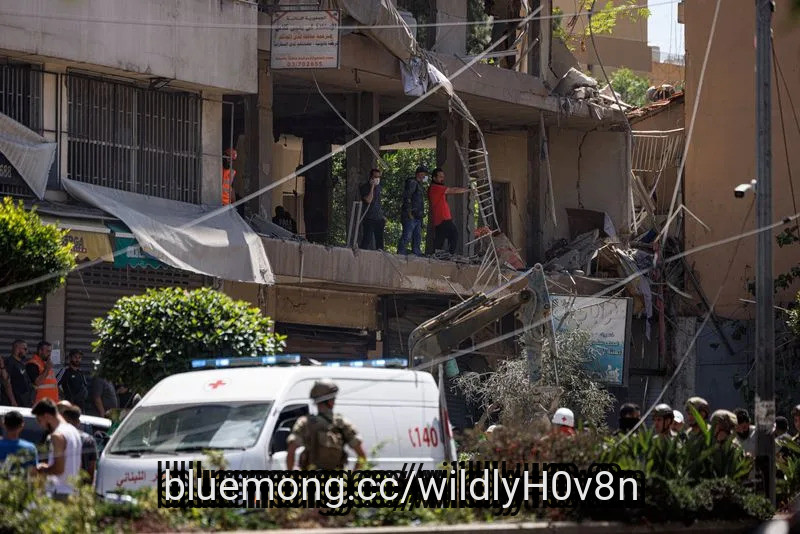
DUBAI/WASHINGTON, June 15 (Reuters) - U.S. and Iranian officials said they had agreed on a framework to end their war, halt the U.S. blockade of Iran and reopen the Strait of Hormuz, a preliminary pact that sent oil prices falling but leaves the fate of Iran's nuclear program to further negotiations.
"The Deal with the Islamic Republic of Iran is now complete," U.S. President Donald Trump wrote on his Truth Social platform around 5:30 p.m. ET local time in Washington (2130 GMT) on Sunday. His post came shortly after Pakistani Prime Minister Shehbaz Sharif, whose country has served as a mediator, announced a deal had been struck early on Monday local time.
The memorandum of understanding is scheduled to be officially signed on Friday in Switzerland.
The precise terms were not immediately known. Sharif said in a post on X that the pact called for "the immediate and permanent termination of military operations on all fronts, including in Lebanon."
4 months ago
By Alexander Cornwell, Parisa Hafezi, Bo Erickson and Yomna Ehab
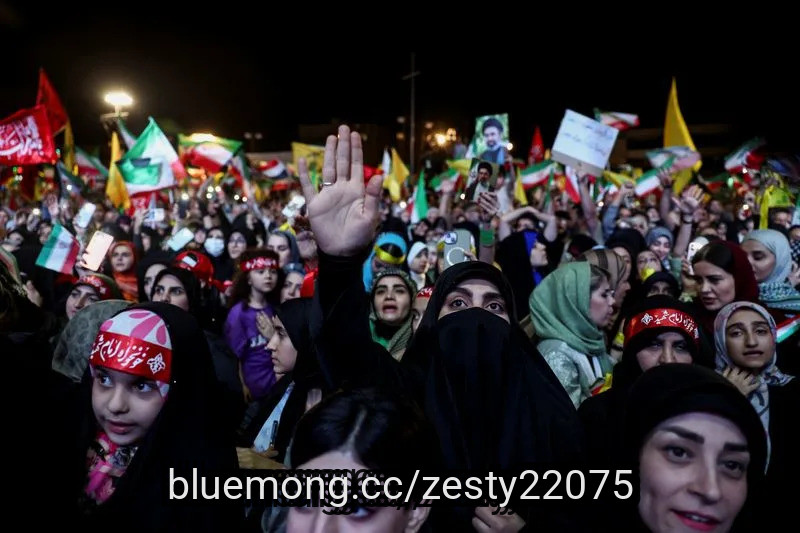
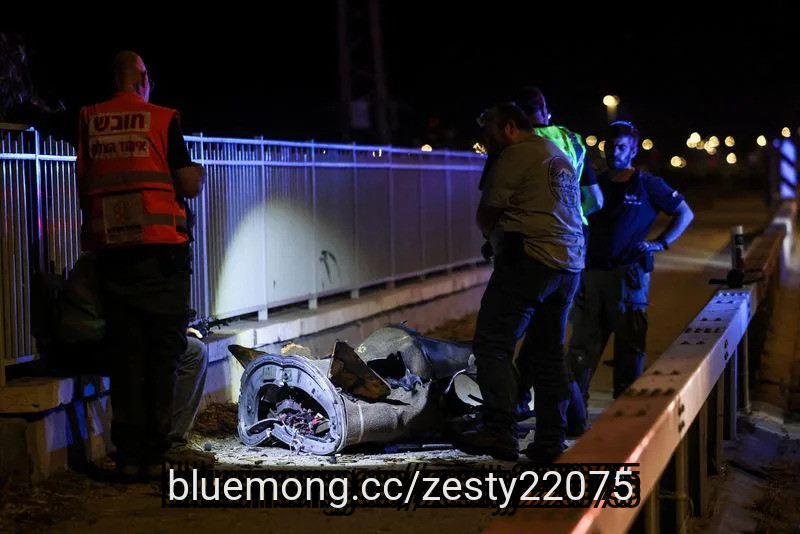
TEL AVIV/DUBAI/NEW BRUNSWICK, New Jersey, June 8 (Reuters) - Israel said on Monday it hit a petrochemical plant in Iran's southwest, along with strikes elsewhere on military targets, after U.S. President Donald Trump reportedly told Israeli Prime Minister Benjamin Netanyahu to refrain from further attacks.
In the first hit on an energy site inside Iran since the April 8 ceasefire, Israel said it struck targets at the Mahshahr petrochemical complex, while a provincial official told Iran's semi-official Fars news agency parts of the plant were damaged.
Hours earlier, Trump said new strikes by Israel and Iran would not affect his administration's peace talks with Tehran, adding that Israeli Prime Minister Benjamin Netanyahu "doesn't call the shots."
Trump has leaned on Israel to stop its attacks in Lebanon to allow room for a deal to end the wider war with Iran, including rebuking Netanyahu with obscenities in a phone call last week.
TEL AVIV/DUBAI/NEW BRUNSWICK, New Jersey, June 8 (Reuters) - Israel said on Monday it hit a petrochemical plant in Iran's southwest, along with strikes elsewhere on military targets, after U.S. President Donald Trump reportedly told Israeli Prime Minister Benjamin Netanyahu to refrain from further attacks.
In the first hit on an energy site inside Iran since the April 8 ceasefire, Israel said it struck targets at the Mahshahr petrochemical complex, while a provincial official told Iran's semi-official Fars news agency parts of the plant were damaged.
Hours earlier, Trump said new strikes by Israel and Iran would not affect his administration's peace talks with Tehran, adding that Israeli Prime Minister Benjamin Netanyahu "doesn't call the shots."
Trump has leaned on Israel to stop its attacks in Lebanon to allow room for a deal to end the wider war with Iran, including rebuking Netanyahu with obscenities in a phone call last week.

4 months ago
By Alexander Cornwell, Parisa Hafezi and Bo Erickson
BEIRUT/DUBAI/NEW BRUNSWICK, New Jersey, June 7 (Reuters) - U.S. President Donald Trump said on Sunday he would tell Israeli Prime Minister Benjamin Netanyahu not to strike back after Iran fired a salvo of missiles at Israeli targets in retaliation for an attack on the outskirts of Beirut, news outlet Axios reported.
Iran has long said any peace deal with the U.S. would depend on a ceasefire also holding in Lebanon, which Israel invaded in March in pursuit of Iran-backed Hezbollah fighters who fired rockets and drones across the border in solidarity with Tehran.
But Israel earlier on Sunday launched strikes in the Beirut area for the first time since the U.S. announced a truce plan for Lebanon last week.
The Israeli military later said it had identified missiles launched from Iran and that its defense systems had intercepted them. Details on whether Israel suffered any damage were not yet available.
BEIRUT/DUBAI/NEW BRUNSWICK, New Jersey, June 7 (Reuters) - U.S. President Donald Trump said on Sunday he would tell Israeli Prime Minister Benjamin Netanyahu not to strike back after Iran fired a salvo of missiles at Israeli targets in retaliation for an attack on the outskirts of Beirut, news outlet Axios reported.
Iran has long said any peace deal with the U.S. would depend on a ceasefire also holding in Lebanon, which Israel invaded in March in pursuit of Iran-backed Hezbollah fighters who fired rockets and drones across the border in solidarity with Tehran.
But Israel earlier on Sunday launched strikes in the Beirut area for the first time since the U.S. announced a truce plan for Lebanon last week.
The Israeli military later said it had identified missiles launched from Iran and that its defense systems had intercepted them. Details on whether Israel suffered any damage were not yet available.



6 months ago
Trump agrees to two-week Iran ceasefire, drops threat to destroy 'whole civilization'
By Steve Holland, Parisa Hafezi, Enas Alashray and Ahmed Tolba
WASHINGTON/DUBAI/CAIRO, April 7 (Reuters) - U.S. President Donald Trump agreed to a two-week ceasefire with Iran on Tuesday, less than two hours before his deadline for Tehran to reopen the Strait of Hormuz or face devastating attacks on its civilian infrastructure.
Trump's announcement on social media represented an abrupt turnaround from earlier in the day, when he issued an extraordinary warning that "a whole civilization will die tonight
By Steve Holland, Parisa Hafezi, Enas Alashray and Ahmed Tolba
WASHINGTON/DUBAI/CAIRO, April 7 (Reuters) - U.S. President Donald Trump agreed to a two-week ceasefire with Iran on Tuesday, less than two hours before his deadline for Tehran to reopen the Strait of Hormuz or face devastating attacks on its civilian infrastructure.
Trump's announcement on social media represented an abrupt turnaround from earlier in the day, when he issued an extraordinary warning that "a whole civilization will die tonight