
1 day ago
IREN fell 5% and Core Scientific dropped 4% as traders de-risked ahead of a consensus-expected 49-cent per share loss Thursday.
NVIDIA's last five earnings beats still averaged a 2% same-day stock decline, creating a harder read-across setup for IREN reporting Thursday night.
DTCR's near-flat 0.6% decline while IREN and Core Scientific sold off confirms targeted event-driven de-risking, not broad digital infrastructure pressure.
Act now: the ******* yst who called NVIDIA in 2010 just named his top 10 AI stocks — and Iren didn't make the cut. Grab the names FREE today.
IREN Limited (NASDAQ:IREN) stock is down 6% to $39.85 midday Wednesday, as traders trim exposure ahead of a busy earnings sequence for the AI hosting group. Meanwhile, Core Scientific (NASDAQ:CORZ) stock is down 4% to $17.40 in sympathy, marking a coordinated de-risk in two Bitcoin miners turned AI hosts.
#core #Stock
NVIDIA's last five earnings beats still averaged a 2% same-day stock decline, creating a harder read-across setup for IREN reporting Thursday night.
DTCR's near-flat 0.6% decline while IREN and Core Scientific sold off confirms targeted event-driven de-risking, not broad digital infrastructure pressure.
Act now: the ******* yst who called NVIDIA in 2010 just named his top 10 AI stocks — and Iren didn't make the cut. Grab the names FREE today.
IREN Limited (NASDAQ:IREN) stock is down 6% to $39.85 midday Wednesday, as traders trim exposure ahead of a busy earnings sequence for the AI hosting group. Meanwhile, Core Scientific (NASDAQ:CORZ) stock is down 4% to $17.40 in sympathy, marking a coordinated de-risk in two Bitcoin miners turned AI hosts.
#core #Stock


1 day ago
On August 14, 2026, Core Scientific, Inc. (NASDAQ:CORZ) completed its acquisition of Polaris DS for roughly $444 million in cash. It is adding about 440 megawatts of grid-connected power capacity in Oklahoma as part of its push to expand its Muskogee campus to 1.5 gigawatts of gross power.
Core Scientific keeps buying power capacity to feed AI data center demand. It is building on a business it already reshaped from bitcoin mining.
That raises the real question: is this string of acquisitions building a genuinely differentiated AI infrastructure company or piling up debt-funded power capacity ahead of confirmed demand?
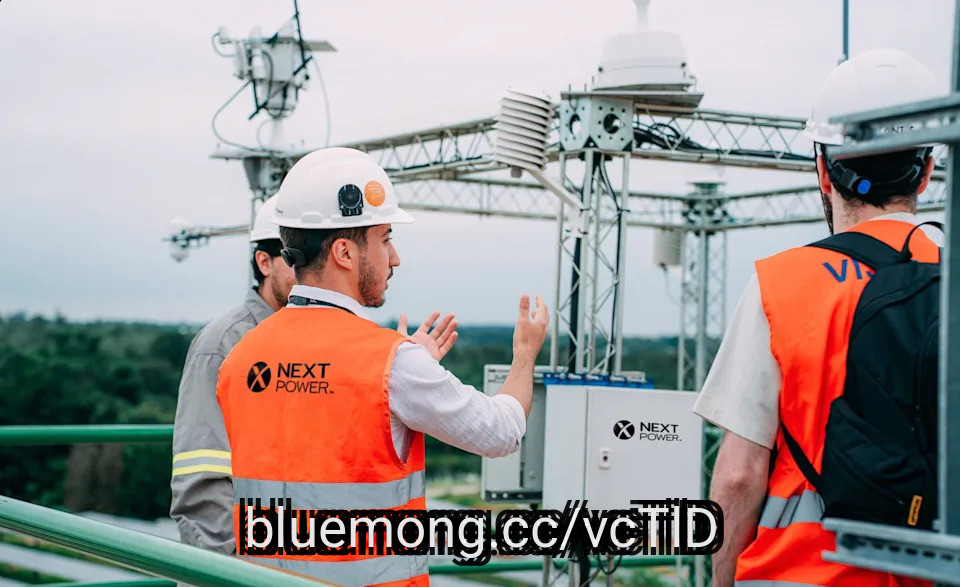
Photo from Nextpower website
CEO Adam Sullivan said the deal is "another example of how we are strategically expanding our power portfolio," noting the company has added more than 600 megawatts of leasable power through site acquisitions this year alone. Core Scientific, Inc. (NASDAQ:CORZ) is already contracted to deliver the next roughly 82 megawatts at Muskogee to a customer starting in the second half of 2027. The company also signed a deal with AMD in July. It gave AMD access to more than 500 megawatts of AI-ready data center capacity starting in 2027, expandable to 2.5 gigawatts. AMD received market-priced warrants to purchase Core Scientific stock as part of the arrangement.
#corz
Core Scientific keeps buying power capacity to feed AI data center demand. It is building on a business it already reshaped from bitcoin mining.
That raises the real question: is this string of acquisitions building a genuinely differentiated AI infrastructure company or piling up debt-funded power capacity ahead of confirmed demand?
Photo from Nextpower website
CEO Adam Sullivan said the deal is "another example of how we are strategically expanding our power portfolio," noting the company has added more than 600 megawatts of leasable power through site acquisitions this year alone. Core Scientific, Inc. (NASDAQ:CORZ) is already contracted to deliver the next roughly 82 megawatts at Muskogee to a customer starting in the second half of 2027. The company also signed a deal with AMD in July. It gave AMD access to more than 500 megawatts of AI-ready data center capacity starting in 2027, expandable to 2.5 gigawatts. AMD received market-priced warrants to purchase Core Scientific stock as part of the arrangement.
#corz

18 days ago
Core Scientific, Inc. (NASDAQ:CORZ) announced a major infrastructure partnership with Advanced Micro Devices, Inc. (NASDAQ:AMD) on July 28, giving the chipmaker's ecosystem access to more than 500 megawatts of U.S. data-center capacity beginning in 2027. The arrangement can expand to 2.5 gigawatts. Core Scientific shares rallied in premarket trading.
The agreement is more substantial than the initial announcement suggested. Core Scientific's earnings release described 15-year agreements covering approximately 530 megawatts across five sites, with more than $14 billion of potential base contracted revenue. Its regulatory filing provided an important distinction: AMD directly leased 377 megawatts, while an unnamed neocloud leased another 152 megawatts under agreements that give AMD certain equipment protections and rights if that customer defaults.
The larger story, however, began nine months earlier. Core Scientific shareholders rejected an all-stock acquisition by CoreWeave whose announcement-date implied equity value was approximately $9 billion. The fixed exchange ratio valued CORZ at $20.40 per share when the transaction was announced in July 2025, but the value shareholders would have received at closing was not fixed and moved with CoreWeave's share price.
In January, Gullane Capital Partners founder Trip Miller, who had opposed the sale, predicted that Core Scientific would secure new AI customers. "I expect them to announce deals for AI with third parties other than CoreWeave," he told Business Insider.
The new agreements appear to deliver precisely that customer diversification. Taken together, AMD's 377-megawatt direct lease and the neocloud's 152-megawatt lease exceed Miller's roughly 400-megawatt expectation, although AMD itself did not directly lease the full 529 megawatts. The question is whether the agreements prove that shareholders were right to preserve Core Scientific's independence, or merely give the company a large, capital-intensive opportunity whose ultimate value remains uncertain.
#lease
The agreement is more substantial than the initial announcement suggested. Core Scientific's earnings release described 15-year agreements covering approximately 530 megawatts across five sites, with more than $14 billion of potential base contracted revenue. Its regulatory filing provided an important distinction: AMD directly leased 377 megawatts, while an unnamed neocloud leased another 152 megawatts under agreements that give AMD certain equipment protections and rights if that customer defaults.
The larger story, however, began nine months earlier. Core Scientific shareholders rejected an all-stock acquisition by CoreWeave whose announcement-date implied equity value was approximately $9 billion. The fixed exchange ratio valued CORZ at $20.40 per share when the transaction was announced in July 2025, but the value shareholders would have received at closing was not fixed and moved with CoreWeave's share price.
In January, Gullane Capital Partners founder Trip Miller, who had opposed the sale, predicted that Core Scientific would secure new AI customers. "I expect them to announce deals for AI with third parties other than CoreWeave," he told Business Insider.
The new agreements appear to deliver precisely that customer diversification. Taken together, AMD's 377-megawatt direct lease and the neocloud's 152-megawatt lease exceed Miller's roughly 400-megawatt expectation, although AMD itself did not directly lease the full 529 megawatts. The question is whether the agreements prove that shareholders were right to preserve Core Scientific's independence, or merely give the company a large, capital-intensive opportunity whose ultimate value remains uncertain.
#lease


20 days ago
Core Scientific, Inc. (NASDAQ:CORZ) announced a major infrastructure partnership with Advanced Micro Devices, Inc. (NASDAQ:AMD) on July 28, giving the chipmaker's ecosystem access to more than 500 megawatts of U.S. data-center capacity beginning in 2027. The arrangement can expand to 2.5 gigawatts. Core Scientific shares rallied in premarket trading.
The agreement is more substantial than the initial announcement suggested. Core Scientific's earnings release described 15-year agreements covering approximately 530 megawatts across five sites, with more than $14 billion of potential base contracted revenue. Its regulatory filing provided an important distinction: AMD directly leased 377 megawatts, while an unnamed neocloud leased another 152 megawatts under agreements that give AMD certain equipment protections and rights if that customer defaults.
The larger story, however, began nine months earlier. Core Scientific shareholders rejected an all-stock acquisition by CoreWeave whose announcement-date implied equity value was approximately $9 billion. The fixed exchange ratio valued CORZ at $20.40 per share when the transaction was announced in July 2025, but the value shareholders would have received at closing was not fixed and moved with CoreWeave's share price.
In January, Gullane Capital Partners founder Trip Miller, who had opposed the sale, predicted that Core Scientific would secure new AI customers. "I expect them to announce deals for AI with third parties other than CoreWeave," he told Business Insider.
The new agreements appear to deliver precisely that customer diversification. Taken together, AMD's 377-megawatt direct lease and the neocloud's 152-megawatt lease exceed Miller's roughly 400-megawatt expectation, although AMD itself did not directly lease the full 529 megawatts. The question is whether the agreements prove that shareholders were right to preserve Core Scientific's independence, or merely give the company a large, capital-intensive opportunity whose ultimate value remains uncertain.
#agreements
The agreement is more substantial than the initial announcement suggested. Core Scientific's earnings release described 15-year agreements covering approximately 530 megawatts across five sites, with more than $14 billion of potential base contracted revenue. Its regulatory filing provided an important distinction: AMD directly leased 377 megawatts, while an unnamed neocloud leased another 152 megawatts under agreements that give AMD certain equipment protections and rights if that customer defaults.
The larger story, however, began nine months earlier. Core Scientific shareholders rejected an all-stock acquisition by CoreWeave whose announcement-date implied equity value was approximately $9 billion. The fixed exchange ratio valued CORZ at $20.40 per share when the transaction was announced in July 2025, but the value shareholders would have received at closing was not fixed and moved with CoreWeave's share price.
In January, Gullane Capital Partners founder Trip Miller, who had opposed the sale, predicted that Core Scientific would secure new AI customers. "I expect them to announce deals for AI with third parties other than CoreWeave," he told Business Insider.
The new agreements appear to deliver precisely that customer diversification. Taken together, AMD's 377-megawatt direct lease and the neocloud's 152-megawatt lease exceed Miller's roughly 400-megawatt expectation, although AMD itself did not directly lease the full 529 megawatts. The question is whether the agreements prove that shareholders were right to preserve Core Scientific's independence, or merely give the company a large, capital-intensive opportunity whose ultimate value remains uncertain.
#agreements

25 days ago
Deciding between Advanced Micro Devices (NASDAQ:AMD) and Arm (NASDAQ:ARM) requires understanding their roles in the hardware ecosystem. One builds the chips, while the other provides the blueprint for others to manufacture them.
Advanced Micro Devices designs high-performance processors and graphics chips, while Arm licenses the foundational architecture that powers most mobile devices. Comparing these two allows investors to weigh a hardware manufacturer against an intellectual property specialist. Both companies are central to the future of computing, but they operate with different business models and growth profiles.
AMD designs and sells semiconductor products, including processors and AI accelerators. It is a prominent player among semiconductor stocks, serving hyperscale data centers and the gaming market. Strategic partnerships with OpenAI, Microsoft (NASDAQ:MSFT), and Core Scientific (NASDAQ:CORZ) highlight its focus on artificial intelligence and data center infrastructure.
In the fiscal year ended Dec. 27, 2025, revenue reached nearly $34.6 billion compared with roughly $25.8 billion in the prior year. That equaled a 34.3% increase, driven by strong demand in the data center segment. The company reported net income of approximately $4.3 billion, resulting in a net margin of 12.5%.
As of its December 2025 balance sheet, AMD's debt-to-equity ratio was roughly 0.1. This ratio divides total debt by shareholder equity to show how much a company relies on borrowed money. The current ratio, which measures the ability to cover short-term debts with ****** ets, stood at approximately 2.9. Note that stock-based compensation represented roughly 21.2% of operating cash flow, which inflates reported cash generation since SBC is a non-cash expense added back in the cash flow statement.
#roughly
Advanced Micro Devices designs high-performance processors and graphics chips, while Arm licenses the foundational architecture that powers most mobile devices. Comparing these two allows investors to weigh a hardware manufacturer against an intellectual property specialist. Both companies are central to the future of computing, but they operate with different business models and growth profiles.
AMD designs and sells semiconductor products, including processors and AI accelerators. It is a prominent player among semiconductor stocks, serving hyperscale data centers and the gaming market. Strategic partnerships with OpenAI, Microsoft (NASDAQ:MSFT), and Core Scientific (NASDAQ:CORZ) highlight its focus on artificial intelligence and data center infrastructure.
In the fiscal year ended Dec. 27, 2025, revenue reached nearly $34.6 billion compared with roughly $25.8 billion in the prior year. That equaled a 34.3% increase, driven by strong demand in the data center segment. The company reported net income of approximately $4.3 billion, resulting in a net margin of 12.5%.
As of its December 2025 balance sheet, AMD's debt-to-equity ratio was roughly 0.1. This ratio divides total debt by shareholder equity to show how much a company relies on borrowed money. The current ratio, which measures the ability to cover short-term debts with ****** ets, stood at approximately 2.9. Note that stock-based compensation represented roughly 21.2% of operating cash flow, which inflates reported cash generation since SBC is a non-cash expense added back in the cash flow statement.
#roughly


28 days ago
Technology stocks, once the market's biggest winners thanks to the artificial intelligence (AI) boom, have suddenly fallen out of favor on Wall Street. Even companies posting blockbuster earnings are finding it difficult to impress investors, as lofty expectations, growing fears of an AI bubble and concerns over whether the industry's massive spending spree will ultimately pay off have made the market far less forgiving. And Advanced Micro Devices (AMD) is one of the latest casualties of this shift in sentiment.
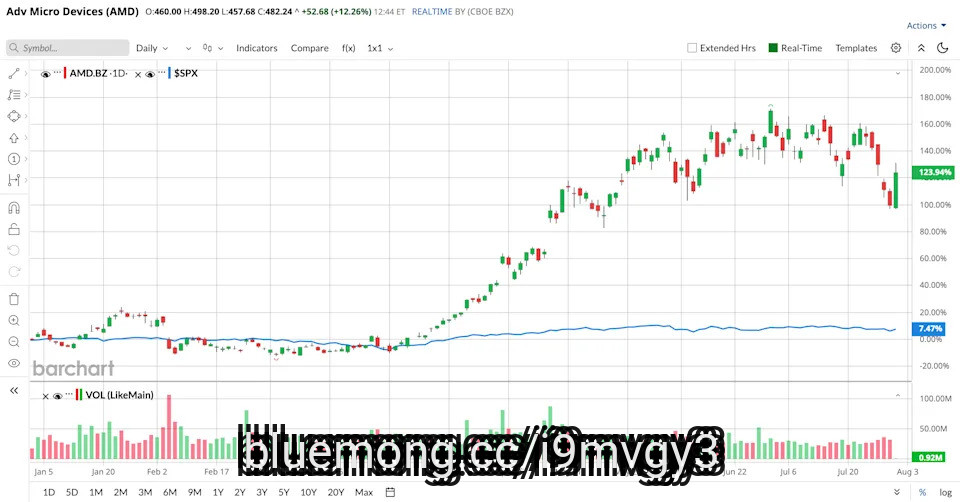
Although the chipmaker has yet to report its next earnings results, investors have become increasingly cautious about AI-related financing deals and whether hyperscalers' enormous AI investments can deliver sustainable returns. As a result, AMD shares have fallen 17.2% from their June all-time high of $584.73. But while many investors have turned cautious, Wedbush Securities believes the market may be missing the bigger picture. The investment firm sees AMD's newly announced partnership with Core Scientific (CORZ) as a key step that could expand the company's AI reach beyond the largest cloud providers and fuel its long-term growth.
Dear Sandisk Stock Fans, Mark Your Calendars for August 5
Intel Stock Sinks 40%, But Most ******* ysts Still Aren't Bullish on INTC
Nebius Stock Gets Another Wall Street Upgrade. Here's Why Investors Are Paying Attention.
#investors
Although the chipmaker has yet to report its next earnings results, investors have become increasingly cautious about AI-related financing deals and whether hyperscalers' enormous AI investments can deliver sustainable returns. As a result, AMD shares have fallen 17.2% from their June all-time high of $584.73. But while many investors have turned cautious, Wedbush Securities believes the market may be missing the bigger picture. The investment firm sees AMD's newly announced partnership with Core Scientific (CORZ) as a key step that could expand the company's AI reach beyond the largest cloud providers and fuel its long-term growth.
Dear Sandisk Stock Fans, Mark Your Calendars for August 5
Intel Stock Sinks 40%, But Most ******* ysts Still Aren't Bullish on INTC
Nebius Stock Gets Another Wall Street Upgrade. Here's Why Investors Are Paying Attention.
#investors


29 days ago
Advanced Micro Devices, Inc. (NASDAQ:AMD) and Core Scientific, Inc. (NASDAQ:CORZ) announced an infrastructure partnership on July 28 that starts with more than 500 megawatts of U.S. data center capacity in 2027 and can expand to 2.5 gigawatts.
The commercial link is a deployment bottleneck. AI accelerators cannot generate revenue without energized land, cooling, networking, and buildings designed for high-density racks. Core Scientific supplies that infrastructure, while the companies will jointly design facilities around AMD Instinct GPUs, EPYC CPUs, and ROCm software. For AMD, reserving compatible capacity can turn customer interest into installable systems rather than stranded chip demand, although the agreement discloses no GPU-purchase commitment.
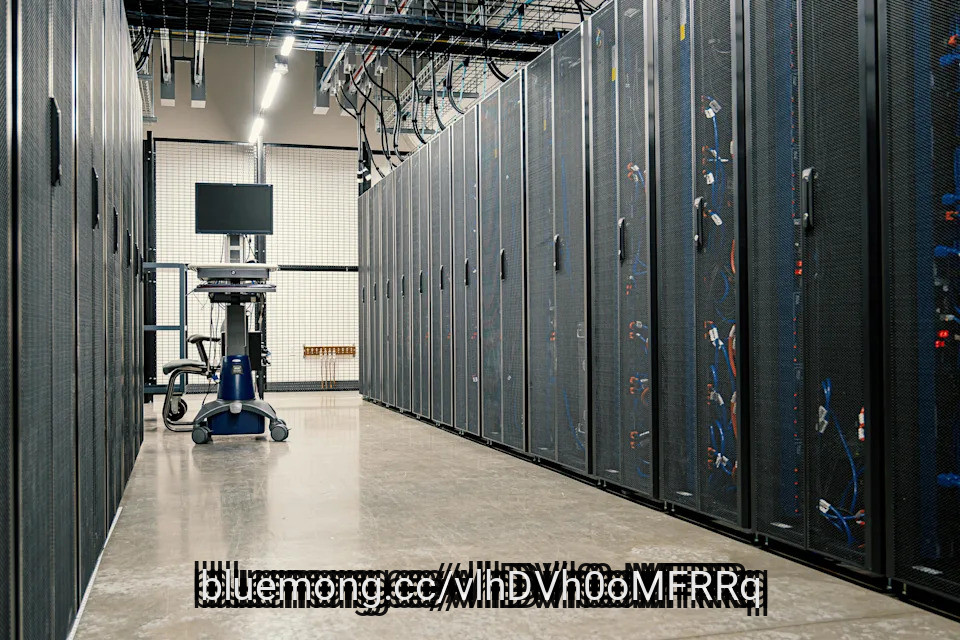
For illustration purposes only. Photo by Brett Sayles on Pexels
The full 2.5 GW is not firm capacity. Core Scientific said the partnership is anchored by 15-year agreements for approximately 530 MW across five sites and more than $14 billion of potential base contracted revenue. That company estimate is not recognized revenue, and no disclosed GPU-purchase commitment lets investors translate it into AMD chip sales.
Advanced Micro Devices, Inc. (NASDAQ:AMD) will receive market-priced warrants to buy Core Scientific common stock, subject to commercial conditions. That feature aligns AMD with the infrastructure provider's execution and gives it potential equity upside. It may also dilute existing CORZ holders if warrants vest and are exercised, but the companies did not disclose enough terms to quantify that effect.
#scientific #infrastructure
The commercial link is a deployment bottleneck. AI accelerators cannot generate revenue without energized land, cooling, networking, and buildings designed for high-density racks. Core Scientific supplies that infrastructure, while the companies will jointly design facilities around AMD Instinct GPUs, EPYC CPUs, and ROCm software. For AMD, reserving compatible capacity can turn customer interest into installable systems rather than stranded chip demand, although the agreement discloses no GPU-purchase commitment.
For illustration purposes only. Photo by Brett Sayles on Pexels
The full 2.5 GW is not firm capacity. Core Scientific said the partnership is anchored by 15-year agreements for approximately 530 MW across five sites and more than $14 billion of potential base contracted revenue. That company estimate is not recognized revenue, and no disclosed GPU-purchase commitment lets investors translate it into AMD chip sales.
Advanced Micro Devices, Inc. (NASDAQ:AMD) will receive market-priced warrants to buy Core Scientific common stock, subject to commercial conditions. That feature aligns AMD with the infrastructure provider's execution and gives it potential equity upside. It may also dilute existing CORZ holders if warrants vest and are exercised, but the companies did not disclose enough terms to quantify that effect.
#scientific #infrastructure


1 month ago
Core Scientific (NASDAQ: $CORZ) is partnering with chipmaker Advanced Micro Devices (NASDAQ: $AMD) on a new artificial intelligence (A.I.) data centre.
The deal involves AMD taking out a 15-year lease for 529 megawatts of U.S. A.I. capacity, which Core Scientific said could generate more than $14 billion U.S. of revenue for it.
Core Scientific is a former Bitcoin (CRYPTO: $BTC) miner turned A.I. data centre operator.
More From Cryptoprowl:
MEXC Adds Five Ondo Tokenized Stocks Spanning Semiconductors to Power Infrastructure
#core #data #advanced #Bitcoin
The deal involves AMD taking out a 15-year lease for 529 megawatts of U.S. A.I. capacity, which Core Scientific said could generate more than $14 billion U.S. of revenue for it.
Core Scientific is a former Bitcoin (CRYPTO: $BTC) miner turned A.I. data centre operator.
More From Cryptoprowl:
MEXC Adds Five Ondo Tokenized Stocks Spanning Semiconductors to Power Infrastructure
#core #data #advanced #Bitcoin


1 month ago
Advanced Micro Devices, Inc. (NASDAQ:AMD) and Core Scientific, Inc. (NASDAQ:CORZ) announced an infrastructure partnership on July 28 that starts with more than 500 megawatts of U.S. data center capacity in 2027 and can expand to 2.5 gigawatts.
The commercial link is a deployment bottleneck. AI accelerators cannot generate revenue without energized land, cooling, networking, and buildings designed for high-density racks. Core Scientific supplies that infrastructure, while the companies will jointly design facilities around AMD Instinct GPUs, EPYC CPUs, and ROCm software. For AMD, reserving compatible capacity can turn customer interest into installable systems rather than stranded chip demand, although the agreement discloses no GPU-purchase commitment.
For illustration purposes only. Photo by Brett Sayles on Pexels
The full 2.5 GW is not firm capacity. Core Scientific said the partnership is anchored by 15-year agreements for approximately 530 MW across five sites and more than $14 billion of potential base contracted revenue. That company estimate is not recognized revenue, and no disclosed GPU-purchase commitment lets investors translate it into AMD chip sales.
Advanced Micro Devices, Inc. (NASDAQ:AMD) will receive market-priced warrants to buy Core Scientific common stock, subject to commercial conditions. That feature aligns AMD with the infrastructure provider's execution and gives it potential equity upside. It may also dilute existing CORZ holders if warrants vest and are exercised, but the companies did not disclose enough terms to quantify that effect.
#core #devices
The commercial link is a deployment bottleneck. AI accelerators cannot generate revenue without energized land, cooling, networking, and buildings designed for high-density racks. Core Scientific supplies that infrastructure, while the companies will jointly design facilities around AMD Instinct GPUs, EPYC CPUs, and ROCm software. For AMD, reserving compatible capacity can turn customer interest into installable systems rather than stranded chip demand, although the agreement discloses no GPU-purchase commitment.
For illustration purposes only. Photo by Brett Sayles on Pexels
The full 2.5 GW is not firm capacity. Core Scientific said the partnership is anchored by 15-year agreements for approximately 530 MW across five sites and more than $14 billion of potential base contracted revenue. That company estimate is not recognized revenue, and no disclosed GPU-purchase commitment lets investors translate it into AMD chip sales.
Advanced Micro Devices, Inc. (NASDAQ:AMD) will receive market-priced warrants to buy Core Scientific common stock, subject to commercial conditions. That feature aligns AMD with the infrastructure provider's execution and gives it potential equity upside. It may also dilute existing CORZ holders if warrants vest and are exercised, but the companies did not disclose enough terms to quantify that effect.
#core #devices

1 month ago
IREN spiked 16% and APLD jumped 9% in a technical rebound after both shed over 40% of their value in the past month; meanwhile, WULF added 7% in risk-on Monday morning trading action.
Applied Digital CEO Wes ****** mins noted CoreWeave demand helped drive 139% revenue growth as hyperscaler capex climbed from roughly $400 billion to $700 billion.
Core Scientific posted 45% revenue growth with colocation surging 9x year-over-year, while IREN and TeraWulf still carry heavy losses despite the sector bounce.
Act now: the ****** yst who called NVIDIA in 2010 just named his top 10 AI stocks — and Iren didn't make the cut. Grab the names FREE today.
Shares of AI infrastructure names are bouncing hard in early Monday trading, led by IREN (NASDAQ:IREN), up 17% to $39.28. Applied Digital (NASDAQ:APLD) is up 9% to $28.06, TeraWulf (NASDAQ:WULF) is up 7% to $19.44, and Core Scientific (NASDAQ:CORZ) is up 7% to $22.31.
#apld
Applied Digital CEO Wes ****** mins noted CoreWeave demand helped drive 139% revenue growth as hyperscaler capex climbed from roughly $400 billion to $700 billion.
Core Scientific posted 45% revenue growth with colocation surging 9x year-over-year, while IREN and TeraWulf still carry heavy losses despite the sector bounce.
Act now: the ****** yst who called NVIDIA in 2010 just named his top 10 AI stocks — and Iren didn't make the cut. Grab the names FREE today.
Shares of AI infrastructure names are bouncing hard in early Monday trading, led by IREN (NASDAQ:IREN), up 17% to $39.28. Applied Digital (NASDAQ:APLD) is up 9% to $28.06, TeraWulf (NASDAQ:WULF) is up 7% to $19.44, and Core Scientific (NASDAQ:CORZ) is up 7% to $22.31.
#apld


2 months ago
We just covered Leopold Aschenbrenner's Situational Awareness Reveals Its 10 Under-The-Radar AI Stock Picks. Core Scientific, Inc. (NASDAQ:CORZ) ranks #2 (see Situational Awareness Top 5 Under-The-Radar AI Stock Picks).
Situational Awareness Stake Value: $389,086,756
Core Scientific (NASDAQ:CORZ) is another former Bitcoin miner in Situational Awareness's portfolio that is transitioning toward AI infrastructure. Core Scientific builds and operates large-scale data centers that provide the physical infrastructure — power, cooling, and ***** e — that AI computing requires. Its moat lies in its existing grid-connected power capacity, which is available to lease today, and its proven ability to deliver that capacity to customers on tight timelines. Most of its ***** ets are expected to be ready for service within the 12 to 14-month window that hyperscalers and neoclouds are actively trying to fill.
Its key customer is CoreWeave, the fast-growing AI cloud provider, which has contracted 590 MW of capacity from Core Scientific in total. Core Scientific (NASDAQ:CORZ) is already billing CoreWeave for 243 MW of that, equivalent to more than $350 million in annualized revenue, with the remaining 347 MW being delivered in stages through the next 12 months. The long-term anchor from this relationship is management's own guidance of approximately $850 million in average annual run-rate revenue from the CoreWeave contract over the next 12 years, with long-term gross margins guided at 75% to 80%.
In Q1 2026, total revenues rose 44% year over year, driven by colocation revenue, which was up 801% year-over-year.
Situational Awareness Stake Value: $389,086,756
Core Scientific (NASDAQ:CORZ) is another former Bitcoin miner in Situational Awareness's portfolio that is transitioning toward AI infrastructure. Core Scientific builds and operates large-scale data centers that provide the physical infrastructure — power, cooling, and ***** e — that AI computing requires. Its moat lies in its existing grid-connected power capacity, which is available to lease today, and its proven ability to deliver that capacity to customers on tight timelines. Most of its ***** ets are expected to be ready for service within the 12 to 14-month window that hyperscalers and neoclouds are actively trying to fill.
Its key customer is CoreWeave, the fast-growing AI cloud provider, which has contracted 590 MW of capacity from Core Scientific in total. Core Scientific (NASDAQ:CORZ) is already billing CoreWeave for 243 MW of that, equivalent to more than $350 million in annualized revenue, with the remaining 347 MW being delivered in stages through the next 12 months. The long-term anchor from this relationship is management's own guidance of approximately $850 million in average annual run-rate revenue from the CoreWeave contract over the next 12 years, with long-term gross margins guided at 75% to 80%.
In Q1 2026, total revenues rose 44% year over year, driven by colocation revenue, which was up 801% year-over-year.


3 months ago
Jackson Peak Capital, an investment management firm, released its first-quarter 2026 investor letter. Jackson Peak Capital employs a concentrated long/short equity approach to deliver strong absolute returns across various market conditions. A copy of the letter is available to download here. In Q1 2026, Jackson Peak returned -21.0%, net, in a challenging environment. The underperformance in Q1 was driven by an increase in tech exposure, adverse movements in certain positions, and the lack of expected catalysts. The ACWI returned -2.2%, and the HFRX Equity Hedge Index returned -1.5% during the same time. The firm expects a strong Q2 start as AI acceleration and easing geopolitical tensions favor positions. At Q1’s end, net exposure was 36%, up from 25% from Q4's end, with confidence in AI infrastructure, energy, compute, data center buildout, and event-driven positions. In addition, please check the fund’s top five holdings to know its best picks in 2026.
In its first-quarter 2026 investor letter, Jackson Peak Capital highlighted stocks like Core Scientific, Inc. (NASDAQ:CORZ). Core Scientific, Inc. (NASDAQ:CORZ) is a leading US-based infrastructure provider for high-density colocation services and digital ****** et mining. On June 1, 2026, Core Scientific, Inc. (NASDAQ:CORZ) closed at $28.55 per share. One-month return of Core Scientific, Inc. (NASDAQ:CORZ) was 28.66%, and its shares gained 141.95% over the past 52 weeks. Core Scientific, Inc. (NASDAQ:CORZ) has a market capitalization of $9.08 billion.
Jackson Peak Capital stated the following regarding Core Scientific, Inc. (NASDAQ:CORZ) in its Q1 2026 investor letter:
"A position worth highlighting this quarter is Core Scientific, Inc. (NASDAQ:CORZ). We re-engaged with CORZ during Q1 after exiting in Q4, as the stock retraced to attractive levels just as we were looking to add to the AI infrastructure theme on the developments above. Specifically, CORZ is a beneficiary of the compute shortage as it has valuable data center co-location capacity, which is structurally short of supply heading into the remainder of 2026 as the leading AI labs and hyperscalers all look for power and shovel-ready sites.
CORZ is one of the few public companies with shovel-ready capacity at scale. It is a high-performance computing (HPC) colocation provider that pivoted from crypto mining to AI infrastructure, and the foundation of the business today is its ~590 MW contract with CoreWeave under 12-year hosting agreements, representing over $10 billion in total contracted revenue. Beyond the CoreWeave contract, CORZ has approximately 1.5 GW of total leasable power in the pipeline. Management has stated that they are in active dialogue with multiple parties and that colocation leasing agreements are expected in the near future.
In its first-quarter 2026 investor letter, Jackson Peak Capital highlighted stocks like Core Scientific, Inc. (NASDAQ:CORZ). Core Scientific, Inc. (NASDAQ:CORZ) is a leading US-based infrastructure provider for high-density colocation services and digital ****** et mining. On June 1, 2026, Core Scientific, Inc. (NASDAQ:CORZ) closed at $28.55 per share. One-month return of Core Scientific, Inc. (NASDAQ:CORZ) was 28.66%, and its shares gained 141.95% over the past 52 weeks. Core Scientific, Inc. (NASDAQ:CORZ) has a market capitalization of $9.08 billion.
Jackson Peak Capital stated the following regarding Core Scientific, Inc. (NASDAQ:CORZ) in its Q1 2026 investor letter:
"A position worth highlighting this quarter is Core Scientific, Inc. (NASDAQ:CORZ). We re-engaged with CORZ during Q1 after exiting in Q4, as the stock retraced to attractive levels just as we were looking to add to the AI infrastructure theme on the developments above. Specifically, CORZ is a beneficiary of the compute shortage as it has valuable data center co-location capacity, which is structurally short of supply heading into the remainder of 2026 as the leading AI labs and hyperscalers all look for power and shovel-ready sites.
CORZ is one of the few public companies with shovel-ready capacity at scale. It is a high-performance computing (HPC) colocation provider that pivoted from crypto mining to AI infrastructure, and the foundation of the business today is its ~590 MW contract with CoreWeave under 12-year hosting agreements, representing over $10 billion in total contracted revenue. Beyond the CoreWeave contract, CORZ has approximately 1.5 GW of total leasable power in the pipeline. Management has stated that they are in active dialogue with multiple parties and that colocation leasing agreements are expected in the near future.