
2 months ago
OKTA offers an enterprise identity management platform, including single sign-on, multi-factor authentication, access gateway, API access management, authentication, adaptive MFA, lifecycle management, and AI agent security. OKTA's second-quarter 2027 report showed $805 million in revenue (an 11% year-over-year gain), per-share earnings of $1.05 (a 15.4% sequential gain), and offered full-year revenue and operating margin guidance of up to $3.226 billion and 26%, respectively.
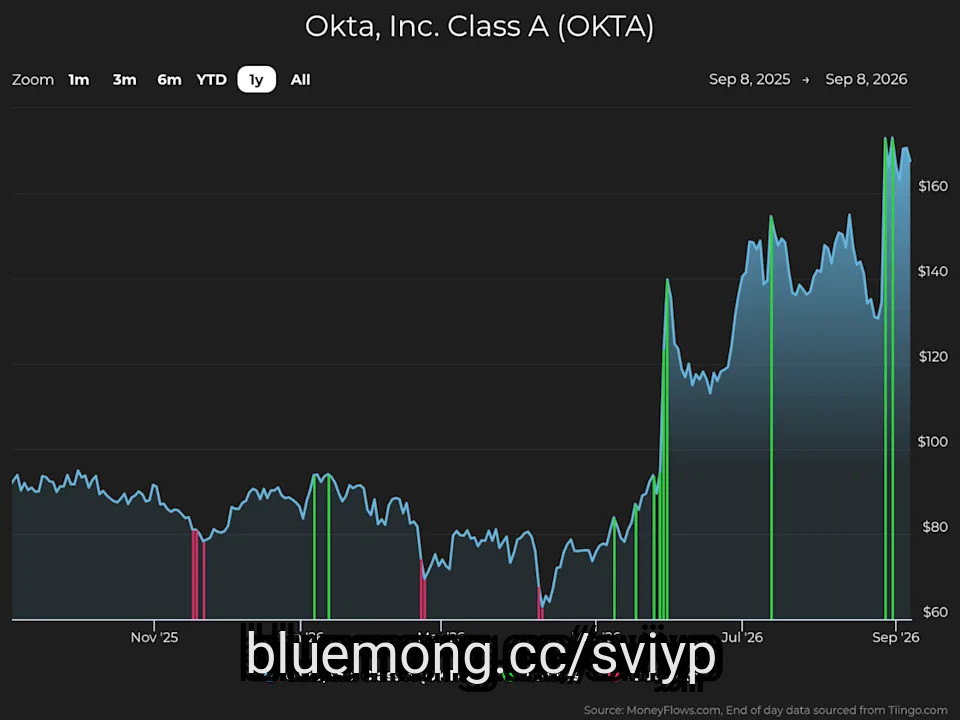
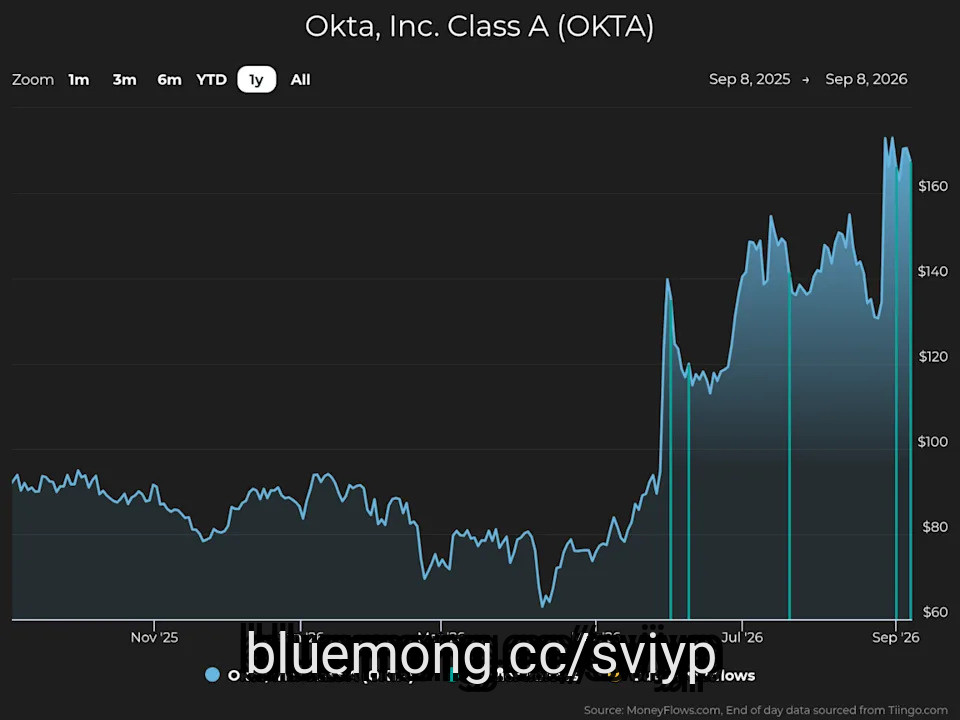
No wonder OKTA shares are up 94% so far this year – and they could rise more. MoneyFlows data shows how Big Money investors are again betting heavily on the stock.
Institutional volumes reveal plenty. In the last year, OKTA has enjoyed strong investor demand, which we believe to be institutional support.
Each green bar signals unusually large volumes in OKTA shares. They reflect our proprietary inflow signal, pushing the stock higher:
Plenty of technology names are under accumulation right now. But there's a powerful fundamental story happening with Okta.
#year #plenty #authentication
0.00$ raised of 0.00$ goal
0 donations
0.00$
to go

2 months ago
Cybersecurity company Mitek Systems (MITK) is seeing the proliferation of artificial intelligence as a business advantage, and its stock is headed toward a buy point amid a year of outperformance over other technology names.
The small-cap company sells verification, authentication and fraud-prevention products. On its website, Mitek touts American Express (AXP), Experian and Intuit (INTU) among its more than 7,000 customers.
The stock has a solid IBD Composite Rating of 94 and has climbed more than 80% during 2026. A recent beat-and-raise financial report helped propel shares toward an entry in a forming cup base.
Mitek shares bulked up nearly 5% in the past week. Further, the weekly chart showed them edging above their 10-week moving average. Trading above 19 on Friday, the stock was nearer to an ideal cup-base buy point of 21.05 set on July 1.
Shares started building the right side of a cup base since a July drag-down with a wider downturn in technology names. Tech stocks got rattled in part by concerns about rising corporate capital expenditures for artificial intelligence. Software stocks in particular this year have been swamped by worries about competition threats from AI tools.
#Stock


4 months ago
The data, collected by omnichannel returns management firm ReBound Returns, is drawn from one million returned orders processed on behalf of its retail clients between July 2025 and May 2026.
The findings highlight a growing challenge for retailers as return rates for online sales approach 20%, with the value in the US market alone nearing $850bn.
ReBound Returns has published these results in its new report, The Returns Fraud Playbook. The research indicates that as more consumers return online purchases, cases of fraud and abuse are rising.
According to the Merchant Risk Council, 'refund and returns policy abuse' is currently considered the most common type of fraud faced by merchants. This trend continues despite the widespread use of identity verification, authentication procedures, and risk-scoring systems designed to prevent fraud during the initial purchase.
The report identifies a key issue in that many retailers refund customers before physically inspecting returned goods.


4 months ago
As the retail landscape shifts toward digital marketplaces and reimagined department stores, choosing between eBay (NASDAQ:EBAY) and Macy's (NYSE:M) depends on whether you value high-margin technology or a classic turnaround play.
eBay operates a global online platform connecting buyers and sellers, while Macy's anchors its business in physical storefronts and luxury brands. They are sometimes compared because both companies are navigating a rapidly evolving consumer environment where scale and digital integration determine long-term viability in a competitive market.
eBay operates a global online marketplace that bypasses the need for owned inventory, focusing instead on connecting millions of buyers and sellers. The company specializes in enthusiast categories such as motor vehicles, collectibles, and refurbished items, often utilizing partners for authentication services. As of June 2026, GameStop (NYSE:GME) has submitted a non-binding acquisition proposal at $125 per share, introducing a new layer of uncertainty regarding the company's future ownership.
eBay competes within the broader universe of retail stocks by focusing on these niche categories to drive engagement. In fiscal 2025, revenue reached nearly $11.1 billion, good for roughly 7.9% year-over-year growth. eBay generated net income of roughly $2 billion, resulting in a net margin of close to 18.3%.
As of its December 2025 balance sheet, the company maintained a debt-to-equity ratio of 1.6x. That means eBay uses $1.60 of debt for every dollar of equity owned by shareholders to fund its operations. The current ratio, which measures the ability to pay short-term debts with ***** ets that can be converted to cash quickly, stood at 1.1x, while free cash flow reached nearly $1.7 billion for the year.


4 months ago
Alkami Technology Inc (NASDAQ:ALKT) is one of the best stocks to buy according to Billionaire Barry Rosenstein. Jana Partners increased its investment in Alkami Technology Inc (NASDAQ:ALKT) by 11% during Q1 2026, as per its latest 13F filing. The stock is backed by 27 hedge funds, and **** ysts see it rising more than 45% from the current price.
everything possible/Shutterstock.com
Alkami Technology Inc (NASDAQ:ALKT) continues to look for new ways to improve its digital banking platform. On June 10, the company announced an integration with Yodlee to shift data sharing services to the Financial Data Exchange (FDX) application programming interface.
The company said that this transition would improve performance and reduce login disruptions when users are accessing third-party financial applications. The company explained that the shift supports both security and user experience.
Alkami delivers the integration as a built-in capability within its digital banking platform. The company said the FDX API integration supports credential-free but consent-based authentication for sharing financial data between institutions and third-party services.

5 months ago
We just covered the Top 10 Stock Picks of 10 Famous Billionaires. Apple Inc. (NASDAQ:AAPL) ranks #4 (see Top 5 Stock Picks of 5 Famous Billionaires).
Number of Hedge Funds: 170
Top Pick Of: Warren Buffett's Berkshire Hathaway
Apple was once seen as a laggard in the AI race. Now it is looking like a winner, and without breaking the bank on capex. Apple's capex-to-revenue ratio stands at just 2.5%, well below the 10%-plus seen at most mega-cap peers. As competitors burn through cash on AI infrastructure and investors question whether those investments will generate returns, Apple is taking a different path.
The company plans to monetize AI through its massive existing customer base. Apple now has over 2.5 billion active devices, up from 2.35 billion a year ago, a gain of 150 million devices in one year. That installed base positions Apple to benefit from the shift toward agentic AI applications, where users need a trusted platform to manage identity, authentication, and payments. Few platforms can match Apple on that front.

5 months ago
Some offers on this page are from advertisers who pay us, which may affect which products we write about, but not our recommendations. See our Advertiser Disclosure.
As the world's connectivity has improved and technology has become cheaper and more advanced, the emergence of "fintech" was bound to happen. This technology has made financial management cheaper and less time-consuming, improving the lives of millions.
But what exactly is fintech, and how does it work? We'll explore that question and break down fintech's benefits and drawbacks. Fintech is likely here to stay, which means we should understand exactly what it is and how it will change the financial landscape going forward.
"Fintech" is a blend of the words "financial" and "technology." As this combination suggests, fintech refers to using digital tools, software, or technology to manage financials or make transactions. Fintech can take many forms in the real world, including everything from mobile banking to peer-to-peer (P2P) payments to cryptocurrency.
Fintech allows customers to quickly log in to their accounts, often supporting biometric logins on their mobile apps. To keep customer accounts safe, fintech companies typically support strong security measures like 256-bit encryption and two-factor authentication (2FA).