
16 days ago
Alluvium ****** et Management, an ****** et management company, released its "Conventum – Alluvium Global Fund" second-quarter 2026 investor letter. The letter can be downloaded here. The second quarter reflected a sharp shift from geopolitical uncertainty and oil market volatility to a powerful equity rally led by semiconductor companies. Despite the broader market strength, the Fund declined 1.4% in EUR terms, 2.2% in USD terms, and 3.9% in AUD terms. Portfolio results were mixed, with Alphabet benefiting from strong Cloud growth, while Robert Half, H&R Block, and other holdings posted solid gains. However, cable businesses and several healthcare and consumer holdings weighed on performance. Also, check the fund's top five holdings to see its best picks in 2026.
In its second-quarter 2026 investor letter, Conventum – Alluvium Global Fund highlighted Ryanair Holdings plc (NASDAQ:RYAAY). Headquartered in Swords, Ireland, Ryanair Holdings plc (NASDAQ:RYAAY) provides scheduled passenger airline services. On September 15, 2026, Ryanair Holdings plc (NASDAQ:RYAAY) closed at $51.95 per share. Over the past month, Ryanair Holdings plc (NASDAQ:RYAAY) declined 5.18%, and its shares lost 9.81% over the past 52 weeks. Ryanair Holdings plc (NASDAQ:RYAAY) has a market capitalization of $26.32 billion and its stock has traded within a 52-week range of $51.68 and $74.24.
Conventum – Alluvium Global Fund stated the following regarding Ryanair Holdings plc (NASDAQ:RYAAY) in its Q2 2026 investor letter:
"Similarly with Ryanair Holdings plc (NASDAQ:RYAAY) (up 14.6%) its share price was faltering and we added to our position, but it since bounced back to account for more than 10% of the Fund, so in this case we were forced to sell a little. It now accounts for 9.9% of the Fund."
Ryanair Holdings plc (NASDAQ:RYAAY) is not on our list of the 40 Most Popular Stocks Among Hedge Funds. As per our database, 23 hedge fund portfolios held Ryanair Holdings plc (NASDAQ:RYAAY) at the end of the second quarter which was 29 in the previous quarter. While we acknowledge the potential of Ryanair Holdings plc (NASDAQ:RYAAY) as an investment, we believe certain AI stocks offer greater upside potential and carry less downside risk. If you're looking for an extremely undervalued AI stock that also stands to benefit significantly from Trump-era tariffs and the onshoring trend, see our free report on the best short-term AI stock.
#NASDAQ #ryaay #conventum #global
In its second-quarter 2026 investor letter, Conventum – Alluvium Global Fund highlighted Ryanair Holdings plc (NASDAQ:RYAAY). Headquartered in Swords, Ireland, Ryanair Holdings plc (NASDAQ:RYAAY) provides scheduled passenger airline services. On September 15, 2026, Ryanair Holdings plc (NASDAQ:RYAAY) closed at $51.95 per share. Over the past month, Ryanair Holdings plc (NASDAQ:RYAAY) declined 5.18%, and its shares lost 9.81% over the past 52 weeks. Ryanair Holdings plc (NASDAQ:RYAAY) has a market capitalization of $26.32 billion and its stock has traded within a 52-week range of $51.68 and $74.24.
Conventum – Alluvium Global Fund stated the following regarding Ryanair Holdings plc (NASDAQ:RYAAY) in its Q2 2026 investor letter:
"Similarly with Ryanair Holdings plc (NASDAQ:RYAAY) (up 14.6%) its share price was faltering and we added to our position, but it since bounced back to account for more than 10% of the Fund, so in this case we were forced to sell a little. It now accounts for 9.9% of the Fund."
Ryanair Holdings plc (NASDAQ:RYAAY) is not on our list of the 40 Most Popular Stocks Among Hedge Funds. As per our database, 23 hedge fund portfolios held Ryanair Holdings plc (NASDAQ:RYAAY) at the end of the second quarter which was 29 in the previous quarter. While we acknowledge the potential of Ryanair Holdings plc (NASDAQ:RYAAY) as an investment, we believe certain AI stocks offer greater upside potential and carry less downside risk. If you're looking for an extremely undervalued AI stock that also stands to benefit significantly from Trump-era tariffs and the onshoring trend, see our free report on the best short-term AI stock.
#NASDAQ #ryaay #conventum #global


17 days ago
Alluvium ***** et Management, an ***** et management company, released its "Conventum – Alluvium Global Fund" second-quarter 2026 investor letter. The letter can be downloaded here. The second quarter reflected a sharp shift from geopolitical uncertainty and oil market volatility to a powerful equity rally led by semiconductor companies. Despite the broader market strength, the Fund declined 1.4% in EUR terms, 2.2% in USD terms, and 3.9% in AUD terms. Portfolio results were mixed, with Alphabet benefiting from strong Cloud growth, while Robert Half, H&R Block, and other holdings posted solid gains. However, cable businesses and several healthcare and consumer holdings weighed on performance. Also, check the fund's top five holdings to see its best picks in 2026.
In its second-quarter 2026 investor letter, Conventum – Alluvium Global Fund highlighted Ryanair Holdings plc (NASDAQ:RYAAY). Headquartered in Swords, Ireland, Ryanair Holdings plc (NASDAQ:RYAAY) provides scheduled passenger airline services. On September 15, 2026, Ryanair Holdings plc (NASDAQ:RYAAY) closed at $51.95 per share. Over the past month, Ryanair Holdings plc (NASDAQ:RYAAY) declined 5.18%, and its shares lost 9.81% over the past 52 weeks. Ryanair Holdings plc (NASDAQ:RYAAY) has a market capitalization of $26.32 billion and its stock has traded within a 52-week range of $51.68 and $74.24.
Conventum – Alluvium Global Fund stated the following regarding Ryanair Holdings plc (NASDAQ:RYAAY) in its Q2 2026 investor letter:
"Similarly with Ryanair Holdings plc (NASDAQ:RYAAY) (up 14.6%) its share price was faltering and we added to our position, but it since bounced back to account for more than 10% of the Fund, so in this case we were forced to sell a little. It now accounts for 9.9% of the Fund."
Ryanair Holdings plc (NASDAQ:RYAAY) is not on our list of the 40 Most Popular Stocks Among Hedge Funds. As per our database, 23 hedge fund portfolios held Ryanair Holdings plc (NASDAQ:RYAAY) at the end of the second quarter which was 29 in the previous quarter. While we acknowledge the potential of Ryanair Holdings plc (NASDAQ:RYAAY) as an investment, we believe certain AI stocks offer greater upside potential and carry less downside risk. If you're looking for an extremely undervalued AI stock that also stands to benefit significantly from Trump-era tariffs and the onshoring trend, see our free report on the best short-term AI stock.
#ryanair
In its second-quarter 2026 investor letter, Conventum – Alluvium Global Fund highlighted Ryanair Holdings plc (NASDAQ:RYAAY). Headquartered in Swords, Ireland, Ryanair Holdings plc (NASDAQ:RYAAY) provides scheduled passenger airline services. On September 15, 2026, Ryanair Holdings plc (NASDAQ:RYAAY) closed at $51.95 per share. Over the past month, Ryanair Holdings plc (NASDAQ:RYAAY) declined 5.18%, and its shares lost 9.81% over the past 52 weeks. Ryanair Holdings plc (NASDAQ:RYAAY) has a market capitalization of $26.32 billion and its stock has traded within a 52-week range of $51.68 and $74.24.
Conventum – Alluvium Global Fund stated the following regarding Ryanair Holdings plc (NASDAQ:RYAAY) in its Q2 2026 investor letter:
"Similarly with Ryanair Holdings plc (NASDAQ:RYAAY) (up 14.6%) its share price was faltering and we added to our position, but it since bounced back to account for more than 10% of the Fund, so in this case we were forced to sell a little. It now accounts for 9.9% of the Fund."
Ryanair Holdings plc (NASDAQ:RYAAY) is not on our list of the 40 Most Popular Stocks Among Hedge Funds. As per our database, 23 hedge fund portfolios held Ryanair Holdings plc (NASDAQ:RYAAY) at the end of the second quarter which was 29 in the previous quarter. While we acknowledge the potential of Ryanair Holdings plc (NASDAQ:RYAAY) as an investment, we believe certain AI stocks offer greater upside potential and carry less downside risk. If you're looking for an extremely undervalued AI stock that also stands to benefit significantly from Trump-era tariffs and the onshoring trend, see our free report on the best short-term AI stock.
#ryanair

29 days ago
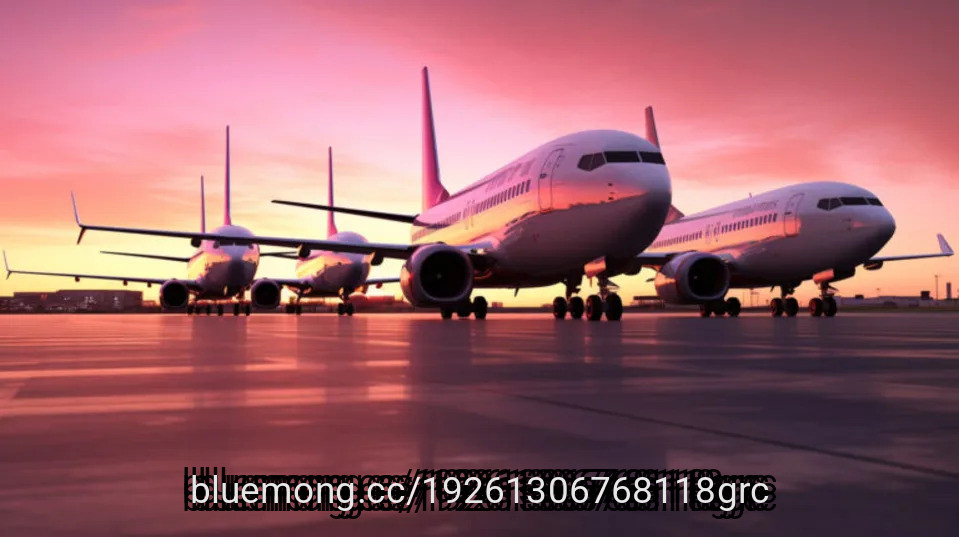
Ryanair, the biggest low-fare airline in Europe, on Wednesday lowered its winter traffic target to reduce exposure to high unhedged oil prices, and warned the some of its less well-hedged competitors could struggle to survive this winter amid high fuel costs.
Since the Iran war slashed deliveries of crude oil and petroleum products from the Middle East, rising jet fuel prices have eaten into the profitability of all airlines globally.
Ryanair is one of the most hedged airlines, with about 80% of fuel costs hedged at $67 per barrel. However, the remaining unhedged 20% is highly exposed to the jet fuel prices currently trading at about $140 per barrel, Ryanair said in its August 2026 traffic stats.
In light of the high unhedged oil prices, "it is sensible to strategically reduce the Group's exposure to unhedged jet fuel during the unprofitable winter schedule (from Nov. to Mar.)," the budget airline said.
Ryanair cut its winter traffic target to 214 million from 216 million passengers, expecting traffic to be broadly flat year-over-year.
#airline
Since the Iran war slashed deliveries of crude oil and petroleum products from the Middle East, rising jet fuel prices have eaten into the profitability of all airlines globally.
Ryanair is one of the most hedged airlines, with about 80% of fuel costs hedged at $67 per barrel. However, the remaining unhedged 20% is highly exposed to the jet fuel prices currently trading at about $140 per barrel, Ryanair said in its August 2026 traffic stats.
In light of the high unhedged oil prices, "it is sensible to strategically reduce the Group's exposure to unhedged jet fuel during the unprofitable winter schedule (from Nov. to Mar.)," the budget airline said.
Ryanair cut its winter traffic target to 214 million from 216 million passengers, expecting traffic to be broadly flat year-over-year.
#airline


2 months ago
Several alarming aviation incidents are making headlines, including a United flight headed to Phoenix that blew out a tire during takeoff at Chicago's O'Hare airport. It comes on the heels of the NTSB releasing a preliminary report detailing what went wrong on board July's Ryanair flight from Greece where a passenger was nearly sucked out of a broken cabin window. NBC's Erin McLaughlin reports for TODAY.
#phoenix #ntsb #ryanair #mclaughlin
#phoenix #ntsb #ryanair #mclaughlin



2 months ago
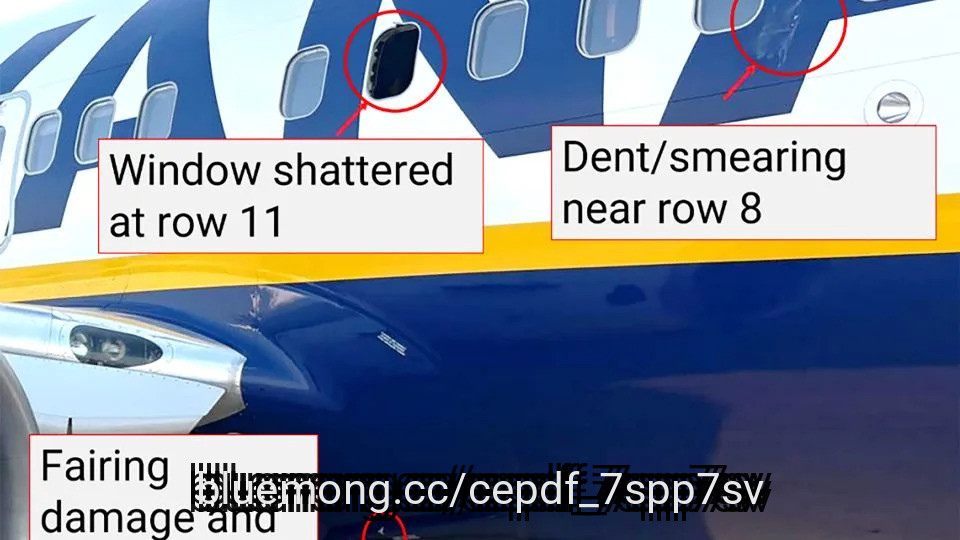
A jet engine fan blade on a Boeing 737 broke free and slammed into the side of the passenger cabin, breaking a window and leading to a man being partially sucked outside the aircraft, the National Transportation Safety Board said in a preliminary report on Thursday.
The July 10 Ryanair flight to Memmingen, Germany, had taken off less than 10 minutes earlier and was forced to return to Thessaloniki in Greece for an emergency landing.
The head and shoulders of 61-year-old Ljubisa Karovic, sitting in seat 11F, were sucked out the window, causing significant injuries, his wife told Reuters. She and the flight attendant pulled him back into the plane, she said.
Seven and a half minutes after takeoff, the pilots got a warning for high engine vibrations, according to the report. Nearly two minutes later, the vibrations increased significantly and pilots "heard a loud bang" as the autopilot disengaged.
A photo annotated by the NTSB shows damage to the side of the plane, including the missing window. - NTSB
#window #engine
The July 10 Ryanair flight to Memmingen, Germany, had taken off less than 10 minutes earlier and was forced to return to Thessaloniki in Greece for an emergency landing.
The head and shoulders of 61-year-old Ljubisa Karovic, sitting in seat 11F, were sucked out the window, causing significant injuries, his wife told Reuters. She and the flight attendant pulled him back into the plane, she said.
Seven and a half minutes after takeoff, the pilots got a warning for high engine vibrations, according to the report. Nearly two minutes later, the vibrations increased significantly and pilots "heard a loud bang" as the autopilot disengaged.
A photo annotated by the NTSB shows damage to the side of the plane, including the missing window. - NTSB
#window #engine



2 months ago
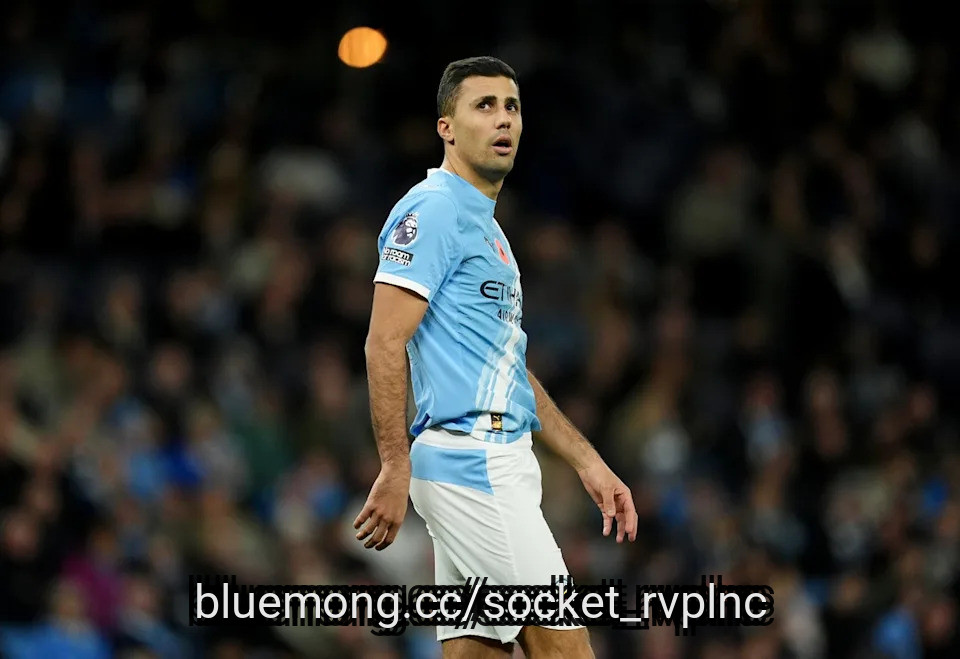
There was a particularly distinguished passenger on a distinctly unglamorous airline. Rodri was on the Ryanair flight to Liverpool and part of the surprise for some was that, via Merseyside, he was returning to Manchester at all. The subject of bids from Barcelona, Rodri's future may lie in his native Spain rather than at Manchester City.
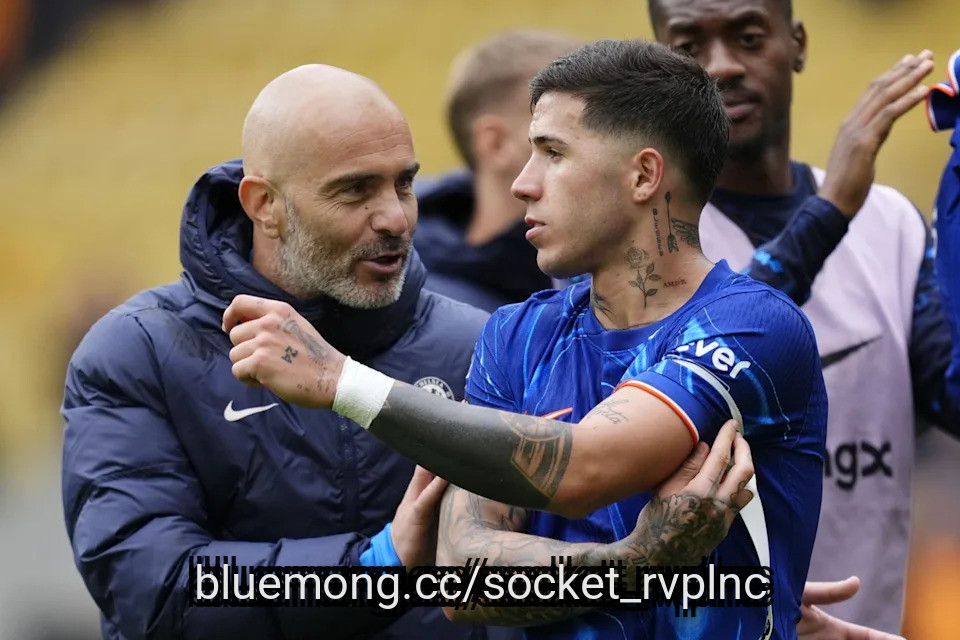
It is so far unknown if he incurred Ryanair's infamous fines for bringing the World Cup's Golden Ball in hand luggage or whether he stowed it under a seat. Enzo Maresca saw the man who lifted the most prestigious trophy of all briefly and gave him a big hug, he said. They would talk later. City's new manager coached Rodri when his goal clinched the Champions League and thus the treble in 2023. Whether he will ever manage him remains to be seen; minor back surgery would always have ruled Rodri out of Sunday's Community Shield against **** nal.
Man City are open to letting Rodri return to Spain but only if it helps fund his replacement (PA)
But with Barcelona expected to return with a third offer, Maresca may have to contemplate forging an entirely new midfield. His inheritance from Pep Guardiola was an enviable one in many respects, but if he is the continuity candidate, there will be change at the centre of the pitch. Rodri has a year left on his deal but seems to have decided to go. Bernardo Silva left when his contract expired; Guardiola's own departure made it a still more natural endpoint for one of his closest allies. Tijjani Reijnders is heading for the exit, too, off to Al Qadsiah for £51m, and if the Dutchman lost his place as Guardiola preferred an axis of Rodri and Silva, it was nevertheless the case that only six players made more appearances for City last season.
Guardiola famously said that, if he could pick 11 midfielders, he would. There were times when he had a surfeit of options: in 2019-20, for instance, he had not merely Rodri and Bernardo Silva but also David Silva, Ilkay Gundogan, Kevin De Bruyne and Fernandinho.
#silva #Barcelona
It is so far unknown if he incurred Ryanair's infamous fines for bringing the World Cup's Golden Ball in hand luggage or whether he stowed it under a seat. Enzo Maresca saw the man who lifted the most prestigious trophy of all briefly and gave him a big hug, he said. They would talk later. City's new manager coached Rodri when his goal clinched the Champions League and thus the treble in 2023. Whether he will ever manage him remains to be seen; minor back surgery would always have ruled Rodri out of Sunday's Community Shield against **** nal.
Man City are open to letting Rodri return to Spain but only if it helps fund his replacement (PA)
But with Barcelona expected to return with a third offer, Maresca may have to contemplate forging an entirely new midfield. His inheritance from Pep Guardiola was an enviable one in many respects, but if he is the continuity candidate, there will be change at the centre of the pitch. Rodri has a year left on his deal but seems to have decided to go. Bernardo Silva left when his contract expired; Guardiola's own departure made it a still more natural endpoint for one of his closest allies. Tijjani Reijnders is heading for the exit, too, off to Al Qadsiah for £51m, and if the Dutchman lost his place as Guardiola preferred an axis of Rodri and Silva, it was nevertheless the case that only six players made more appearances for City last season.
Guardiola famously said that, if he could pick 11 midfielders, he would. There were times when he had a surfeit of options: in 2019-20, for instance, he had not merely Rodri and Bernardo Silva but also David Silva, Ilkay Gundogan, Kevin De Bruyne and Fernandinho.
#silva #Barcelona

2 months ago
Ryanair (NASDAQ:RYAAY) reported a difficult start to its fiscal year, with PAT for the quarter falling 34% to €593 million (£503 million) as the price of its 20% unhedged jet fuel spiked and fares fell 6%. Although revenue edged 1% higher to €4.4 billion, the airline was forced to lower ticket prices to stimulate demand amid geopolitical uncertainty. The company also anticipates summer fares to be slightly lower compared to last year, mainly due to "consumer hesitancy" surrounding air travel. The question for investors now is whether Ryanair's (NASDAQ:RYAAY) cost advantages are enough to offset weaker pricing if that trend continues.
At first glance, the quarter looks disappointing. However, the underlying demand picture was stronger than the headline profit decline suggests. Passenger numbers increased 6% during the quarter, allowing revenue to rise 1% to €4.4 billion despite a 6% decline in fares. That suggests consumers are still willing to travel, even if airlines have had to compete more aggressively on price.
The company's biggest advantage, however, may not be demand but costs. Management said Ryanair (NASDAQ:RYAAY) remains better positioned than many of its competitors because approximately 80% of its fuel requirements through the end of March 2027 have already been hedged at $67 per barrel. It also hedged another 15% of next year's fuel needs at $85 per barrel during the recent interim ceasefire. By locking in a significant portion of its future fuel costs, Ryanair (NASDAQ:RYAAY) has reduced its exposure to one of the airline industry's biggest sources of earnings volatility.
Management also declined to provide a full-year profit forecast, arguing that it is still too early given the importance of close-in bookings over the remainder of the summer. While that creates uncertainty, it also suggests the company believes the rest of the summer season will play a much larger role in determining full-year performance than the first quarter alone.
The biggest concern for Ryanair (NASDAQ:RYAAY) following the recent earnings is that stronger passenger demand has not translated into stronger profitability. Despite carrying more passengers, Ryanair reported a 34% decline in profit after reducing fares to stimulate demand. If pricing remains under pressure, volume growth alone may not be enough to drive a meaningful earnings recovery.
#fuel
At first glance, the quarter looks disappointing. However, the underlying demand picture was stronger than the headline profit decline suggests. Passenger numbers increased 6% during the quarter, allowing revenue to rise 1% to €4.4 billion despite a 6% decline in fares. That suggests consumers are still willing to travel, even if airlines have had to compete more aggressively on price.
The company's biggest advantage, however, may not be demand but costs. Management said Ryanair (NASDAQ:RYAAY) remains better positioned than many of its competitors because approximately 80% of its fuel requirements through the end of March 2027 have already been hedged at $67 per barrel. It also hedged another 15% of next year's fuel needs at $85 per barrel during the recent interim ceasefire. By locking in a significant portion of its future fuel costs, Ryanair (NASDAQ:RYAAY) has reduced its exposure to one of the airline industry's biggest sources of earnings volatility.
Management also declined to provide a full-year profit forecast, arguing that it is still too early given the importance of close-in bookings over the remainder of the summer. While that creates uncertainty, it also suggests the company believes the rest of the summer season will play a much larger role in determining full-year performance than the first quarter alone.
The biggest concern for Ryanair (NASDAQ:RYAAY) following the recent earnings is that stronger passenger demand has not translated into stronger profitability. Despite carrying more passengers, Ryanair reported a 34% decline in profit after reducing fares to stimulate demand. If pricing remains under pressure, volume growth alone may not be enough to drive a meaningful earnings recovery.
#fuel


2 months ago
Ryanair Holdings plc (NASDAQ:RYAAY)'s fiscal first-quarter profit fell 34% to €538 million from €820 million a year earlier. Revenue rose about 1% to €4.38 billion, short of the €4.48 billion ***** ysts expected. Passenger traffic climbed 6% to 61.3 million. Shares fell as much as 7% on the day (July 20). Rival carriers Wizz Air, Lufthansa, IAG, and Air France-KLM all dropped too.
Two things drove the miss. Firstly, fares fell 6% as the Iran war made travelers nervous and pushed bookings closer to departure. Secondly, operating costs rose 11% because the 20% of Ryanair Holdings plc (NASDAQ:RYAAY)'s jet fuel that isn't hedged more than doubled in price, hitting $150 a barrel during the quarter. CEO Michael O'Leary said the conflict, EU jet-fuel supply concerns, and general economic uncertainty forced the airline to cut fares to fill seats. He gave no full-year profit guidance, calling second-quarter pricing "trending modestly down" YoY and noting zero visibility into the second half of the year.
That raises a real question. Is this just a short-term problem for Europe's strongest budget airline, or is it the beginning of a long period of low ticket prices that will last even after the war ends?
BULL CASE
Ryanair Holdings plc (NASDAQ:RYAAY)'s own earnings call is the strongest source for the bull case. CFO Neil Sorahan told CNBC the Middle East conflict will cause a capacity shakeout among weaker European airlines this winter, since carriers without Ryanair's cost base or balance sheet may fail or get absorbed. He confirmed Ryanair paid off its final €1.2 billion bond in May. The corporation is now debt-free and owns its roughly 620 aircraft outright, with about €2.8 billion in cash on hand. Sorahan pushed back on demand fears directly, telling CNBC, "No shortage of bookings. No shortage of people traveling, just travelers booking closer to departure.
#billion #fell
Two things drove the miss. Firstly, fares fell 6% as the Iran war made travelers nervous and pushed bookings closer to departure. Secondly, operating costs rose 11% because the 20% of Ryanair Holdings plc (NASDAQ:RYAAY)'s jet fuel that isn't hedged more than doubled in price, hitting $150 a barrel during the quarter. CEO Michael O'Leary said the conflict, EU jet-fuel supply concerns, and general economic uncertainty forced the airline to cut fares to fill seats. He gave no full-year profit guidance, calling second-quarter pricing "trending modestly down" YoY and noting zero visibility into the second half of the year.
That raises a real question. Is this just a short-term problem for Europe's strongest budget airline, or is it the beginning of a long period of low ticket prices that will last even after the war ends?
BULL CASE
Ryanair Holdings plc (NASDAQ:RYAAY)'s own earnings call is the strongest source for the bull case. CFO Neil Sorahan told CNBC the Middle East conflict will cause a capacity shakeout among weaker European airlines this winter, since carriers without Ryanair's cost base or balance sheet may fail or get absorbed. He confirmed Ryanair paid off its final €1.2 billion bond in May. The corporation is now debt-free and owns its roughly 620 aircraft outright, with about €2.8 billion in cash on hand. Sorahan pushed back on demand fears directly, telling CNBC, "No shortage of bookings. No shortage of people traveling, just travelers booking closer to departure.
#billion #fell


2 months ago
Early warnings surrounding the Strait of Hormuz suggested that European airports and fuel markets could face physical shortages by the beginning of summer. Those shortages largely failed to materialise, revealing both the adaptability of global energy markets and their persistent tendency to price worst-case scenarios long before they occur.
When the Strait of Hormuz was effectively closed at the end of February, the first forecasts were dramatic. The disruption affected a route that had carried nearly 20 million barrels per day of crude oil and petroleum products before the conflict, while Gulf exporters had also supplied a significant share of the world's diesel, jet fuel and liquefied petroleum gas. Europe appeared particularly exposed because it imported far more aviation fuel than it produced and had relied heavily on supplies originating in the Middle East.
By April, warnings of physical shortages were becoming increasingly specific. The International Energy Agency estimated that Europe could begin running short of aviation fuel in June if it managed to replace only half of the supplies normally imported from the Gulf. Airlines warned that flights might have to be cancelled, airports considered contingency measures, and European officials began discussing the coordinated release and redistribution of jet fuel reserves. Ryanair suggested that a loss of 10% to 20% of available supply could force airlines to cut capacity during the summer season.
June has now passed, however, and European aviation has not ground to a halt. Petrol stations have not broadly run dry, diesel rationing has not been introduced and the widespread physical shortages that dominated the early discussion have not occurred. Prices increased sharply, inventories declined and individual routes became less economical, but the energy system absorbed a disruption that the IEA described as the largest in the history of the global oil market.
Related: Europe's Heatwave Is Becoming an Energy Crisis
When the Strait of Hormuz was effectively closed at the end of February, the first forecasts were dramatic. The disruption affected a route that had carried nearly 20 million barrels per day of crude oil and petroleum products before the conflict, while Gulf exporters had also supplied a significant share of the world's diesel, jet fuel and liquefied petroleum gas. Europe appeared particularly exposed because it imported far more aviation fuel than it produced and had relied heavily on supplies originating in the Middle East.
By April, warnings of physical shortages were becoming increasingly specific. The International Energy Agency estimated that Europe could begin running short of aviation fuel in June if it managed to replace only half of the supplies normally imported from the Gulf. Airlines warned that flights might have to be cancelled, airports considered contingency measures, and European officials began discussing the coordinated release and redistribution of jet fuel reserves. Ryanair suggested that a loss of 10% to 20% of available supply could force airlines to cut capacity during the summer season.
June has now passed, however, and European aviation has not ground to a halt. Petrol stations have not broadly run dry, diesel rationing has not been introduced and the widespread physical shortages that dominated the early discussion have not occurred. Prices increased sharply, inventories declined and individual routes became less economical, but the energy system absorbed a disruption that the IEA described as the largest in the history of the global oil market.
Related: Europe's Heatwave Is Becoming an Energy Crisis


3 months ago
Thessaloniki, Greece — A man was nearly sucked out the window of a Ryanair flight when it "detached" midair en route to Germany, with other passengers pulling him back inside, a witness told Greek media on Friday.
The passenger, described as a tourist from Serbia on a flight from Thessaloniki in Greece to Memmingen in Germany, was hospitalized with friction burns but was otherwise in good condition, authorities said. The ****** ociated Press quoted an unnamed Greek hospital official as saying the 61-year-old man was treated for neck and shoulder injuries and friction burns.
"Most of us had fallen asleep, we had closed our eyes. There was a noise, like a tire bursting," a fellow passenger told Radio Thessaloniki.
"We immediately realized there had been a decompression. There were screams ... for a moment I thought someone had accidentally opened the emergency door," the woman said. "The masks dropped and there was a strong smell. The head and shoulders of one passenger were outside the window. Fortunately, he hadn't taken off his seat belt."
Other passengers near the man helped to pull him in, she said.
The passenger, described as a tourist from Serbia on a flight from Thessaloniki in Greece to Memmingen in Germany, was hospitalized with friction burns but was otherwise in good condition, authorities said. The ****** ociated Press quoted an unnamed Greek hospital official as saying the 61-year-old man was treated for neck and shoulder injuries and friction burns.
"Most of us had fallen asleep, we had closed our eyes. There was a noise, like a tire bursting," a fellow passenger told Radio Thessaloniki.
"We immediately realized there had been a decompression. There were screams ... for a moment I thought someone had accidentally opened the emergency door," the woman said. "The masks dropped and there was a strong smell. The head and shoulders of one passenger were outside the window. Fortunately, he hadn't taken off his seat belt."
Other passengers near the man helped to pull him in, she said.


4 months ago
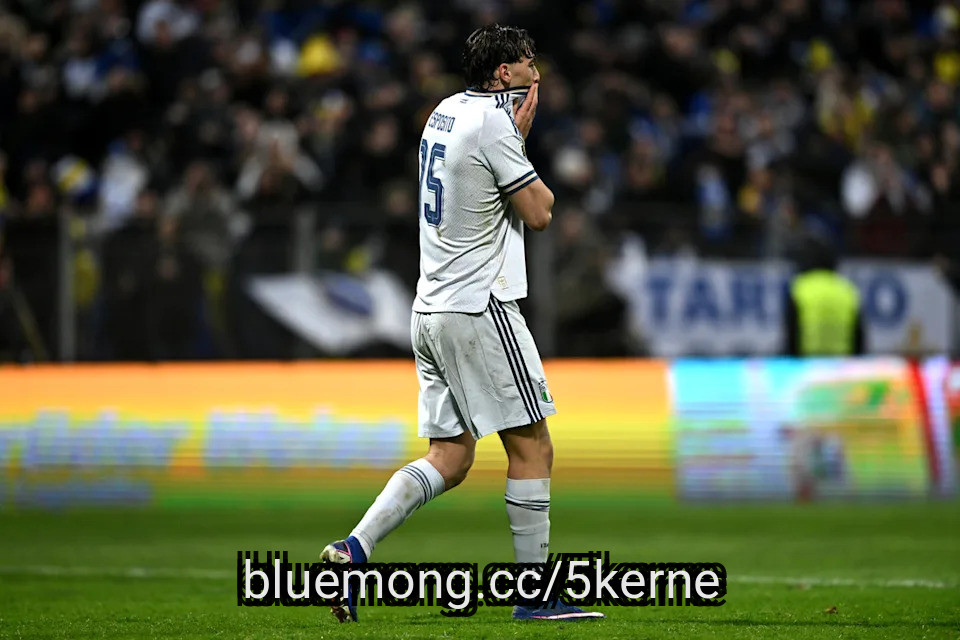
Ryanair trolled Italy with a brutal post on X ahead of the Azzurri’s friendly game against Luxembourg: ‘Where exactly?’
Ryanair trolled the Italian national team on Wednesday with a cheeky comment on X.
The Italian FA shared a photo of the players boarding for their away game in Luxembourg, captioned “en route.” Ryanair quickly responded with a highly sarcastic remark: “To where exactly?”
Italy have failed to qualify for the World Cup for the third time in a row, making their last appearance in the competition in 2014.
The Azzurri, led by caretaker coach Silvio Baldini, beat Luxembourg 1-0 on Wednesday and will finish the season on Sunday in another away friendly in Greece.
Ryanair trolled the Italian national team on Wednesday with a cheeky comment on X.
The Italian FA shared a photo of the players boarding for their away game in Luxembourg, captioned “en route.” Ryanair quickly responded with a highly sarcastic remark: “To where exactly?”
Italy have failed to qualify for the World Cup for the third time in a row, making their last appearance in the competition in 2014.
The Azzurri, led by caretaker coach Silvio Baldini, beat Luxembourg 1-0 on Wednesday and will finish the season on Sunday in another away friendly in Greece.