
From my own Bears-centric view of things, the Chicago Bears under Ryan Poles seem to have had a pretty rare set of conditions to help usher along a rebuild. In his first five years on the job, Poles had four selections in the top third of the first round (i.e. Top 11 picks) including the #1 overall pick. He also made nine eight selections in the Top 50, and seventeen selections in the Top 100. How many GMs have enjoyed that much opportunity?
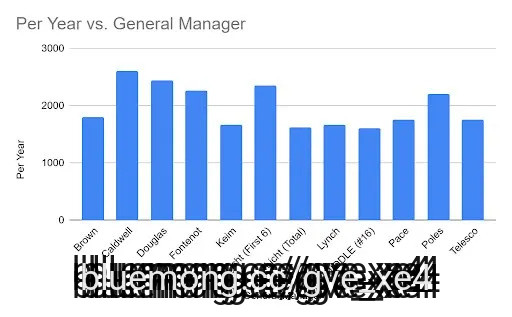
Well, it depends. Obviously, the selections needed to be available under the same general manager. This excludes teams like Cleveland, which had back-to-back #1 selections in 2017 (Garrett) and 2018 (Mayfield) and seven top-ten picks in just nine years–but that was under six different managers. It also excludes Nick Cesario of Houston Texans, who would put up a good show but who only has three picks in the top eleven, even if all those were made within the top three. Likewise, if the sticking point is four elite selections, Trent Baalke doesn't count either. He made back-to-back selections with the #1 overall pick (Lawrence and Walker), and despite having more pricey premium picks on a per-year basis than Poles (averaging 2,581 points on the Jimmy Johnson chart just in his four years, or the equivalent of having the #4 spot in the draft for four straight years), he didn't qualify because his tenure was too short.
Also not included, even though he would technically qualify, is Les Snead. He did in fact have four elite picks (and the #13 selection he used on Aaron Donald) in a 4-year stretch, but I intend on doing a larger piece later in the season looking at exactly how the Rams have defied convention on so many different fronts. For now, though, here are the other nine in ascending order of Top 11 draft picks made, with ties broken by average value of top picks made.
Licht needed seven years to reach the playoffs, but when he got his team there, they won it all. His first six years averaged 2,358 points of premium draft selections per year and a .34 win rate, meaning he had more to work with but worse results than Poles has had to date. Of course, that championship the next year covers a lot.
Key Selections: 4/18/31, meaning that he had 4 picks in the top eleven, 18 picks in the top fifty, and 31 in the first three rounds* with 19,457 in premium picks (1,621 per year) over his 12-year career.
#picks #four #first #nine

2 months ago