1 month ago
(Bloomberg) -- A federal judge suggested a court-appointed "neutral" overseer could allay concerns that the Justice Department might use a long-standing US fund to revive plans to compensate supporters of President Donald Trump as victims of government "weaponization."
Most Read from Bloomberg
Saudis Give European Oil Buyers No Supplies for Next Month
Zuckerberg Has an AI Empire to Build. Meet the Adviser Who Handles the Details
McDonald's Is Planning to Revamp Its Value Strategy to Revive US Sales
#revive #justice #department #Trump
Most Read from Bloomberg
Saudis Give European Oil Buyers No Supplies for Next Month
Zuckerberg Has an AI Empire to Build. Meet the Adviser Who Handles the Details
McDonald's Is Planning to Revamp Its Value Strategy to Revive US Sales
#revive #justice #department #Trump


2 months ago
Newly confirmed Attorney General Todd Blanche tells Meet the Press there is no plan to revive President Trump's so-called "anti-weaponization fund" for people who believe they were wrongfully prosecuted by the federal government, including January 6th rioters.
#Attorney
#Attorney



3 months ago
Acting Attorney General Todd Blanche just lost the last little bit of cushion he had left to survive confirmation.
Sen. Lisa Murkowski, R-Alaska, announced that she would not support Blanche's nomination to be the nation's top prosecutor and law enforcement official, dealing another blow to his rocky confirmation process.
Her defection, despite a heavy lobbying effort by Blanche that saw him make the trek to Alaska, means that Senate Republican leadership can't afford to lose anymore votes to get him across the finish line, given that Sen. Mitch McConnell, R-Ky., though now back home, has still not returned to the Senate.
Collins Drops The Hammer On Trump's Pick To Lead Doj, Jeopardizing Path To Confirmation
Murkowski acknowledged Blanche's visit to Alaska and heavy lobbying effort throughout the last few weeks, but it's his connection to President Donald Trump's nearly $2 billion anti-weaponization fund, and broader concerns of a weaponized Justice Department, that proved the nail in the coffin for her.
#blanche #heavy

3 months ago
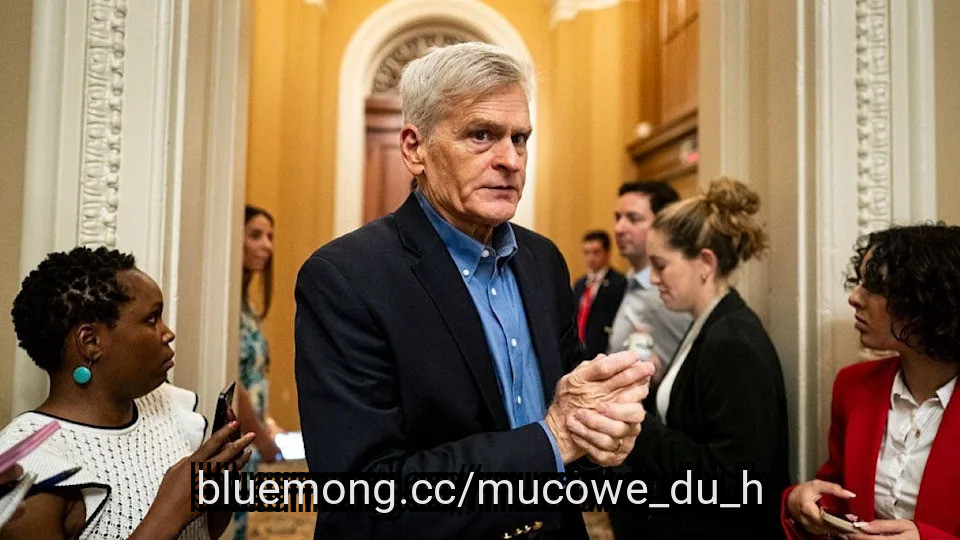
In an exclusive interview with Meet the Press, Sen. John Kennedy (R-La.) discusses concerns over the Trump administration's so-called "anti-weaponization" fund, the subject of the Senate holdup over Todd Blanche's confirmation as attorney general.
#meet #Trump #discusses
#meet #Trump #discusses



3 months ago
President Trump on Saturday threatened to "push hard" to keep a $1.8 billion "anti-weaponization" fund active, amid an ongoing feud between two Republican senators and the Trump administration over the president's nomination of Todd Blanche for attorney general.
#saturday
#saturday



3 months ago
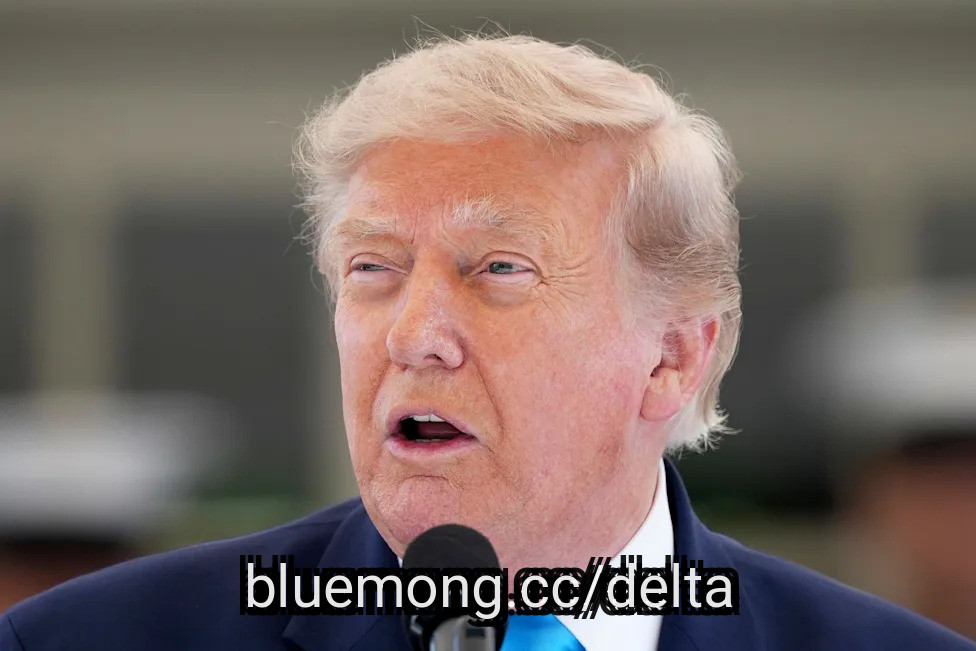
President Donald Trump is appealing a federal judge's decision to continue investigating whether his lawsuit against the IRS was part of a greater scheme to mislead the court.
Trump filed his notice to appeal the ruling by U.S. District Judge Kathleen Williams, who ruled earlier this month that her court had the authority to continue probing a $10 billion lawsuit Trump, his family and businesses filed against the IRS for failing to safeguard his tax return information from leaks.
The parties announced a controversial out-of-court agreement in May in which the Justice Department — representing the IRS — would create a nearly $1.8 billion "anti-weaponization fund" to pay out purported victims of political retribution and the IRS would spare Trump and his businesses from ongoing audits.
In a blistering order July 13, Williams accused Trump of filing the lawsuit to "gain the imprimatur of judicial legitimacy for a 'settlement' that had no viable basis in law or fact." She also said exempting Trump from audits would violate a federal law that prohibits the White House from directing IRS investigations.
Williams also noted that the case itself defied legal procedure because Trump sued an administration he runs, essentially putting him in the position of both plaintiff and defendant.
#court #audits
3 months ago
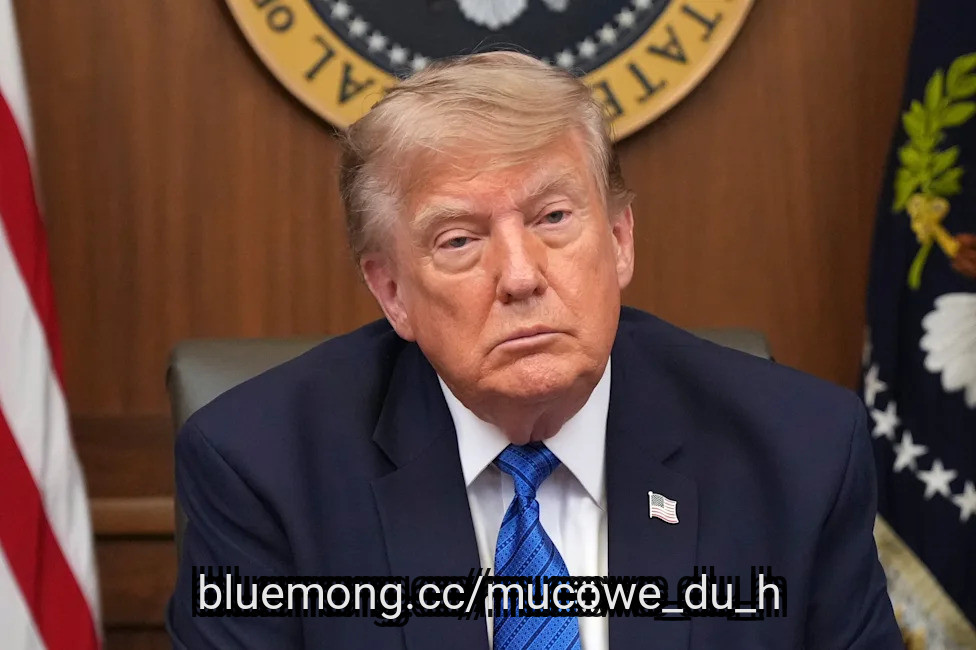
WASHINGTON (AP) — President Donald Trump said Friday that his $1.8 billion anti-weaponization fund is "dead" while also continuing to defend it, further complicating his administration's negotiations with two Republican senators who are blocking his attorney general nominee in protest.
Trump told reporters at Camp David on Friday morning that administration officials had "agreed not to have a fund" that compensates his political allies, yet made clear that he disagrees with that decision.
The comments came hours after an early morning social media post in which Trump said people who had been prosecuted by the Justice Department — many of them for their involvement in the violent Jan. 6, 2001, attack on the Capitol — "are suffering still, many ruined, and I felt that they should be given compensation for what has been done to them."
Trump's reluctant declaration that the fund won't be created came as Republican Sens. John Cornyn of Texas and Thom Tillis of North Carolina, both members of the Senate Judiciary Committee, say they won't support Todd Blanche's nomination for attorney general until they see that promise in writing. They have been working for weeks with the White House and Blanche, who is now the acting attorney general, to produce a document to that effect, but both senators have said they aren't satisfied so far.
"The President made it clear today that the so-called Anti Weaponization Fund is still alive, which is exactly why we are attempting to formally end it," Tillis said after Trump's initial social media post.
#Trump #weaponization

3 months ago
WASHINGTON (AP) — Acting Attorney General Todd Blanche confronted skeptical questioning at a Senate confirmation hearing Wednesday about the creation of a fund to compensate allies of President Donald Trump and a tax immunity deal for the president as he aimed to lock down the Republican support needed to advance his nomination.
Blanche insisted the $1.776 billion "Anti-Weaponization Fund," which was scrapped after fierce bipartisan backlash, was "not moving forward." But lawmakers, including Republican Sen. John Cornyn, raised concerns the Trump administration has yet to commit in writing that the fund is dead and it could therefore conceivably be resurrected.
"Just to be clear, the president of the United States, who's a plaintiff in this lawsuit, has not agreed in writing to delete the 'Anti-Weaponization Fund' and there's no guarantee that he won't raise it in the future?" Cornyn asked. Blanche replied that Trump has no power over the fund, which was to have been administered by the Justice Department but never launched.
Cornyn's questions were closely watched given that Blanche requires the support of all Republicans on the Judiciary Committee and the Texas senator has yet to commit to back him.
The hearing arrived at a tumultuous time for the Justice Department, with mass firings and resignations hollowing out the workforce and Democrats and other critics raising alarms that Blanche is still functioning as the president's personal lawyer. He has led the department on an interim basis since April, functioning as the public face of the maligned and later-withdrawn fund and accelerating investigations into perceived Trump adversaries


3 months ago
"I'm guessing I'll be in line," former FBI Director James Comey quipped after Acting Attorney General Todd Blanche announced a "settlement agreement" between President Donald Trump and the IRS that included $1.8 billion in taxpayer money for targets of "lawfare and weaponization." Comey's joke encompasses two reasons why the Senate should not confirm Blanche as attorney general: a flagrantly unconstitutional prosecution and a brazenly corrupt arrangement that delivered huge favors to Trump, his family, and his followers at taxpayers' expense.
Blanche's participation in both of those scams demonstrated his eagerness to please his boss, which explains why Trump nominated him to replace Pam Bondi. But that same tendency should alarm anyone who thinks the attorney general should pursue justice rather than the president's personal agenda.
In a scathing ruling on Monday, a federal judge described Trump's lawsuit against the IRS as a pretext for "a 'settlement' that had no viable basis in law or fact." Kathleen Williams, who oversaw the case in the Southern District of Florida, concluded that it never involved a genuine controversy between adverse parties, since both sides were controlled by the president.
Trump's lawsuit, which was joined by two of his sons and the Trump Organization, preposterously alleged that an IRS contractor's illegal disclosure of their tax returns had caused "at least" $10 billion in damages. In addition to offering an improbable estimate of the injury he had suffered, Trump filed the lawsuit more than two years after learning about the leak, exceeding the time limit set by the statute he invoked.
That law covers unauthorized disclosures by "any officer or employee of the United States." So even if Trump had filed his lawsuit on time, he would have faced the challenge of arguing that a contractor employed by a consulting business fit into that category—a point that the Justice Department has disputed in other cases involving similar claims.


4 months ago
By Dan Rosenzweig-Ziff
WASHINGTON, July 14 (Reuters) - Todd Blanche will walk into his confirmation hearing on Wednesday carrying baggage that might have sunk past attorney general nominees.
That includes a client list featuring the president who nominated him, a since-shelved $1.8 billion "anti-weaponization fund" that many Republicans called reckless and a stack of demands from Democrats, former prosecutors and Jeffrey Epstein survivors urging senators to vote no after they say he botched the release of the Epstein files.
And yet, Republican insiders expect him to easily win confirmation. The outcome will determine who leads the Justice Department at a time when it is pursuing prosecutions of President Donald Trump's perceived adversaries and facing questions about its independence from the White House.
"He's on a glide path to confirmation," said Mike Davis, a former chief counsel for nominations to Senate Judiciary Chairman Chuck Grassley who remains an influential outside voice in the Trump orbit.



4 months ago
By Dan Rosenzweig-Ziff
WASHINGTON, July 14 (Reuters) - Todd Blanche will walk into his confirmation hearing on Wednesday carrying baggage that might have sunk past attorney general nominees.
That includes a client list featuring the president who nominated him, a since-shelved $1.8 billion "anti-weaponization fund" that many Republicans called reckless and a stack of demands from Democrats, former prosecutors and Jeffrey Epstein survivors urging senators to vote no after they say he botched the release of the Epstein files.
And yet, Republican insiders expect him to easily win confirmation. The outcome will determine who leads the Justice Department at a time when it is pursuing prosecutions of President Donald Trump's perceived adversaries and facing questions about its independence from the White House.
"He's on a glide path to confirmation," said Mike Davis, a former chief counsel for nominations to Senate Judiciary Chairman Chuck Grassley who remains an influential outside voice in the Trump orbit.
WASHINGTON, July 14 (Reuters) - Todd Blanche will walk into his confirmation hearing on Wednesday carrying baggage that might have sunk past attorney general nominees.
That includes a client list featuring the president who nominated him, a since-shelved $1.8 billion "anti-weaponization fund" that many Republicans called reckless and a stack of demands from Democrats, former prosecutors and Jeffrey Epstein survivors urging senators to vote no after they say he botched the release of the Epstein files.
And yet, Republican insiders expect him to easily win confirmation. The outcome will determine who leads the Justice Department at a time when it is pursuing prosecutions of President Donald Trump's perceived adversaries and facing questions about its independence from the White House.
"He's on a glide path to confirmation," said Mike Davis, a former chief counsel for nominations to Senate Judiciary Chairman Chuck Grassley who remains an influential outside voice in the Trump orbit.


4 months ago
In 2024, China announced export controls on antimony. It's a metal most people have never heard of, but antimony goes into more than 200 types of military munitions.
Within weeks, the price went from $1,400 per ton to $38,000 — a 2,600% spike — and shipments to the United States fell 97%.
Today, Beijing is setting up for something bigger. And REalloys (NASDAQ: ALOY) — a U.S.-based mine-to-magnet rare earth company — has spent years getting ready for it.
The company holds an exclusive 80% offtake from the only non-Chinese rare earth processing plant in North America capable of processing heavy rare earths. And it operates its own metallization facility in Euclid, Ohio, and plans to source feedstock from the U.S., Canada, Brazil, Kazakhstan, and Greenland, which means no Chinese inputs at any step.
The heavy rare earth materials at the center of China's next mineral weaponization, like dysprosium and terbium, are precisely the ones REalloys has spent years positioning to supply.


4 months ago
As President Donald Trump's lawyers tell it, there is "no evidence" that the May 18 "settlement" of his lawsuit against the IRS, which included huge favors for him, his family, and his supporters, was a product of collusion. That position is hard to take seriously, since both sides in the lawsuit were represented by attorneys who worked for Trump, and the president himself has described the cozy arrangement as "a settlement with myself."
In a June 12 brief ordered by Kathleen Williams, the federal judge in Florida who oversaw Trump v. IRS, the president's lawyers improbably maintained that the "settlement" was business as usual at the Department of Justice (DOJ). That brief "only underscores the need to investigate whether the parties have perpetrated a fraud on this Court and corrupted the integrity of the judicial process," 35 former federal judges argue in a response filed on Friday.
Trump sued the IRS on January 29, claiming that an IRS contractor's illegal disclosure of his tax returns had caused "at least" $10 billion in damages. In addition to offering a plainly preposterous estimate of the injury he had suffered, Trump missed the statutory deadline for filing such claims. And even if he had filed his lawsuit on time, he would have faced the challenge of arguing that the contractor qualified as an "officer or employee of the United States"—a point that the DOJ has disputed in other cases involving similar claims.
Despite those manifest legal weaknesses, the DOJ never contested Trump's claims, in sharp contrast with the way it has handled lawsuits against the IRS by plaintiffs who were not the president. That failure underlined the blatant conflicts of interest created by the case, which pitted Trump against an agency he oversees, represented by DOJ lawyers who serve at his pleasure. Further compromising the DOJ's ability to represent the IRS, an executive order that Trump issued in February 2025 bars the government's lawyers from taking legal positions that contradict the president's.
The situation was so bizarre that Williams questioned whether the case involved a genuine controversy between adverse parties, as required for the lawsuit to proceed. But two days before the deadline for briefing on that crucial issue, Trump dropped his lawsuit, and Acting Attorney General Todd Blanche announced a "settlement agreement" that promised $1.8 billion in taxpayer money for an "Anti-Weaponization Fund" designed to benefit Trump's friends and followers. The next day, Blanche revealed an addendum that purports to shield Trump and his family from liability for tax violations and any other federal offenses they might have committed prior to May 19.

4 months ago
The Justice Department on Friday refused to issue a signed declaration from acting Attorney General Todd Blanche verifying that it no longer intends to pursue President Donald Trump's "Anti-Weaponization Fund."
The DOJ's refusal comes after a federal judge last week gave the administration seven days to verify in a declaration that it wouldn't create the controversial fund.
"Such declarations are unnecessary and the compelled testimony of senior officials from the Executive Branch implicates serious separation of powers concerns," the DOJ said in a court filing Friday to U.S. District Judge Leonie Brinkema, who last week issued an injunction indefinitely blocking the administration from creating the fund.
Judge issues injunction blocking administration's 'Anti-Weaponization Fund'
Brinkema had given the Trump administration seven days to verify in a declaration from acting Attorney General Todd Blanche and Treasury Secretary Scott Bessent that it wouldn't create the fund, which she said would likely lead to the dismissal of the lawsuit she was overseeing against the fund.

4 months ago
By David Morgan
WASHINGTON, June 17 (Reuters) - President Donald Trump's derailment of a U.S. Senate plan to pass a key national security bill this week is only the latest example of a growing rift with Senate Republicans, who are more willing to defy the commander-in-chief in the run-up to the November midterm elections.
Aiming to protect his controversial choice of loyalist Bill Pulte as acting U.S. spy chief, Trump forced the Senate Intelligence Committee to postpone a confirmation hearing for U.S. Attorney Jay Clayton, his permanent nominee for director of national security, who Republicans had hoped to fast-track into the job.
"He made a colossal mistake," Republican Senator Thom Tillis said of the president's move. "It's undermining our ability to produce the very results he wants."
It was the latest in a series of actions by Trump that have upended Senate Republican plans to move major legislation intended to forward his agenda. Last month, his announcement of a $1.8 billion "antiweaponization" fund to compensate political allies who claim to have been victimized by federal authorities stalled a $70 billion bill to fund his immigration crackdown.



4 months ago
"I'm supposed to work out a settlement with myself," President Donald Trump told reporters a few days after he sued the IRS. He wasn't kidding: His January 29 lawsuit, which alleged damages from an IRS contractor's illegal leaking of his tax returns, pitted Trump against an agency he oversees, represented by Justice Department lawyers who also answer to him.
The "settlement" that the president reached with himself, which Acting Attorney General Todd Blanche announced on May 18, included $1.8 billion in taxpayer money for purported victims of the Biden administration's "lawfare and weaponization." It also included protection from liability for tax violations and any other federal offenses that Trump or his family might have committed. That sweet deal was business as usual at the Justice Department, Trump's personal lawyers improbably claim in a brief they filed on Monday in the Southern District of Florida.
There is "no evidence" of "collusion or fraud" in Trump v. IRS, Alejandro Brito and two other lawyers told U.S. District Judge Kathleen Williams, who last month ordered briefing on that issue. Any suggestion that Trump used a phony lawsuit as a pretext to obtain huge favors for himself, his relatives, and his supporters is based on "nothing but speculation," Trump's attorneys say.
Brito et al. glide over the glaring conflicts of interest created by a case in which both sides were represented by lawyers who worked for Trump. Further compromising the Justice Department's ability to defend the IRS, an executive order that Trump issued in February 2025 bars the government's lawyers from taking legal positions at odds with the president's.
That bizarre situation prompted Williams to question whether the case involved a genuine controversy between adverse parties, as required for the lawsuit to proceed. After Williams ordered briefing on that crucial issue by May 20, Trump avoided the need to address it by dropping his lawsuit two days before the deadline. But in response to a May 27 motion by 35 former federal judges, Williams is now mulling "whether the case should be reopened because the Court was the 'victim of a fraud.'"


4 months ago
"I'm supposed to work out a settlement with myself," President Donald Trump told reporters a few days after he sued the IRS. He wasn't kidding: His January 29 lawsuit, which alleged damages from an IRS contractor's illegal leaking of his tax returns, pitted Trump against an agency he oversees, represented by Justice Department lawyers who also answer to him.
The "settlement" that the president reached with himself, which Acting Attorney General Todd Blanche announced on May 18, included $1.8 billion in taxpayer money for purported victims of the Biden administration's "lawfare and weaponization." It also included protection from liability for tax violations and any other federal offenses that Trump or his family might have committed. That sweet deal was business as usual at the Justice Department, Trump's personal lawyers improbably claim in a brief they filed on Monday in the Southern District of Florida.
There is "no evidence" of "collusion or fraud" in Trump v. IRS, Alejandro Brito and two other lawyers told U.S. District Judge Kathleen Williams, who last month ordered briefing on that issue. Any suggestion that Trump used a phony lawsuit as a pretext to obtain huge favors for himself, his relatives, and his supporters is based on "nothing but speculation," Trump's attorneys say.
Brito et al. glide over the glaring conflicts of interest created by a case in which both sides were represented by lawyers who worked for Trump. Further compromising the Justice Department's ability to defend the IRS, an executive order that Trump issued in February 2025 bars the government's lawyers from taking legal positions at odds with the president's.
That bizarre situation prompted Williams to question whether the case involved a genuine controversy between adverse parties, as required for the lawsuit to proceed. After Williams ordered briefing on that crucial issue by May 20, Trump avoided the need to address it by dropping his lawsuit two days before the deadline. But in response to a May 27 motion by 35 former federal judges, Williams is now mulling "whether the case should be reopened because the Court was the 'victim of a fraud.'"
The "settlement" that the president reached with himself, which Acting Attorney General Todd Blanche announced on May 18, included $1.8 billion in taxpayer money for purported victims of the Biden administration's "lawfare and weaponization." It also included protection from liability for tax violations and any other federal offenses that Trump or his family might have committed. That sweet deal was business as usual at the Justice Department, Trump's personal lawyers improbably claim in a brief they filed on Monday in the Southern District of Florida.
There is "no evidence" of "collusion or fraud" in Trump v. IRS, Alejandro Brito and two other lawyers told U.S. District Judge Kathleen Williams, who last month ordered briefing on that issue. Any suggestion that Trump used a phony lawsuit as a pretext to obtain huge favors for himself, his relatives, and his supporters is based on "nothing but speculation," Trump's attorneys say.
Brito et al. glide over the glaring conflicts of interest created by a case in which both sides were represented by lawyers who worked for Trump. Further compromising the Justice Department's ability to defend the IRS, an executive order that Trump issued in February 2025 bars the government's lawyers from taking legal positions at odds with the president's.
That bizarre situation prompted Williams to question whether the case involved a genuine controversy between adverse parties, as required for the lawsuit to proceed. After Williams ordered briefing on that crucial issue by May 20, Trump avoided the need to address it by dropping his lawsuit two days before the deadline. But in response to a May 27 motion by 35 former federal judges, Williams is now mulling "whether the case should be reopened because the Court was the 'victim of a fraud.'"

5 months ago
By David Morgan
WASHINGTON, June 6 (Reuters) - Donald Trump is facing widening opposition within his own party as Republican lawmakers in Congress, long reluctant to defy him, are showing a greater willingness to break ranks with the U.S. president.
Just over the past week, multiple factions of Republicans in the Senate and House of Representatives have stepped forward to rebuke his war against Iran, reject $1 billion in funding tied to his White House ballroom, force a retreat on his $1.8 billion "anti-weaponization" fund and block his legislation on domestic spying.
The House also defied Trump by passing a bill on Thursday to provide aid to Ukraine and impose new sanctions on Russia, a measure that seems destined for a veto by the president.
Republicans and Democrats are skeptical that Trump faces an actual revolt. But a growing coalition of Republicans is showing a willingness to break with him, including those Trump has personally helped to drum out of office, and could pose a threat to his most ambitious initiatives between now and Election Day.



5 months ago
President Donald Trump reportedly is reconsidering the $1.8 billion "Anti-Weaponization Fund" described in his May 18 settlement agreement with the IRS, which was designed to compensate people who claim they were targeted by the Biden administration for "improper and unlawful political, personal, and/or ideological reasons." That brazenly corrupt scheme, which provoked vigorous objections from Republican legislators and ran into two judicial roadblocks last week, "has become a distraction," an unnamed administration official told Axios.
Although "the president believes government was weaponized against people," that official added, "this isn't the time and vehicle" for addressing those grievances. In other words, doling out taxpayer money to Trump's allies under the pretext of a lawsuit that pitted the president against agencies he oversees turned out to be unexpectedly controversial. It's a mystery why Acting Attorney General Todd Blanche ever thought that plan was a good idea.
Trump sued the IRS and the Treasury Department in January, preposterously alleging that an IRS contractor's illegal leaking of his tax returns had caused "at least" $10 billion in damages. In addition to offering an improbable estimate of the injury he had suffered, Trump missed the statutory deadline for filing such claims. And although he argued that the IRS had failed to properly oversee its contractors, it was not clear whether the agency could be held liable for the crimes of someone it did not employ. But the Justice Department, which was charged with representing the IRS in court, never bothered to mount a defense.
That failure underlined the blatant conflicts of interest created by the case, both sides of which were represented by lawyers who work for Trump. "I'm supposed to work out a settlement with myself," Trump acknowledged a few days after filing the lawsuit.
That bizarre situation prompted Kathleen Williams, the federal judge overseeing the case in the Southern District of Florida, to question whether it involved a genuine controversy between adverse parties, as required for the lawsuit to proceed. Williams ordered briefing on that issue by May 20. The Justice Department dodged that order by announcing the settlement, which Williams never had a chance to review, two days before the deadline.


5 months ago
President Donald Trump reportedly is reconsidering the $1.8 billion "Anti-Weaponization Fund" described in his May 18 settlement agreement with the IRS, which was designed to compensate people who claim they were targeted by the Biden administration for "improper and unlawful political, personal, and/or ideological reasons." That brazenly corrupt scheme, which provoked vigorous objections from Republican legislators and ran into two judicial roadblocks last week, "has become a distraction," an unnamed administration official told Axios.
Although "the president believes government was weaponized against people," that official added, "this isn't the time and vehicle" for addressing those grievances. In other words, doling out taxpayer money to Trump's allies under the pretext of a lawsuit that pitted the president against agencies he oversees turned out to be unexpectedly controversial. It's a mystery why Acting Attorney General Todd Blanche ever thought that plan was a good idea.
Trump sued the IRS and the Treasury Department in January, preposterously alleging that an IRS contractor's illegal leaking of his tax returns had caused "at least" $10 billion in damages. In addition to offering an improbable estimate of the injury he had suffered, Trump missed the statutory deadline for filing such claims. And although he argued that the IRS had failed to properly oversee its contractors, it was not clear whether the agency could be held liable for the crimes of someone it did not employ. But the Justice Department, which was charged with representing the IRS in court, never bothered to mount a defense.
That failure underlined the blatant conflicts of interest created by the case, both sides of which were represented by lawyers who work for Trump. "I'm supposed to work out a settlement with myself," Trump acknowledged a few days after filing the lawsuit.
That bizarre situation prompted Kathleen Williams, the federal judge overseeing the case in the Southern District of Florida, to question whether it involved a genuine controversy between adverse parties, as required for the lawsuit to proceed. Williams ordered briefing on that issue by May 20. The Justice Department dodged that order by announcing the settlement, which Williams never had a chance to review, two days before the deadline.
Although "the president believes government was weaponized against people," that official added, "this isn't the time and vehicle" for addressing those grievances. In other words, doling out taxpayer money to Trump's allies under the pretext of a lawsuit that pitted the president against agencies he oversees turned out to be unexpectedly controversial. It's a mystery why Acting Attorney General Todd Blanche ever thought that plan was a good idea.
Trump sued the IRS and the Treasury Department in January, preposterously alleging that an IRS contractor's illegal leaking of his tax returns had caused "at least" $10 billion in damages. In addition to offering an improbable estimate of the injury he had suffered, Trump missed the statutory deadline for filing such claims. And although he argued that the IRS had failed to properly oversee its contractors, it was not clear whether the agency could be held liable for the crimes of someone it did not employ. But the Justice Department, which was charged with representing the IRS in court, never bothered to mount a defense.
That failure underlined the blatant conflicts of interest created by the case, both sides of which were represented by lawyers who work for Trump. "I'm supposed to work out a settlement with myself," Trump acknowledged a few days after filing the lawsuit.
That bizarre situation prompted Kathleen Williams, the federal judge overseeing the case in the Southern District of Florida, to question whether it involved a genuine controversy between adverse parties, as required for the lawsuit to proceed. Williams ordered briefing on that issue by May 20. The Justice Department dodged that order by announcing the settlement, which Williams never had a chance to review, two days before the deadline.

5 months ago
Democratic Sen. Cory Booker said Sunday that he expects Republican opposition to President Donald Trump's policy agenda to grow after his administration's recent push to create a $1.8 billion anti-weaponization fund, among other actions.
"We fought a revolution to stop exactly this -- a ruler from taking public funds and doing whatever they want with no checks and balances," Booker told ABC News' "This Week" co-anchor Jonathan Karl. "This president is giving us a master class in our own democracy by tearing it down."
The anti-weaponization fund would allow those who claim they were victims of the government to apply for compensation and could include those convicted, but pardoned by Trump, for participating in the Jan. 6, 2021, Capitol riot.
But that fund's creation was temporarily blocked by a federal judge on Friday, one of multiple Trump actions halted by courts in the last week. In a separate case, a federal judge ordered Trump's name to be removed from the John F. Kennedy Center for the Performing Arts.
Trump says 'no interest' in Kennedy Center overhaul after judge orders his name removed