
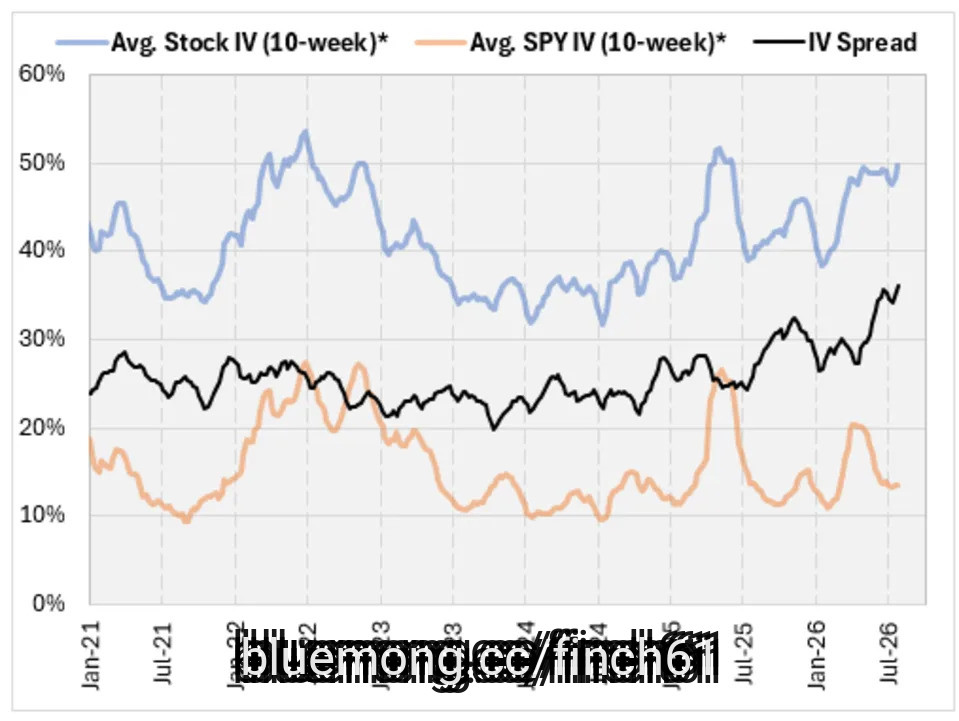
Option prices are surging for stocks but are relatively subdued for the SPY. In the chart below, I compare the implied volatility (IV) of individual stocks with the IV of the SPY (an ETF based on the S&P 500 Index) using weekly options that expire the following week. Specifically, I calculated the average IV of individual stocks at the end of each week and compared it to the SPY IV.
The chart below is color-coded, highlighting that over the past ten weeks, the average IV of individual stocks has been around 50% (blue), a historically high level. Meanwhile, the SPY average IV has remained relatively low at about 13.5% (orange). This has pushed the spread between the two close to 36% (black), the highest level in my data dating back to 2016.
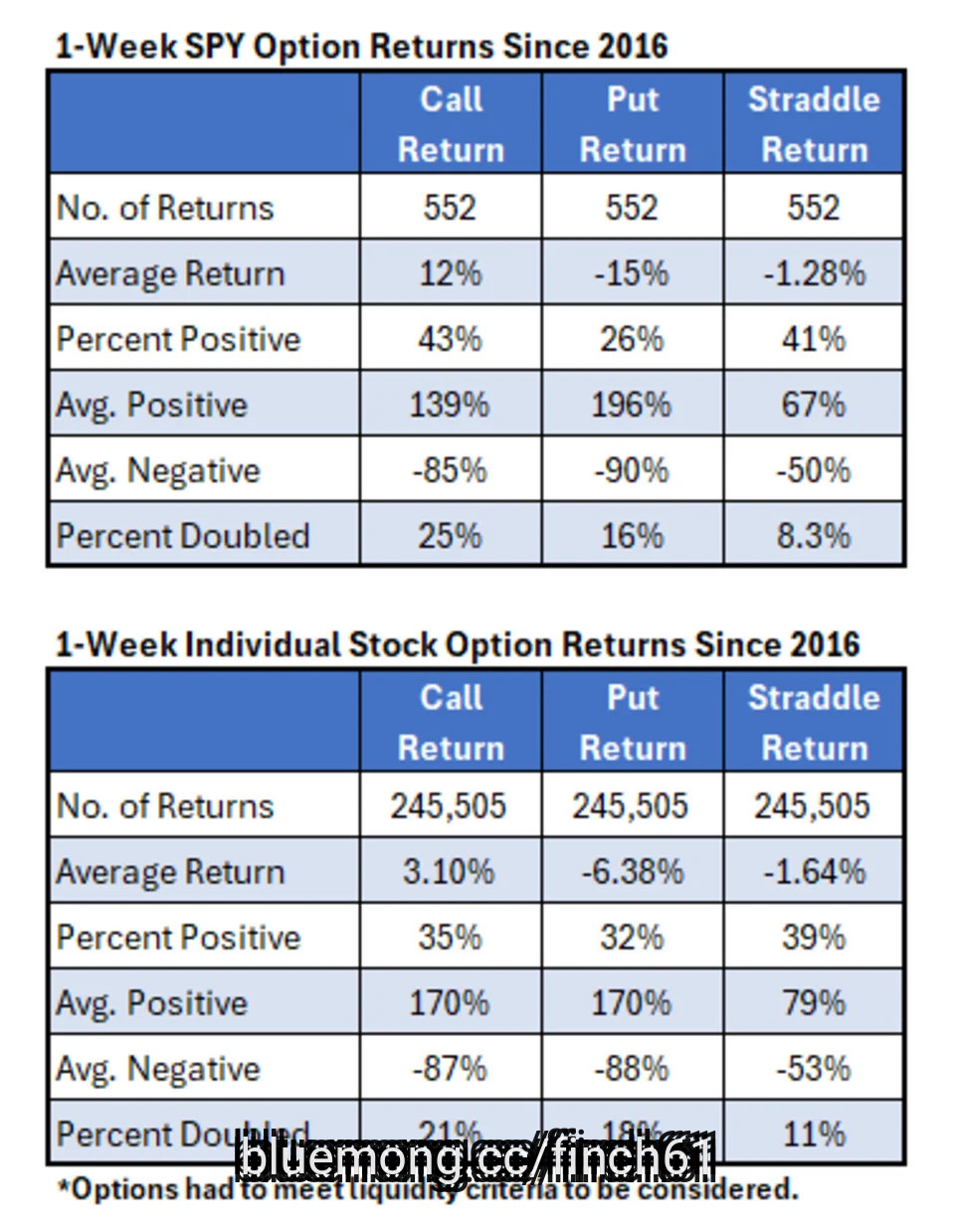
This is an interesting situation, and this week I'll examine the historical data to see what this has typically meant for the short-term options trading environment.
We would normally expect IVs on individual stocks to correlate with IVs on the SPY, and that's typically the case. However, there are times when they diverge, as they have now.
It makes sense if traders expect big moves from individual stocks, but they expect the big moves in both directions. That could result in little movement from the broad index. In other words, the options market is pricing in large, but uncorrelated, moves in individual stocks.
#index

3 months ago