INDIANAPOLIS, INDIANA - JUNE 19: Caitlin Clark #22 of the Indiana Fever argues a call with a referee during a game against the Washington Mystics at Gainbridge Fieldhouse on June 19, 2024 in Indianapolis, Indiana. NOTE TO USER: User expressly acknowledges and agrees that, by downloading and or using this photograph, User is consenting to the terms and conditions of the Getty Images License Agreement. (Photo by Emilee Chinn/Getty Images)
Each time a WNBA opponent makes hard contact with Caitlin Clark , a familiar sequence of events typically follows. Over the past few weeks that sequence has consisted of a missed whistle, a viral clip, a wave of outrage, a quiet league review, followed by an outpouring of commentary from coaches, teammates, broadcasters, and fans insisting that the sport's most visible player must be protected. And while the implicit instinct behind some of that chorus is largely understandable, and in many cases may be sincere, the language used often unknowingly relies on sentiments and language that perpetuate decades of harmful stereotypes about women athletes.
Specifically, what we are seeing as people attempt to protect Cailtin Clark is the harmful framing of women athletes as either fragile and in need of protection, while simultaneously characterizing other's as too physical and classless. The outcome of these storylines is also increasingly becoming harmful to the growth of the sport. Given that women's professional sport continues to grow at historic rates, it is unfortunate that one of the biggest storylines is being told through a frame that is reviving harmful stereotypes about women athletes.
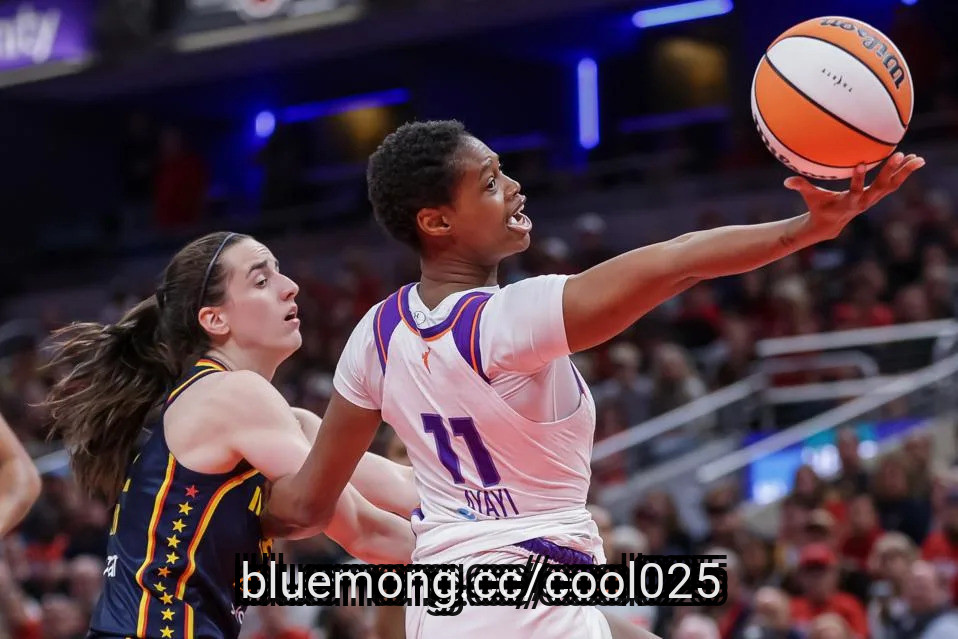
INDIANAPOLIS, INDIANA - JUNE 22: Valeriane Ayayi #11 of the Phoenix Mercury reaches for the ball against Caitlin Clark #22 of the Indiana Fever at Gainbridge Fieldhouse on June 22, 2026 in Indianapolis, Indiana. NOTE TO USER: User expressly acknowledges and agrees that, by downloading and or using this photograph, User is consenting to the terms and conditions of the Getty Images License Agreement. (Photo by Michael Hickey/Getty Images)
The most recent example of protection came on June 24, when Phoenix Mercury forward Alyssa Thomas pressed a closed fist into Clark's neck during a scramble for a loose ball and drew no whistle. The league reviewed the play the next day, upgraded it to a Flagrant 2, and suspended Thomas for one game . In the hours between, Indiana Fever head coach Stephanie White described the no-calls as "absolutely unacceptable," "egregious," and "utterly disrespectful," and accused WNBA officials of failing to safeguard a "generational talent." It was not the first such moment. The Chennedy Carter hip-check, Angel Reese's forearm, and the Jacy Sheldon–Marina Mabrey physicality followed similar sequences, and each became a national conversation on whether Clark, specifically, was being adequately protected.
Each time a WNBA opponent makes hard contact with Caitlin Clark , a familiar sequence of events typically follows. Over the past few weeks that sequence has consisted of a missed whistle, a viral clip, a wave of outrage, a quiet league review, followed by an outpouring of commentary from coaches, teammates, broadcasters, and fans insisting that the sport's most visible player must be protected. And while the implicit instinct behind some of that chorus is largely understandable, and in many cases may be sincere, the language used often unknowingly relies on sentiments and language that perpetuate decades of harmful stereotypes about women athletes.
Specifically, what we are seeing as people attempt to protect Cailtin Clark is the harmful framing of women athletes as either fragile and in need of protection, while simultaneously characterizing other's as too physical and classless. The outcome of these storylines is also increasingly becoming harmful to the growth of the sport. Given that women's professional sport continues to grow at historic rates, it is unfortunate that one of the biggest storylines is being told through a frame that is reviving harmful stereotypes about women athletes.
INDIANAPOLIS, INDIANA - JUNE 22: Valeriane Ayayi #11 of the Phoenix Mercury reaches for the ball against Caitlin Clark #22 of the Indiana Fever at Gainbridge Fieldhouse on June 22, 2026 in Indianapolis, Indiana. NOTE TO USER: User expressly acknowledges and agrees that, by downloading and or using this photograph, User is consenting to the terms and conditions of the Getty Images License Agreement. (Photo by Michael Hickey/Getty Images)
The most recent example of protection came on June 24, when Phoenix Mercury forward Alyssa Thomas pressed a closed fist into Clark's neck during a scramble for a loose ball and drew no whistle. The league reviewed the play the next day, upgraded it to a Flagrant 2, and suspended Thomas for one game . In the hours between, Indiana Fever head coach Stephanie White described the no-calls as "absolutely unacceptable," "egregious," and "utterly disrespectful," and accused WNBA officials of failing to safeguard a "generational talent." It was not the first such moment. The Chennedy Carter hip-check, Angel Reese's forearm, and the Jacy Sheldon–Marina Mabrey physicality followed similar sequences, and each became a national conversation on whether Clark, specifically, was being adequately protected.

3 months ago