
20 days ago
STOCKHOLM (AP) — Belgian-born scientist Francis Halzen won the ***** el Prize in physics Tuesday for his efforts to demystify a rare group of neutrinos, tiny cosmic particles that researchers believe offer clues to how the universe evolved.
"It was a great surprise, and I obviously didn't expect it," Halzen said, speaking to the ***** el Physics Committee by phone from Italy, in a call broadcast at the news conference to announce the winner.
Halzen said it was predicted that he would win the prize, but the announcement still made him feel "strange."
"I am working on a proposal, and I hope that this prize will help getting it approved," he said to chuckles from the audience.
Neutrinos are tiny cosmic particles with no electrical charge and extraordinarily small mass, making them difficult to detect. Yet they are everywhere: They spew from stars like the sun, and trillions zip through our bodies every second.
#neutrinos
"It was a great surprise, and I obviously didn't expect it," Halzen said, speaking to the ***** el Physics Committee by phone from Italy, in a call broadcast at the news conference to announce the winner.
Halzen said it was predicted that he would win the prize, but the announcement still made him feel "strange."
"I am working on a proposal, and I hope that this prize will help getting it approved," he said to chuckles from the audience.
Neutrinos are tiny cosmic particles with no electrical charge and extraordinarily small mass, making them difficult to detect. Yet they are everywhere: They spew from stars like the sun, and trillions zip through our bodies every second.
#neutrinos



23 days ago
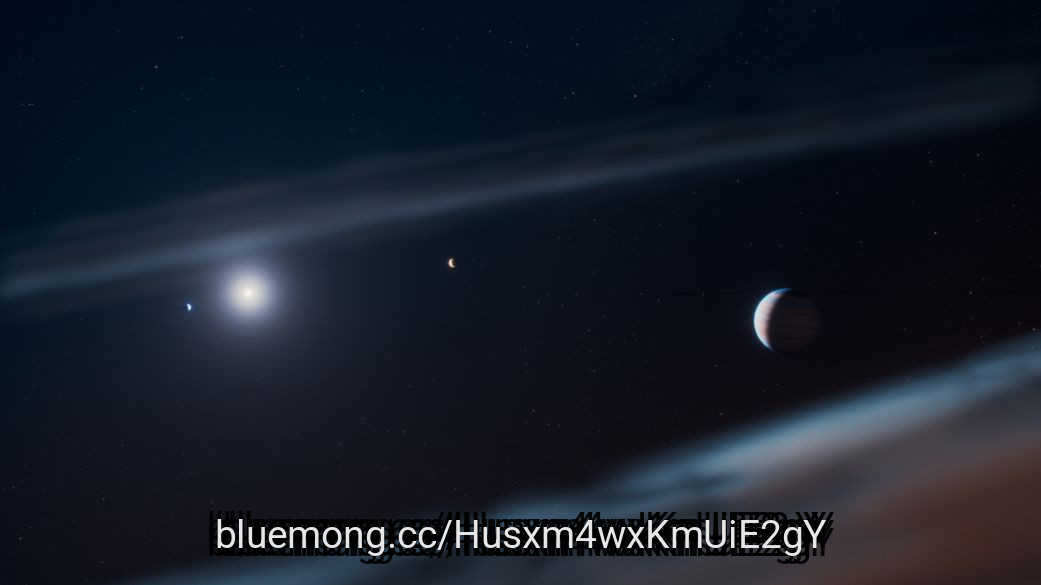
Astronomers say they have directly detected the first-ever radio emission from a planet outside the solar system. The signal, however, is evidence of a colossal magnetic field — not intelligent life.
“I know radio signals are **** ociated with searches for extraterrestrial intelligence,” said Edo Berger, a professor of astronomy at Harvard University. “But this is something very different.”
The discovery, described in a new paper awaiting publication in a peer-reviewed journal, traces repeating radio bursts that appear to come from the exoplanet Beta Pictoris b, located 63 light-years from Earth — a short distance, astronomically speaking. The gas giant, about 12 times the mass of Jupiter, is one of three planets orbiting a young star that is 1.75 times as massive as the sun.
Processes **** ociated with the planet’s magnetic field produce the radio emission, according to Berger, a researcher at the Center for Astrophysics | Harvard & Smithsonian in Cambridge, Massachusetts. Specifically, the detection involves auroras similar to Earth’s northern lights — the spectacular displays sparked by magnetic storms involving charged particles from the sun. “In order to see radio waves that extend all the way to the frequencies that we observed, you need an incredibly strong magnetic field,” added Berger, a coauthor of the paper posted September 15 to the preprint platform ArXiv.
New evidence deepens mystery of moon’s ancient magnetic field
#radio #evidence
“I know radio signals are **** ociated with searches for extraterrestrial intelligence,” said Edo Berger, a professor of astronomy at Harvard University. “But this is something very different.”
The discovery, described in a new paper awaiting publication in a peer-reviewed journal, traces repeating radio bursts that appear to come from the exoplanet Beta Pictoris b, located 63 light-years from Earth — a short distance, astronomically speaking. The gas giant, about 12 times the mass of Jupiter, is one of three planets orbiting a young star that is 1.75 times as massive as the sun.
Processes **** ociated with the planet’s magnetic field produce the radio emission, according to Berger, a researcher at the Center for Astrophysics | Harvard & Smithsonian in Cambridge, Massachusetts. Specifically, the detection involves auroras similar to Earth’s northern lights — the spectacular displays sparked by magnetic storms involving charged particles from the sun. “In order to see radio waves that extend all the way to the frequencies that we observed, you need an incredibly strong magnetic field,” added Berger, a coauthor of the paper posted September 15 to the preprint platform ArXiv.
New evidence deepens mystery of moon’s ancient magnetic field
#radio #evidence



2 months ago
In the quantum computing investment sector, two popular stock picks are IonQ (NYSE: IONQ) and Rigetti Computing (NASDAQ: RGTI). Both of these quantum computing upstarts have a long way to go before becoming a viable investment option. However, by looking at their respective technologies, investors can get an idea as to which company has a better chance of reaching the finish line.
Let's take a look at these two and see which is the better stock pick.
Missed Nvidia in 2009? This Rare Signal Is Flashing Again. In 2009, a "Double Down" signal flashed for a little-known chipmaker called Nvidia. For the first time in years, that same "Total Conviction" signal is flashing for a company 1/100th the size of Nvidia. Continue »
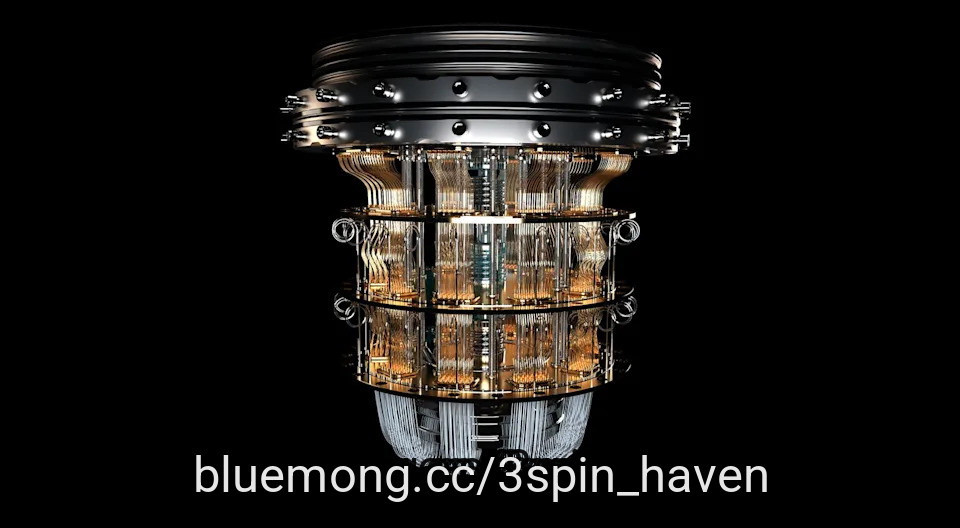
The primary way most companies do quantum computing is via superconducting. This involves cooling a particle in a chamber to near absolute zero temperatures so it can be controlled for the purposes of quantum computing. Rigetti utilizes this technique, but that's also the same process that many of the legacy tech companies are using. That may prove to be a problem, as Rigetti is competing against some heavyweights with huge resources.
IonQ is taking a far different approach. There's really ****** ody else doing what IonQ is doing, which could be good or bad. Instead of cooling a chamber, IonQ uses lasers to pinpoint and cool a particle, then utilizes an ion trap that's similar to a maze to trap the particle and utilize it for quantum computing purposes. This yields superior accuracy, but at the cost of processing speed.
#quantum #rigetti #particle
Let's take a look at these two and see which is the better stock pick.
Missed Nvidia in 2009? This Rare Signal Is Flashing Again. In 2009, a "Double Down" signal flashed for a little-known chipmaker called Nvidia. For the first time in years, that same "Total Conviction" signal is flashing for a company 1/100th the size of Nvidia. Continue »
The primary way most companies do quantum computing is via superconducting. This involves cooling a particle in a chamber to near absolute zero temperatures so it can be controlled for the purposes of quantum computing. Rigetti utilizes this technique, but that's also the same process that many of the legacy tech companies are using. That may prove to be a problem, as Rigetti is competing against some heavyweights with huge resources.
IonQ is taking a far different approach. There's really ****** ody else doing what IonQ is doing, which could be good or bad. Instead of cooling a chamber, IonQ uses lasers to pinpoint and cool a particle, then utilizes an ion trap that's similar to a maze to trap the particle and utilize it for quantum computing purposes. This yields superior accuracy, but at the cost of processing speed.
#quantum #rigetti #particle
2 months ago
By Will Dunham
Sept 1 (Reuters) - Scientists have made a possible breakthrough in the hunt for dark matter — observing hints of it during an experiment about a mile (1.6 km) underground in South Dakota — though they stopped short of saying they have finally detected this elusive cosmic component.
The researchers described a particle interaction documented at the Sanford Underground Research Facility — built in a former gold mine in the state's Black Hills region — that may have involved a hypothesized particle called a WIMP, short for "weakly interacting massive particle." This is one of the proposed candidates for being a dark matter particle.
Ordinary matter makes up stars, planets, people and everything else we can see. But it represents only about 15% of all the matter in the universe. The rest is thought to be dark matter, which does not emit or reflect light, making it invisible to the human eye and to telescopes. But scientists are confident dark matter exists because of its gravitational effects at galactic scales.
Particle physicist Sam Eriksen of the University of Bristol in England, lead author of a study describing the work, said it "could be the first hint of a dark matter observation."
#matter #sept
Sept 1 (Reuters) - Scientists have made a possible breakthrough in the hunt for dark matter — observing hints of it during an experiment about a mile (1.6 km) underground in South Dakota — though they stopped short of saying they have finally detected this elusive cosmic component.
The researchers described a particle interaction documented at the Sanford Underground Research Facility — built in a former gold mine in the state's Black Hills region — that may have involved a hypothesized particle called a WIMP, short for "weakly interacting massive particle." This is one of the proposed candidates for being a dark matter particle.
Ordinary matter makes up stars, planets, people and everything else we can see. But it represents only about 15% of all the matter in the universe. The rest is thought to be dark matter, which does not emit or reflect light, making it invisible to the human eye and to telescopes. But scientists are confident dark matter exists because of its gravitational effects at galactic scales.
Particle physicist Sam Eriksen of the University of Bristol in England, lead author of a study describing the work, said it "could be the first hint of a dark matter observation."
#matter #sept


4 months ago
A plume of Saharan dust is sweeping across Texas, spreading a milky haze over South-Central Texas before expanding north into Central Texas and the Dallas–Fort Worth Metroplex by late today into Tuesday.
The dust plume on Monday, June 29, is tied to a broader Saharan Air Layer outbreak over the western Gulf that is expected to persist into Tuesday, June 30. Satellite imagery shows a more concentrated band of elevated dust already moving onshore. While the strongest concentrations are expected to remain farther south, the plume is forecast to spread across much of Texas as it gradually weakens.
In South-Central Texas, the dust is riding in the mid-levels of the atmosphere near 5,000 to 6,000 feet, with potential for some downward mixing during peak daytime heating, according to the National Weather Service in Austin-San Antonio. That could result in a slightly muted sky and a softer, hazier sun angle through the afternoon, though surface visibility impacts should remain limited. The most noticeable effect will likely be a loss of sky clarity rather than any tangible air quality issues at ground level.
As the plume pushes north, it will become more diffuse, but still capable of coloring the sky. North and Central Texas, including the Dallas-Fort Worth area, are more likely to see dust expressed as optics rather than haze — with sunsets and sunrises taking on deeper oranges and reds as sunlight scatters through suspended particles. Any impacts will be subtle but visually noticeable, especially around peak twilight hours.
The dust begins to thin further by Tuesday, June 30, as it lifts out of the region and mixes with returning Gulf moisture. Hot conditions will persist across Texas, with highs near or above seasonal norms, but skies should gradually clear from south to north as the Saharan plume disperses.
The dust plume on Monday, June 29, is tied to a broader Saharan Air Layer outbreak over the western Gulf that is expected to persist into Tuesday, June 30. Satellite imagery shows a more concentrated band of elevated dust already moving onshore. While the strongest concentrations are expected to remain farther south, the plume is forecast to spread across much of Texas as it gradually weakens.
In South-Central Texas, the dust is riding in the mid-levels of the atmosphere near 5,000 to 6,000 feet, with potential for some downward mixing during peak daytime heating, according to the National Weather Service in Austin-San Antonio. That could result in a slightly muted sky and a softer, hazier sun angle through the afternoon, though surface visibility impacts should remain limited. The most noticeable effect will likely be a loss of sky clarity rather than any tangible air quality issues at ground level.
As the plume pushes north, it will become more diffuse, but still capable of coloring the sky. North and Central Texas, including the Dallas-Fort Worth area, are more likely to see dust expressed as optics rather than haze — with sunsets and sunrises taking on deeper oranges and reds as sunlight scatters through suspended particles. Any impacts will be subtle but visually noticeable, especially around peak twilight hours.
The dust begins to thin further by Tuesday, June 30, as it lifts out of the region and mixes with returning Gulf moisture. Hot conditions will persist across Texas, with highs near or above seasonal norms, but skies should gradually clear from south to north as the Saharan plume disperses.



4 months ago
A University of Kentucky project using artificial intelligence to help decode an ancient Roman mystery has led to a major discovery, researchers announced Thursday.
In 79 A.D., the eruption of Mount Vesuvius buried the Roman city of Pompeii and the nearby town of Herculaneum. During a dig in Herculaneum in the 18th century, archaeologists found 1,800 papyrus scrolls in an intact ancient library, deep under the site of a villa that was destroyed by Vesuvius' eruption. But reading them was impossible: The scrolls are brittle and charred, and unravelling them turns them into ash.
For centuries, researchers have worked to interpret the scrolls. Recent technology led to a breakthrough: A particle accelerator and AI were used to identify ink, even faint traces, allowing researchers to virtually unwrap the delicate scrolls. But interpreting the ancient language is another project entirely.
In 2023, Brent Seales launched the Vesuvius Challenge, a global competition offering prize money for those who can help interpret the writing. Three college students became the first to extract words from a carbonized scroll in 2024. But they only interpreted about 5% of one scroll.
The second phase of the challenge led to Thursday's major discovery. The University of Kentucky's Stanley and Karen Pigman School of Engineering, which leads the research in collaboration with the Biblioteca ****** onale di Napoli Vittorio Emanuele III in Naples, said that experts have virtually unwrapped one entire scroll, recovered more than 70 columns of text from another, identified two new books from ancient Rome, and recovered "sufficient text to support new critical scholarly editions."
In 79 A.D., the eruption of Mount Vesuvius buried the Roman city of Pompeii and the nearby town of Herculaneum. During a dig in Herculaneum in the 18th century, archaeologists found 1,800 papyrus scrolls in an intact ancient library, deep under the site of a villa that was destroyed by Vesuvius' eruption. But reading them was impossible: The scrolls are brittle and charred, and unravelling them turns them into ash.
For centuries, researchers have worked to interpret the scrolls. Recent technology led to a breakthrough: A particle accelerator and AI were used to identify ink, even faint traces, allowing researchers to virtually unwrap the delicate scrolls. But interpreting the ancient language is another project entirely.
In 2023, Brent Seales launched the Vesuvius Challenge, a global competition offering prize money for those who can help interpret the writing. Three college students became the first to extract words from a carbonized scroll in 2024. But they only interpreted about 5% of one scroll.
The second phase of the challenge led to Thursday's major discovery. The University of Kentucky's Stanley and Karen Pigman School of Engineering, which leads the research in collaboration with the Biblioteca ****** onale di Napoli Vittorio Emanuele III in Naples, said that experts have virtually unwrapped one entire scroll, recovered more than 70 columns of text from another, identified two new books from ancient Rome, and recovered "sufficient text to support new critical scholarly editions."



5 months ago
When an underwater volcano erupted in the South Pacific in January 2022, it sent a plume of ash, steam and gas nearly 40 miles above the Earth’s surface. It was one of the most violent volcanic eruptions of modern times. It may also have also revealed a new weapon in the fight against a potent planet-heating gas, according to new research.
The Hunga Tonga-Hunga Ha’apai volcano erupted with a power hundreds of times stronger than the Hiroshima nuclear explosion, setting off a tsunami and a sonic boom that went around the planet twice. It then did something “unexpected,” according to the authors of the new study published Thursday in the journal Nature Communications. It started cleaning up some of its own pollution.
The scientists’ discovery came from looking at advanced satellite data of the eruption. “We found a huge cloud of formaldehyde that should normally not be there,” said Maarten van Herpen, a study author, and a physicist and executive director at Acacia Impact Innovation, a Dutch consultancy. Formaldehyde often forms when methane, a potent planet-heating gas, is destroyed in the atmosphere.
The researchers believed they were observing a chemical process that had previously been identified over the Atlantic Ocean.
Scientists had found that when Saharan dust is blown over the Atlantic, it mixes with salt spray and forms small iron-based particles. As the sunlight hits them, it produces chlorine atoms, which react with methane in the atmosphere and help break it down.
The Hunga Tonga-Hunga Ha’apai volcano erupted with a power hundreds of times stronger than the Hiroshima nuclear explosion, setting off a tsunami and a sonic boom that went around the planet twice. It then did something “unexpected,” according to the authors of the new study published Thursday in the journal Nature Communications. It started cleaning up some of its own pollution.
The scientists’ discovery came from looking at advanced satellite data of the eruption. “We found a huge cloud of formaldehyde that should normally not be there,” said Maarten van Herpen, a study author, and a physicist and executive director at Acacia Impact Innovation, a Dutch consultancy. Formaldehyde often forms when methane, a potent planet-heating gas, is destroyed in the atmosphere.
The researchers believed they were observing a chemical process that had previously been identified over the Atlantic Ocean.
Scientists had found that when Saharan dust is blown over the Atlantic, it mixes with salt spray and forms small iron-based particles. As the sunlight hits them, it produces chlorine atoms, which react with methane in the atmosphere and help break it down.


6 months ago
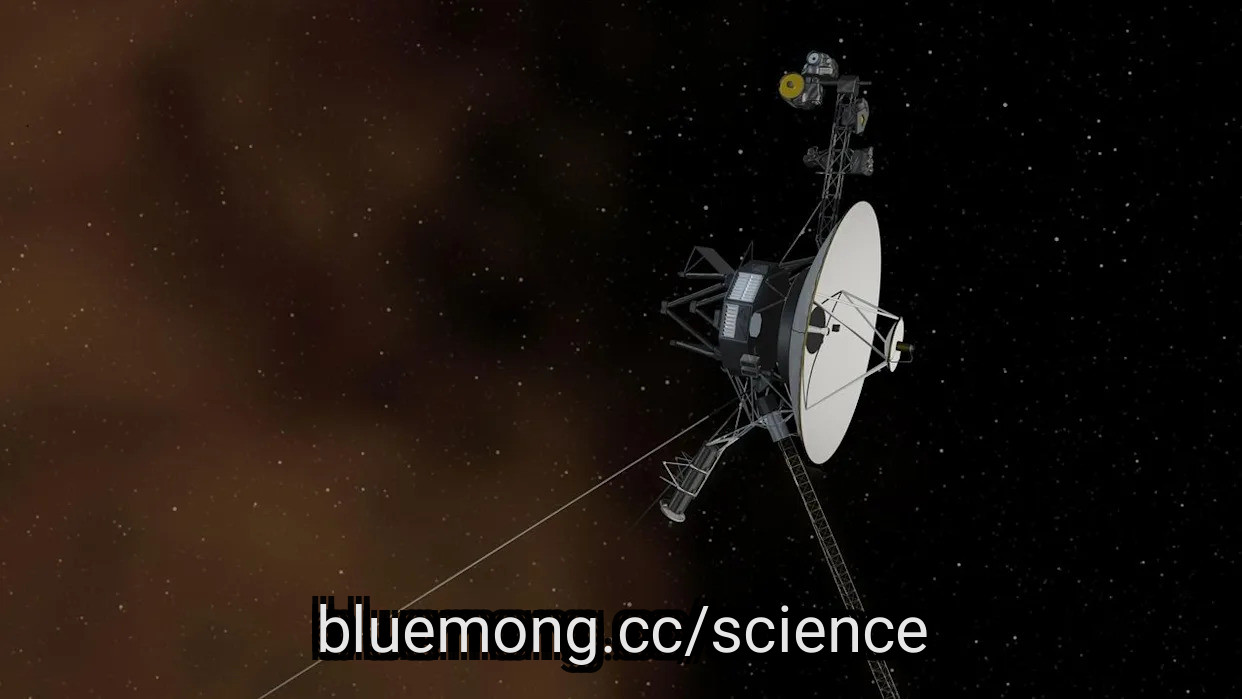
NASA's twin Voyager ******* ecraft are very low on power after nearly 50 years. How long can they keep going?
When you buy through links on our articles, Future and its syndication partners may earn a commission.
The pioneering Voyager probes might only have a few years left to explore interstellar ******* e, and that's ******* uming a planned, risky maneuver in 2026 goes well.
NASA's twin Voyager 1 and Voyager 2 ******* ecraft, both running on nuclear power, now have access to just a portion of the 470 watts of energy that they generated immediately after their 1977 launches. Originally tasked with exploring the giant planets in our solar system, the pair have long passed their expected lifespans and are still transmitting data, far from home.
Voyager 1 crossed into interstellar ******* e in 2012, and Voyager 2 followed suit six years later. For years, NASA has been turning off the probes' instruments one at a time as their power supplies dwindled. They still lose about four watts of power a year. But NASA's Jet Propulsion Laboratory (JPL) in Southern California has an idea, which will be tested out soon, to give them a little more time.
Both Voyager probes launched with the same 10 operational instruments. Voyager 1 turned off its subsystem to look at cosmic rays (high-energy particles) in February, then did the same with its Low-Energy Charged Particles (LECP) instrument in April.
https://www.yahoo.com/news...
When you buy through links on our articles, Future and its syndication partners may earn a commission.
The pioneering Voyager probes might only have a few years left to explore interstellar ******* e, and that's ******* uming a planned, risky maneuver in 2026 goes well.
NASA's twin Voyager 1 and Voyager 2 ******* ecraft, both running on nuclear power, now have access to just a portion of the 470 watts of energy that they generated immediately after their 1977 launches. Originally tasked with exploring the giant planets in our solar system, the pair have long passed their expected lifespans and are still transmitting data, far from home.
Voyager 1 crossed into interstellar ******* e in 2012, and Voyager 2 followed suit six years later. For years, NASA has been turning off the probes' instruments one at a time as their power supplies dwindled. They still lose about four watts of power a year. But NASA's Jet Propulsion Laboratory (JPL) in Southern California has an idea, which will be tested out soon, to give them a little more time.
Both Voyager probes launched with the same 10 operational instruments. Voyager 1 turned off its subsystem to look at cosmic rays (high-energy particles) in February, then did the same with its Low-Energy Charged Particles (LECP) instrument in April.
https://www.yahoo.com/news...
8 months ago
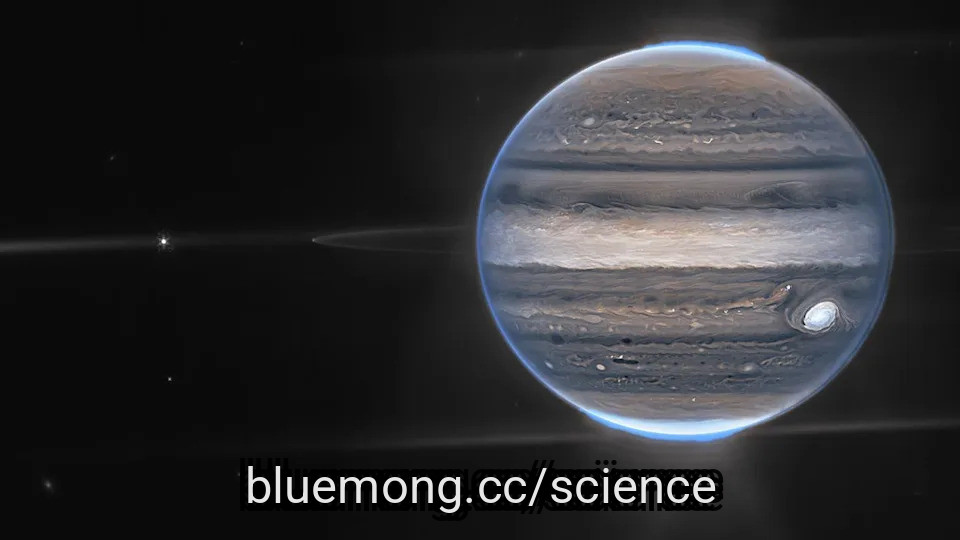
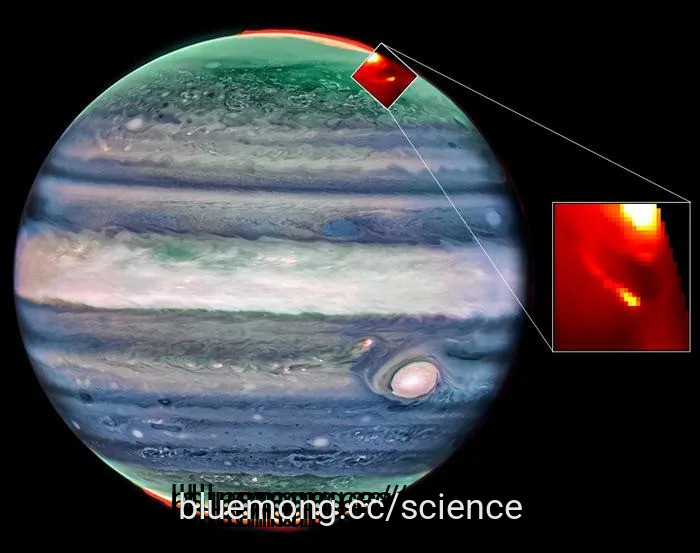
Jupiter's moons leave cold 'footprints' in the planet's auroras, James Webb ****** e Telescope finds
When you buy through links on our articles, Future and its syndication partners may earn a commission.
Jupiter's moons can have surprising effects on the world's displays of auroral lights by "stomping down" on the planet's gigantic magnetic environment.These surprising effects, detected in observations from the James Webb ****** e Telescope (JWST), include a cold spot in Jupiter's atmosphere, and a rapid increase in the density of charged particles."The moons constantly interact with the m
When you buy through links on our articles, Future and its syndication partners may earn a commission.
Jupiter's moons can have surprising effects on the world's displays of auroral lights by "stomping down" on the planet's gigantic magnetic environment.These surprising effects, detected in observations from the James Webb ****** e Telescope (JWST), include a cold spot in Jupiter's atmosphere, and a rapid increase in the density of charged particles."The moons constantly interact with the m
9 months ago
Scientists have discovered an unexpected source of air pollution caused by planes, and it has nothing to do with their exhaust.
A new study, published in the journal Environmental Chemistry and Ecotoxicology, examined the presence of Tire Wear Particles at the Milan Linate Airport in Italy.
Tire wear particles, or TWPs, are non-exhaust pollutants that shed from tires as they move across pavement.
Researchers found that the airport was a significant local source of hazardous organic compounds, specifically benzothiazole (BTH) components, which can be released from TWPs.
They discovered seve
A new study, published in the journal Environmental Chemistry and Ecotoxicology, examined the presence of Tire Wear Particles at the Milan Linate Airport in Italy.
Tire wear particles, or TWPs, are non-exhaust pollutants that shed from tires as they move across pavement.
Researchers found that the airport was a significant local source of hazardous organic compounds, specifically benzothiazole (BTH) components, which can be released from TWPs.
They discovered seve



9 months ago
Back from the dead, a black hole is erupting after a 100-million-year hiatus
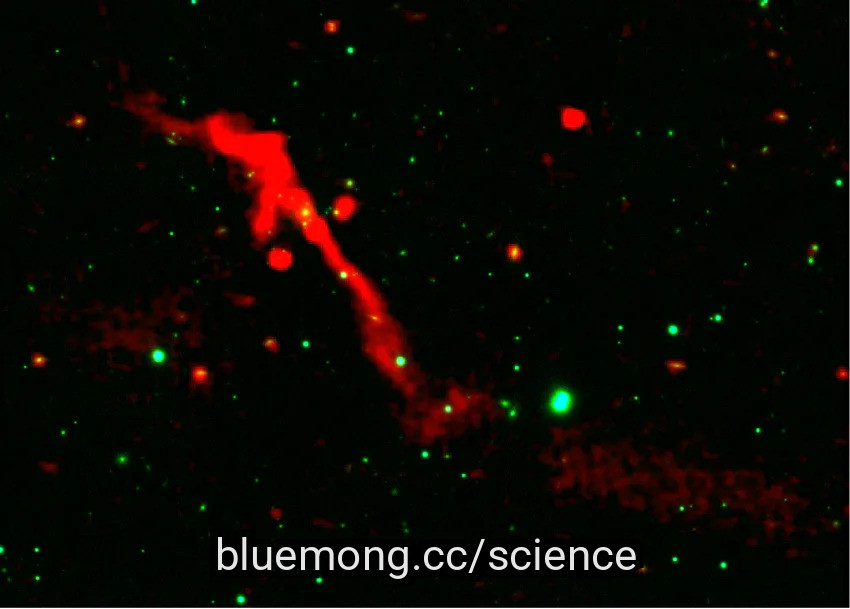
Inside an incredibly bright cluster of galaxies, a long-dormant supermassive black hole has come back to life. Radio images captured a one-million-light-year-long stream of star-forming particles and gas emanating from the black hole at the center of the galaxy J1007+3540—which apparently is erupting for the first time in about 100 million years.
“Although some ‘restarted’ radio galaxies are known in the literature, J1007+3540 stands out,” says lead study author Shobha ***** ari of Midnapore City College in India.
Inside an incredibly bright cluster of galaxies, a long-dormant supermassive black hole has come back to life. Radio images captured a one-million-light-year-long stream of star-forming particles and gas emanating from the black hole at the center of the galaxy J1007+3540—which apparently is erupting for the first time in about 100 million years.
“Although some ‘restarted’ radio galaxies are known in the literature, J1007+3540 stands out,” says lead study author Shobha ***** ari of Midnapore City College in India.


10 months ago
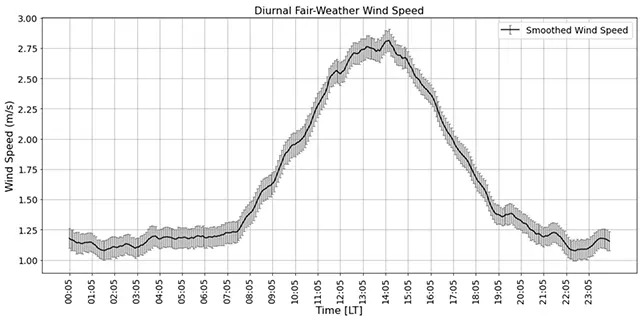
Detailed measurements collected in metropolitan Tel Aviv, Israel, have revealed how the ebb and flow of traffic throughout the week affects the electric field generated by Earth's atmosphere.
Led by researchers from The Hebrew University of Jerusalem in Israel, the study used an electric field mill deployed in the city of Holon in 2024, matching its results with air quality data over a period of seven months. Only measurements from fair weather days were included to filter out interference from rain and storms.
A number of specific pollutants were tracked, including gases and particles from
Led by researchers from The Hebrew University of Jerusalem in Israel, the study used an electric field mill deployed in the city of Holon in 2024, matching its results with air quality data over a period of seven months. Only measurements from fair weather days were included to filter out interference from rain and storms.
A number of specific pollutants were tracked, including gases and particles from


10 months ago
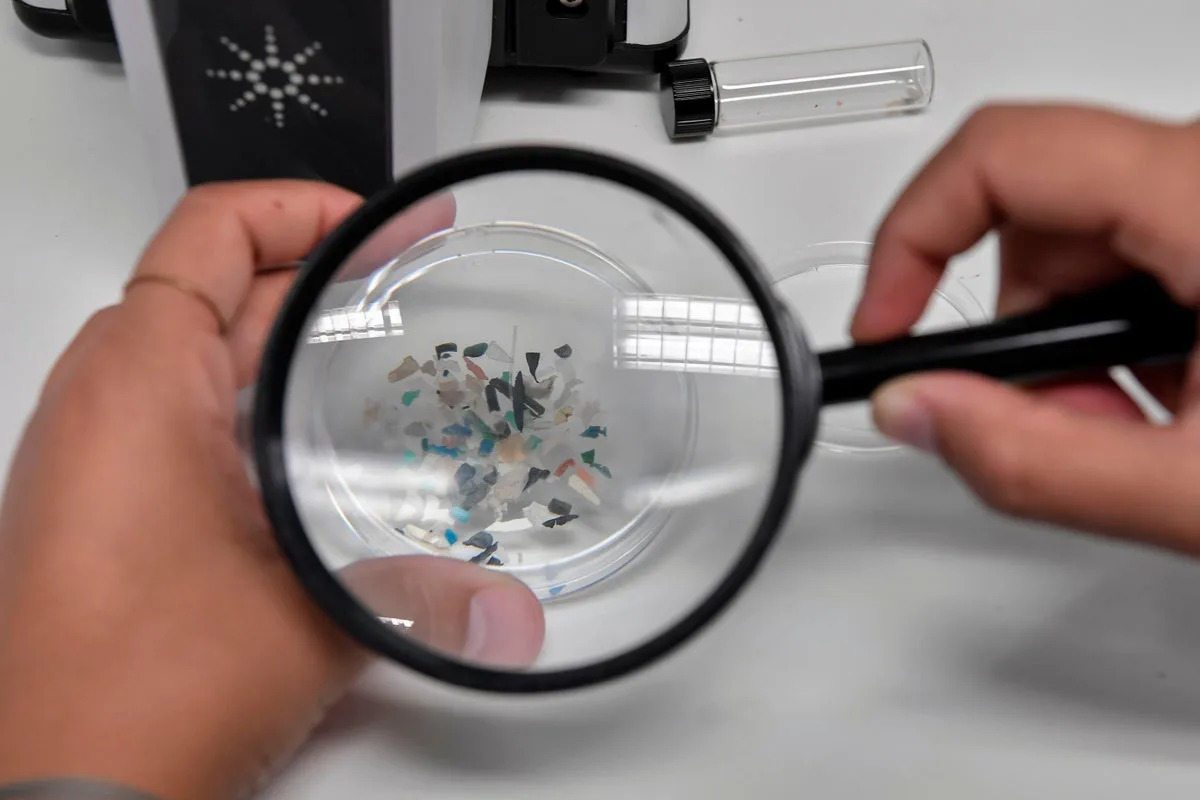
Microplastics may be burrowing into arteries and triggering heart disease, especially in men, according to a new study.
Tiny plastic particles varying in size from about a thousandth of a millimetre to five millimetres are ubiquitous today, present in food, water and air. They are known to enter the bloodstream and even lodge into vital organs.
They are implicated in a range of health conditions, from hormonal disruption, impaired reproduction, neurological damage, cancer, and heart ailments.
In the case of heart diseases, however, it remains unclear whether these particles actively damage
Tiny plastic particles varying in size from about a thousandth of a millimetre to five millimetres are ubiquitous today, present in food, water and air. They are known to enter the bloodstream and even lodge into vital organs.
They are implicated in a range of health conditions, from hormonal disruption, impaired reproduction, neurological damage, cancer, and heart ailments.
In the case of heart diseases, however, it remains unclear whether these particles actively damage


10 months ago
The masses of fundamental particles such as the Z and W bosons could have arisen from the twisted geometry of hidden dimensions, a new theoretical paper has demonstrated.
The work has outlined a way to bypass the Higgs field as the source of particle masses, offering a new tool for understanding how the Higgs field itself might have emerged, as well as a possible means of addressing some of the persistent gaps in the Standard Model of particle physics.
"In our picture," says theoretical physicist Richard Pinčák of the Slovak Academy of Sciences, "matter emerges from the resistance of geometr
The work has outlined a way to bypass the Higgs field as the source of particle masses, offering a new tool for understanding how the Higgs field itself might have emerged, as well as a possible means of addressing some of the persistent gaps in the Standard Model of particle physics.
"In our picture," says theoretical physicist Richard Pinčák of the Slovak Academy of Sciences, "matter emerges from the resistance of geometr


11 months ago
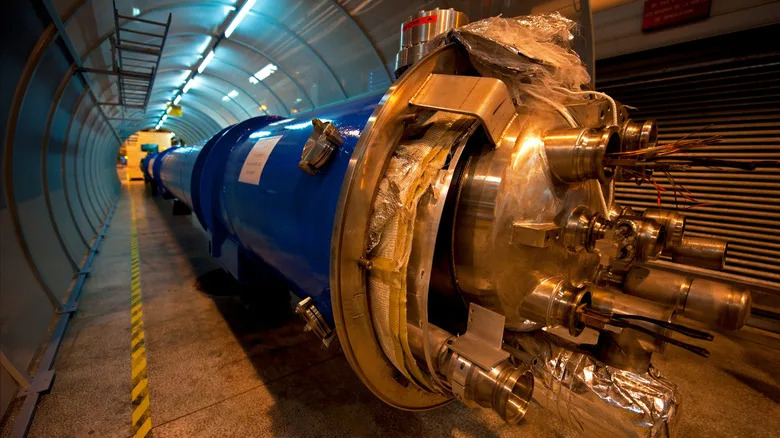
Every time two beams of particles collide inside an accelerator, the universe lets us in on a little secret. Sometimes it's a particle no one has ever seen. Other times, it's a fleeting glimpse of conditions that last existed in the first moments after the Big Bang. A particle accelerator is the machine that makes those collisions possible. Its job is straightforward to describe: Take tiny charged particles and drive them to extreme speeds so the resulting collisions carry enough force to break matter apart. However, pure speed isn't the point; the goal is to create collisions so energetic tha


11 months ago
Microscopic plastic fragments can slip through your skin and carry harmful substances into your body, reported Bioengineer.org.
Scientists at Texas A&M University discovered that nanoplastics, plastic pieces smaller than a grain of sand, can penetrate the skin after exposure to ocean water.
The research team exposed these tiny particles to seawater from the Corpus Christi coast and published their findings in the Journal of Hazardous Materials. The water deposited proteins and organic matter onto the plastics, creating a disguise that helped them sneak past the body's natural defenses.
When
Scientists at Texas A&M University discovered that nanoplastics, plastic pieces smaller than a grain of sand, can penetrate the skin after exposure to ocean water.
The research team exposed these tiny particles to seawater from the Corpus Christi coast and published their findings in the Journal of Hazardous Materials. The water deposited proteins and organic matter onto the plastics, creating a disguise that helped them sneak past the body's natural defenses.
When




1 yr. ago
Webb captured an enormous display of auroras unlike anything seen on Earth. These infrared observations reveal unexpected activity in Jupiter’s atmosphere, challenging what scientists thought they knew about the planet’s magnetic field and particle interactions.