
The second wave of the US-Iran conflict shows no signs of letting up. Attacks by the Houthi militia have threatened to curtail shipping through the Red Sea. Russia's refineries are buckling under the weight of bombardment by the Ukrainian military.
For global oil markets, already in a precarious situation, critical logistical nodes just keep getting thwarted. Things keep going wrong. Oil prices have started rebounding in return, reaching levels not seen since the first weeks of June before the signing of the US-Iran memorandum of understanding as Brent futures (BZ=F) crossed $100 per barrel on Thursday.
"If a ceasefire does not materialize," Rystad Energy head of geopolitical ***** ysis Jorge León said, "the risk of a significant rebound in oil prices would be substantial."
As the war between the US and Iran initially began in late February, attention swung toward the Strait of Hormuz, a critical waterway responsible for roughly a fifth of the world's oil trade. Threats of violence and, eventually, direct attacks on vessels by Iranian military wings sent traffic through the strait collapsing, kicking off the largest energy supply crisis on record.
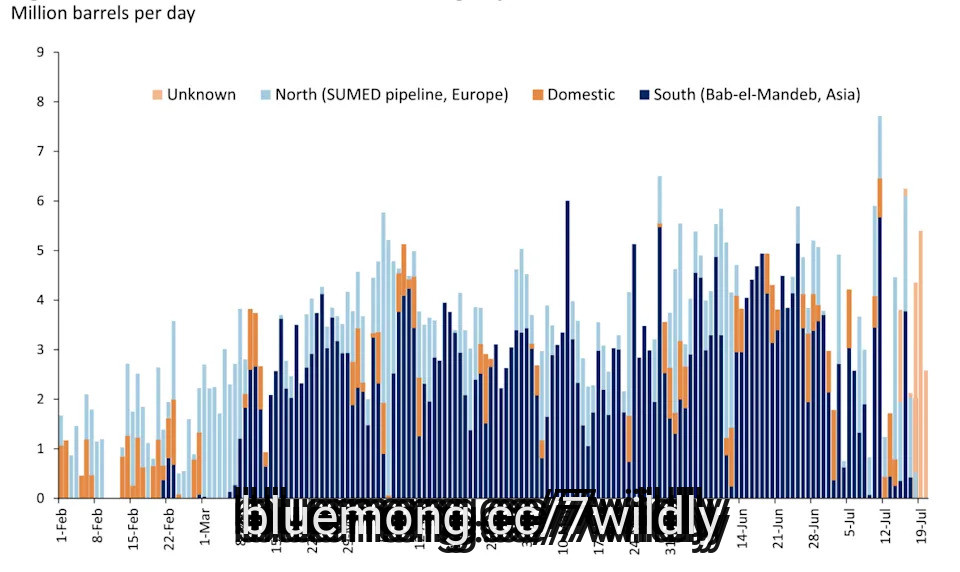
Six months down the road, as the conflict has reignited, the danger for the global oil market has diversified, no longer concentrated in a single waterway or oil-producing country. Instead, disruptions are accumulating across the infrastructure that carries crude from the Middle East, processes Russian oil into 11% of the world's diesel, and supplies fuel to consumers from Europe to Asia — and at a time when the market is already squeezed after half a year's worth of supply disruptions.
#energy
For global oil markets, already in a precarious situation, critical logistical nodes just keep getting thwarted. Things keep going wrong. Oil prices have started rebounding in return, reaching levels not seen since the first weeks of June before the signing of the US-Iran memorandum of understanding as Brent futures (BZ=F) crossed $100 per barrel on Thursday.
"If a ceasefire does not materialize," Rystad Energy head of geopolitical ***** ysis Jorge León said, "the risk of a significant rebound in oil prices would be substantial."
As the war between the US and Iran initially began in late February, attention swung toward the Strait of Hormuz, a critical waterway responsible for roughly a fifth of the world's oil trade. Threats of violence and, eventually, direct attacks on vessels by Iranian military wings sent traffic through the strait collapsing, kicking off the largest energy supply crisis on record.
Six months down the road, as the conflict has reignited, the danger for the global oil market has diversified, no longer concentrated in a single waterway or oil-producing country. Instead, disruptions are accumulating across the infrastructure that carries crude from the Middle East, processes Russian oil into 11% of the world's diesel, and supplies fuel to consumers from Europe to Asia — and at a time when the market is already squeezed after half a year's worth of supply disruptions.
#energy


2 months ago