
1 month ago
It looks like the American consumer has more to worry about than food recalls and cyclospora—a new study found that even the packaging the food comes in may pose some health concerns.
Out of over 15,000 food contact chemicals (FCCs), 1,222 or 8% can pose serious health risks, according to a recent study published in the peer-reviewed journal Environmental Science & Technology. Some of these FCCs, which in general are "substances that come into contact with food, such as through food packaging, processing, storage or other handling," per the FDA, were found to be hazardous to human health.
Researchers from the nonprofit Food Packaging Forum Foundation, which conducted the study, found at least 2,160 chemicals regularly contact food and "migrate into foodstuffs." Using guidelines from the UN's Globally Harmonized System of Classification and Labeling of Chemicals (GHS), researchers found some of the chemicals related to food packaging and other materials were "carcinogenic, mutagenic, toxic to reproduction, harmful to specific organs after repeated exposure, [and] endocrine disrupting."
That's not the only concerning part. The researchers found that 13,211 of the 15,159 known food-contact chemicals lacked harmonized hazard data. That means the scientists could not determine from the available data whether those chemicals met the study's criteria for being hazardous.
"There's a lot of ways of establishing whether something is hazardous or not, and some methods are based very much just on computer models, looking at the structure, predicting something. And others are based on in vitro tests," Dr. Helene Wiesinger, scientific communication officer at the nonprofit and one of the researchers on the study, told Fortune. "And in some sense, the data that we used?' So this is the data we used, and the problem we ran into at that point was that there were huge data lags."
#Food #study #contact

0.00$ raised of 0.00$ goal
0 donations
0.00$
to go
2 months ago
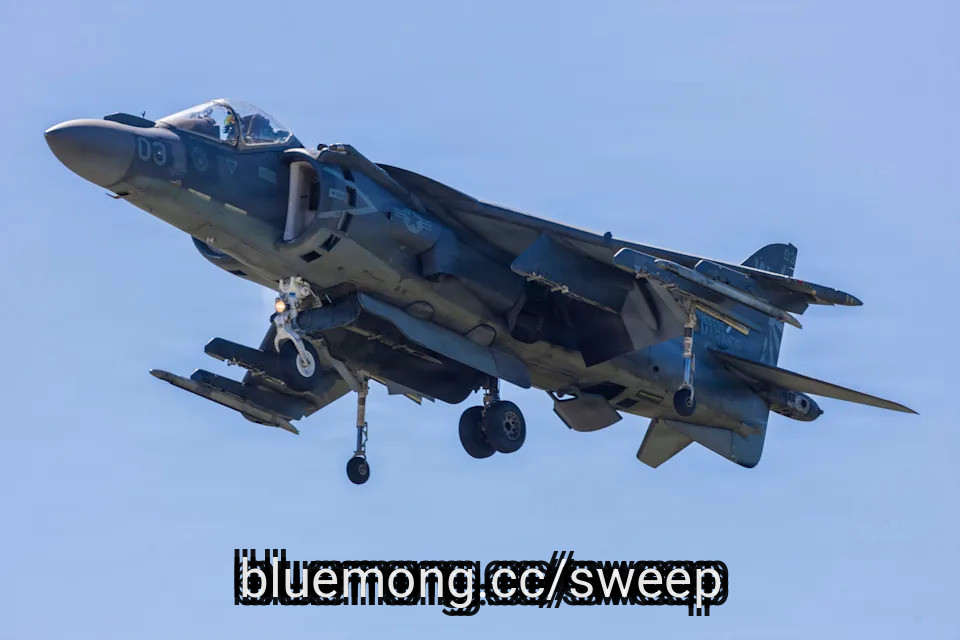
Marine pilots moving from the newly retired Harrier to the F-35 must unlearn old instincts.
The F-35 eases much of the physical work of flying, but gives pilots far more data to manage.
Former Harrier pilots say breaking those patterns takes repeated simulator training and practice.
The first time a former Marine Harrier pilot brings an F-35 fighter jet in to land on the deck of an amphibious warship, skills honed by hundreds of hours in the old jet might work against them in the new Lightning II.
The AV-8B Harrier, the Marine Corps' short take-off and vertical-landing fighter, saw its pilots carefully manage three different controls — one to control direction, an engine throttle, and a nozzle lever that directed engine thrust, allowing the aircraft to hover.
#harrier #pilots #former #fighter