
5 days ago
While Youngstown State quarterback Beau Brungard received the Stats Perform FCS National Offensive Player of the Week honor on Monday, Indiana State quarterback Elijah Owens was listed among others for honorable mention.
Brungard, a fifth-year senior, accounted for a touchdown in all eight of the Penguins' series possessions, with him at QB, in YSU's 70-13 rout of Duquesne on Saturday. He completed 20 of 23 passes for 290 yards and six TDs, while also running for two touchdowns.
Five other players received honorable mention for the weekly award, including Owens, former Sycamore running back Plez Lawrence (now at North Carolina Central), Montana running back Eli Gillman, Stonehill quarterback Jack O'Connell, and Alcorn State quarterback Jaylon Tolbert.
Owens delivered his best performance as a Sycamore in Indiana State's 42-35 win at Eastern Illinois on Saturday night. The redshirt junior quarterback threw for 284 yards, ran for 98 yards, and scored five total touchdowns (three passing, two rushing). Overall, Owens was 21-of-33 through the air for 284 yards and three passing touchdowns, while adding 18 carries for 98 yards and two additional scores.
Meanwhile, Lawrence — who played at ISU from 2023-25 and rushed for 1,164 total yards in 270 carries — ran for 210 yards and three touchdowns in North Carolina Central's 30-22 win against North Carolina A&T on Saturday in Durham. Lawrence also had a 200-plus-yard game as a Sycamore, gaining 203 yards in 29 carries at Murray State on Sept. 30, 2023.
#state #owens #sycamore #carolina
Brungard, a fifth-year senior, accounted for a touchdown in all eight of the Penguins' series possessions, with him at QB, in YSU's 70-13 rout of Duquesne on Saturday. He completed 20 of 23 passes for 290 yards and six TDs, while also running for two touchdowns.
Five other players received honorable mention for the weekly award, including Owens, former Sycamore running back Plez Lawrence (now at North Carolina Central), Montana running back Eli Gillman, Stonehill quarterback Jack O'Connell, and Alcorn State quarterback Jaylon Tolbert.
Owens delivered his best performance as a Sycamore in Indiana State's 42-35 win at Eastern Illinois on Saturday night. The redshirt junior quarterback threw for 284 yards, ran for 98 yards, and scored five total touchdowns (three passing, two rushing). Overall, Owens was 21-of-33 through the air for 284 yards and three passing touchdowns, while adding 18 carries for 98 yards and two additional scores.
Meanwhile, Lawrence — who played at ISU from 2023-25 and rushed for 1,164 total yards in 270 carries — ran for 210 yards and three touchdowns in North Carolina Central's 30-22 win against North Carolina A&T on Saturday in Durham. Lawrence also had a 200-plus-yard game as a Sycamore, gaining 203 yards in 29 carries at Murray State on Sept. 30, 2023.
#state #owens #sycamore #carolina




5 days ago
One of the longest-tenured members of the Houston Astros leadership will be taking his talents to the East Coast to try out a new professional sport.
On Monday afternoon, the NHL's Pittsburgh Penguins announced the appointment of Marcel Braithwaite as the team's new President of Business Operations.
Braithwaite has been promoted to the new role after 14 years with the Houston Astros. He notably served as the Senior Vice President of Business Operations and was one of the initial hires under the Jim Crane-led baseball organization.
"It's an honor to join the Penguins at such an exciting time under new ownership," said Braithwaite. "I am grateful to the Astros and look forward to serving the employees, fans and city of Pittsburgh by bringing a winning culture to this franchise alongside Geoff, Kyle and the rest of this talented Front Office."
As a member of the Astros' Executive leadership team, Braithwaite guided the franchise through several ballpark renovations, security upgrades and naming rights negotiations, ensuring the business maximized revenue opportunities while providing a best-in-class fan experience.
#astros #braithwaite #houston
On Monday afternoon, the NHL's Pittsburgh Penguins announced the appointment of Marcel Braithwaite as the team's new President of Business Operations.
Braithwaite has been promoted to the new role after 14 years with the Houston Astros. He notably served as the Senior Vice President of Business Operations and was one of the initial hires under the Jim Crane-led baseball organization.
"It's an honor to join the Penguins at such an exciting time under new ownership," said Braithwaite. "I am grateful to the Astros and look forward to serving the employees, fans and city of Pittsburgh by bringing a winning culture to this franchise alongside Geoff, Kyle and the rest of this talented Front Office."
As a member of the Astros' Executive leadership team, Braithwaite guided the franchise through several ballpark renovations, security upgrades and naming rights negotiations, ensuring the business maximized revenue opportunities while providing a best-in-class fan experience.
#astros #braithwaite #houston


12 days ago
Timely enough off the heels of the Labor Day holiday yesterday, the NHL's new collective bargaining agreement, the labor rules agreed to by the NHL and the NHLPA, kicks in next week. The new agreement is in place through September 2030, marking the second time in a row the two sides have put a deal in place without missing any time. That's no small matter, prior to the recent labor peace the NHL owners have locked out the players in 2004 and 2012 for significant periods that cost a total of 116 games.
These days, fortunately for all, there is more cooperation and perhaps about the best working relationship between the owners and players that we have seen in hockey. Those good feelings are no doubt influenced by business as a whole booming – revenue is way up so their is more money to be made by both sides. Further, ownership is absolutely swimming in vastly increased valuation and sale prices lately – look no further than the Penguins selling for $1.75 billion in 2026 after selling for $900 million just five years earlier.
The new CBA had some rules come on board early for last season – like LTIR tweaks and the playoff salary cap. Here are a few more interesting tweaks in place.
Training camps open Sept. 16 to coincide with the start of that new labor deal, and they'll look much different than they did in the past. Experienced players will be put through only a 13-day camp, down from 20 days, and those with at least 100 NHL games on their resumes are now limited to two exhibition games. Each team will play only four exhibition games.
The preseason shrinks again, at least formally. Most players across the league are already skating informally with their teammates and have been for a week or more by this point. That amount of time in the pre-practice stage will now be longer than the formal, official 13-day training camp. Long gone are the days of multiple on-ice sessions per day. In fact, teams can also no longer implement fitness testing for unpopular tests on the exercise bike or the so-called dreaded bag skate or repetitive timed sprints.
#players #place #rules
These days, fortunately for all, there is more cooperation and perhaps about the best working relationship between the owners and players that we have seen in hockey. Those good feelings are no doubt influenced by business as a whole booming – revenue is way up so their is more money to be made by both sides. Further, ownership is absolutely swimming in vastly increased valuation and sale prices lately – look no further than the Penguins selling for $1.75 billion in 2026 after selling for $900 million just five years earlier.
The new CBA had some rules come on board early for last season – like LTIR tweaks and the playoff salary cap. Here are a few more interesting tweaks in place.
Training camps open Sept. 16 to coincide with the start of that new labor deal, and they'll look much different than they did in the past. Experienced players will be put through only a 13-day camp, down from 20 days, and those with at least 100 NHL games on their resumes are now limited to two exhibition games. Each team will play only four exhibition games.
The preseason shrinks again, at least formally. Most players across the league are already skating informally with their teammates and have been for a week or more by this point. That amount of time in the pre-practice stage will now be longer than the formal, official 13-day training camp. Long gone are the days of multiple on-ice sessions per day. In fact, teams can also no longer implement fitness testing for unpopular tests on the exercise bike or the so-called dreaded bag skate or repetitive timed sprints.
#players #place #rules

14 days ago
Saturday marked the debut of the Will Stein era for Kentucky Football, and boy, was it a fun one.
Thanks to six touchdowns and 506 yards of total offense, the Wildcats put this one out of reach early and never looked back en route to a 45-13 victory over Youngstown State.
The Penguins were held to a mere two touchdowns, while Kentucky had just two possessions that did not end with points
All in all, it was a great day of football in the Bluegrass to kick off what hopes to be a fun era under Coach Stein.
After the game, you could tell Stein was emotional about his first win as a head coach, even letting a few f-bombs drop during postgame interviews.
#coach #saturday #thanks
Thanks to six touchdowns and 506 yards of total offense, the Wildcats put this one out of reach early and never looked back en route to a 45-13 victory over Youngstown State.
The Penguins were held to a mere two touchdowns, while Kentucky had just two possessions that did not end with points
All in all, it was a great day of football in the Bluegrass to kick off what hopes to be a fun era under Coach Stein.
After the game, you could tell Stein was emotional about his first win as a head coach, even letting a few f-bombs drop during postgame interviews.
#coach #saturday #thanks


16 days ago
According to Sportsnet:
Pittsburgh Penguins: Arturs Silovs
It's something of a similar story in Pittsburgh. After finishing second in the Metro last season, after a string of campaigns in the division's basement before that, the Penguins enter 2026-27 looking to prove their resurgence was more than a one-year fluke.
They'll do so with a lineup that's seen plenty of turnover this summer. New offensive talents Andrei Kuzmenko and Nick Robertson are dotted among the forward corps' bottom six, and new blue-liners Trevor van Riemsdyk and Kaedan Korczak will slot in to replace key depth pieces. The most important change, though, might be the fact that the net will be turned over to young Arturs Silovs.
The 25-year-old split netminding duties with a veteran partner for the entirety of last season — first with Tristan Jarry and then Stuart Skinner following the trade that brought the two-time Cup finalist to Pittsburgh. It was Skinner who got the start for the first few games of the post-season, before Silovs took over and nearly pulled Pittsburgh back from an 0-3 series deficit. With Skinner headed to Winnipeg, it'll be up to Silovs and young Sergei Murashov to keep Sidney Crosby's club in the post-season picture once again.
#pittsburgh
Pittsburgh Penguins: Arturs Silovs
It's something of a similar story in Pittsburgh. After finishing second in the Metro last season, after a string of campaigns in the division's basement before that, the Penguins enter 2026-27 looking to prove their resurgence was more than a one-year fluke.
They'll do so with a lineup that's seen plenty of turnover this summer. New offensive talents Andrei Kuzmenko and Nick Robertson are dotted among the forward corps' bottom six, and new blue-liners Trevor van Riemsdyk and Kaedan Korczak will slot in to replace key depth pieces. The most important change, though, might be the fact that the net will be turned over to young Arturs Silovs.
The 25-year-old split netminding duties with a veteran partner for the entirety of last season — first with Tristan Jarry and then Stuart Skinner following the trade that brought the two-time Cup finalist to Pittsburgh. It was Skinner who got the start for the first few games of the post-season, before Silovs took over and nearly pulled Pittsburgh back from an 0-3 series deficit. With Skinner headed to Winnipeg, it'll be up to Silovs and young Sergei Murashov to keep Sidney Crosby's club in the post-season picture once again.
#pittsburgh

23 days ago
YOUNGSTOWN, Ohio (AP) — Beau Brungard threw for three touchdowns and ran for two, leading Youngstown State to a 43-10 rout of Mercyhurst in a Football Championship Subdivision season opener on Thursday night.
Brungard, the reigning Walter Payton Award winner as the top offensive player in FCS, had 98 yards rushing in the first half as the Penguins built a 29-3 lead. He accounted for three touchdowns — two on the ground and one passing. His second touchdown pass, 27 yards to Bryan Hunt, gave the Penguins a 36-3 lead to open the third quarter. He added a short touchdown pass to Jaden Gilbert with under 10 minutes left in the fourth before coming out of the game.
Brungard finished with 232 yards passing, completing 20 of 29 throws, and was intercepted once. He had 119 yards rushing on 21 carries. Gilbert had five carries for 89 yards, which included a 50-yard run. The Penguins, ranked No. 9 in the Stats Perform FCS top 25, had 484 yards on offense, with 232 passing and 252 rushing.
After driving 65 yards for a 24-yard field goal on the opening possession of the game, the Lakers didn't cross midfield until the middle of the fourth when they reached the YSU 34-yard line before being stopped on fourth down.
A blocked punt by Kaleb Platz set up the Lakers for a 53-yard drive to their only touchdown, a 2-yard pass from Alex Gevaudan to Sha'lik Hampton.
#rushing
Brungard, the reigning Walter Payton Award winner as the top offensive player in FCS, had 98 yards rushing in the first half as the Penguins built a 29-3 lead. He accounted for three touchdowns — two on the ground and one passing. His second touchdown pass, 27 yards to Bryan Hunt, gave the Penguins a 36-3 lead to open the third quarter. He added a short touchdown pass to Jaden Gilbert with under 10 minutes left in the fourth before coming out of the game.
Brungard finished with 232 yards passing, completing 20 of 29 throws, and was intercepted once. He had 119 yards rushing on 21 carries. Gilbert had five carries for 89 yards, which included a 50-yard run. The Penguins, ranked No. 9 in the Stats Perform FCS top 25, had 484 yards on offense, with 232 passing and 252 rushing.
After driving 65 yards for a 24-yard field goal on the opening possession of the game, the Lakers didn't cross midfield until the middle of the fourth when they reached the YSU 34-yard line before being stopped on fourth down.
A blocked punt by Kaleb Platz set up the Lakers for a 53-yard drive to their only touchdown, a 2-yard pass from Alex Gevaudan to Sha'lik Hampton.
#rushing


24 days ago
With the NHL season quickly approaching, the league has revealed its national TV schedule across TNT Sports and ESPN networks.
TNT Sports will air 72 regular-season games this season, including the Heritage Classic, Winter Classic, and "Thanksgiving Showdown" doubleheader on Black Friday. TNT will also air the 2027 Stanley Cup Final.
On ESPN, there will be 100 games across ABC, ESPN and ESPN+/Disney+/Hulu. Featured games include the NHL Frozen Frenzy and NHL Stadium Series. ABC and ESPN will also air the NHL All-Star Weekend, which is returning after a two-year hiatus.
Opening night on Tuesday, Sept. 29, as previously announced, will feature an opening tripleheader. Florida Panthers-Carolina Hurricanes will be at 5 p.m., New York Rangers-Boston Bruins at 8 p.m., and Chicago Blackhawks-Vegas Golden Knights at 10:30 p.m., all on ESPN.
TNT will begin its coverage the next night with a doubleheader featuring Pittsburgh Penguins-Philadelphia Flyers at 7:30 p.m. and Los Angeles Kings-Colorado Avalanche at 10 p.m.
#games #across
TNT Sports will air 72 regular-season games this season, including the Heritage Classic, Winter Classic, and "Thanksgiving Showdown" doubleheader on Black Friday. TNT will also air the 2027 Stanley Cup Final.
On ESPN, there will be 100 games across ABC, ESPN and ESPN+/Disney+/Hulu. Featured games include the NHL Frozen Frenzy and NHL Stadium Series. ABC and ESPN will also air the NHL All-Star Weekend, which is returning after a two-year hiatus.
Opening night on Tuesday, Sept. 29, as previously announced, will feature an opening tripleheader. Florida Panthers-Carolina Hurricanes will be at 5 p.m., New York Rangers-Boston Bruins at 8 p.m., and Chicago Blackhawks-Vegas Golden Knights at 10:30 p.m., all on ESPN.
TNT will begin its coverage the next night with a doubleheader featuring Pittsburgh Penguins-Philadelphia Flyers at 7:30 p.m. and Los Angeles Kings-Colorado Avalanche at 10 p.m.
#games #across


27 days ago
Pudgy Penguins token PENGU climbed 62.1% over the past week and now trades near $0.0095. Traders link a cryptic post from CEO Luca Netz to the company's stated ambition of a public listing.
The token added roughly 15% in the last 24 hours alone. Meanwhile, its market value sits close to $598 million, ranking PENGU 97th across all cryptocurrencies.
LBank, a centralized crypto exchange, opened a promotional campaign with Pudgy Penguins in August. The program combines trading competitions, giveaways, and yield products that lock user deposits for 30 days. Those locked products keep tokens away from exchange order books for a month at a time. Therefore, the campaign thins the supply available to sellers while it runs.
The brand keeps widening its offline footprint too. Plush toys and collectible figures now sell through Walmart and Target stores across North America. Netz pushed the Target rollout directly to his followers this weekend.
Retail distribution has become the core bull case here. In January, the project moved deeper into sports through its Manchester City NFT deal. That pivot matters more now, because the wider NFT market cap slide has hit blue-chip collections hard this year.
#netz #target #across #campaign
The token added roughly 15% in the last 24 hours alone. Meanwhile, its market value sits close to $598 million, ranking PENGU 97th across all cryptocurrencies.
LBank, a centralized crypto exchange, opened a promotional campaign with Pudgy Penguins in August. The program combines trading competitions, giveaways, and yield products that lock user deposits for 30 days. Those locked products keep tokens away from exchange order books for a month at a time. Therefore, the campaign thins the supply available to sellers while it runs.
The brand keeps widening its offline footprint too. Plush toys and collectible figures now sell through Walmart and Target stores across North America. Netz pushed the Target rollout directly to his followers this weekend.
Retail distribution has become the core bull case here. In January, the project moved deeper into sports through its Manchester City NFT deal. That pivot matters more now, because the wider NFT market cap slide has hit blue-chip collections hard this year.
#netz #target #across #campaign



29 days ago
While other professional sports teams are moving to streaming- or over-the-air-heavy models, the Pittsburgh Pirates are reportedly extending their contract with SportsNet Pittsburgh amid strong ratings.
The news comes from a report in the Pittsburgh Post-Gazette. The agreement is not a long-term deal and was made through SportsNet Pittsburgh's operator, NESN. The Pittsburgh Penguins have also committed to SNP for the 2026-27 season, but have not made long-term plans.
The Pirates and Penguins continue to enjoy strong local ratings on SNP. SNP and NESN president and CEO David Wisnia told the Post-Gazette that the Penguins ranked second among all NHL teams in terms of local broadcast ratings, while the Pirates rank fifth among MLB teams. Seven NHL teams aired their games fully over the air last season.
The Pirates have been with SNP since 1986, when the network was then known as Pirates Cable Network. The network has undergone several name changes, operating under the Fox Sports brand from 1996 to 2011, Root Sports from 2011 to 2017, and AT&T SportsNet from 2017 to 2023.
After AT&T SportsNet owner Warner Bros. Discovery announced its intention to leave the regional sports network business following the 2023 MLB season, the network was acquired by Fenway Sports Group, which then owned the Pittsburgh Penguins, in August 2023. The Pirates then acquired a stake in the network that December.
#ratings
The news comes from a report in the Pittsburgh Post-Gazette. The agreement is not a long-term deal and was made through SportsNet Pittsburgh's operator, NESN. The Pittsburgh Penguins have also committed to SNP for the 2026-27 season, but have not made long-term plans.
The Pirates and Penguins continue to enjoy strong local ratings on SNP. SNP and NESN president and CEO David Wisnia told the Post-Gazette that the Penguins ranked second among all NHL teams in terms of local broadcast ratings, while the Pirates rank fifth among MLB teams. Seven NHL teams aired their games fully over the air last season.
The Pirates have been with SNP since 1986, when the network was then known as Pirates Cable Network. The network has undergone several name changes, operating under the Fox Sports brand from 1996 to 2011, Root Sports from 2011 to 2017, and AT&T SportsNet from 2017 to 2023.
After AT&T SportsNet owner Warner Bros. Discovery announced its intention to leave the regional sports network business following the 2023 MLB season, the network was acquired by Fenway Sports Group, which then owned the Pittsburgh Penguins, in August 2023. The Pirates then acquired a stake in the network that December.
#ratings


1 month ago
Returning to Boston, a Motivated Connor Clifton Looks to Bolster Bruins' Defense originally appeared on NESN. Add NESN as a Preferred Source by clicking here.
The last two seasons for the Bruins have seen the team miss the playoffs or lose in the first round. Something was needed to give the team a spark. How about the return of an old teammate?
After a run with the Sabres and Penguins, Connor Clifton looks to once again create chaos with the Bruins, a team he spent his first five seasons with, signing a two-year contract with a $2.25 million cap hit.
The defenseman from New Jersey, a member of the ECAC All-Tournament Team at Quinnipiac, joined the Providence Bruins in 2017 before signing an entry-level deal with the Bruins in 2018. A fixture on the third defense pairing, Clifton became a menace on the ice in the early 2020s.
In those five seasons in Boston, Clifton had 10 goals and 33 **** ists. He accumulated a career-high 23 points during the 2022-23 season, during which he led the Bruins in hits (208). Clifton led the Penguins with 180 hits last season.
#bruins #connor
The last two seasons for the Bruins have seen the team miss the playoffs or lose in the first round. Something was needed to give the team a spark. How about the return of an old teammate?
After a run with the Sabres and Penguins, Connor Clifton looks to once again create chaos with the Bruins, a team he spent his first five seasons with, signing a two-year contract with a $2.25 million cap hit.
The defenseman from New Jersey, a member of the ECAC All-Tournament Team at Quinnipiac, joined the Providence Bruins in 2017 before signing an entry-level deal with the Bruins in 2018. A fixture on the third defense pairing, Clifton became a menace on the ice in the early 2020s.
In those five seasons in Boston, Clifton had 10 goals and 33 **** ists. He accumulated a career-high 23 points during the 2022-23 season, during which he led the Bruins in hits (208). Clifton led the Penguins with 180 hits last season.
#bruins #connor


1 month ago
The Penguins' already stacked forward group could be getting even deeper with potential options. Filip Hallander lost most of the 2025-26 season due to a puck strike causing a blood clot in his leg. A translated Swedish interview (shoutout Reddit) gives an update for how he's doing, ****** led "Hållander on the tough year: "I thought I'd be doing something else". We ran it through a google translator so we won't take every word for gospel, but one can kind of get the general point.
First, he suffered a blood clot in his leg. Then, something was discovered in one of his lungs. Now, Filip Hållander is back on the ice and opening up about the tough year he endured.
"Right then and there, I just felt: 'Damn, maybe there won't be any more hockey for me?'" he tells ST. Filip Hållander is back home training with Timrå IK, following a difficult season in the US with the Pittsburgh Penguins.
Filip Hållander suffered a blood clot In November 2025, he received the news that he had a blood clot in his leg. He returned in February but managed only a few games in the AHL before being sidelined again.
"I played a few games and picked up some minor issues. We ran some new tests as a precaution. Some of the readings weren't quite right, and they wanted to play it safe. So, I went back to Pittsburgh for more tests, and that's when we found something in my lung," says Hållander.
#blood
First, he suffered a blood clot in his leg. Then, something was discovered in one of his lungs. Now, Filip Hållander is back on the ice and opening up about the tough year he endured.
"Right then and there, I just felt: 'Damn, maybe there won't be any more hockey for me?'" he tells ST. Filip Hållander is back home training with Timrå IK, following a difficult season in the US with the Pittsburgh Penguins.
Filip Hållander suffered a blood clot In November 2025, he received the news that he had a blood clot in his leg. He returned in February but managed only a few games in the AHL before being sidelined again.
"I played a few games and picked up some minor issues. We ran some new tests as a precaution. Some of the readings weren't quite right, and they wanted to play it safe. So, I went back to Pittsburgh for more tests, and that's when we found something in my lung," says Hållander.
#blood


1 month ago
The Blue Jackets now have an ECHL affiliation, announcing Aug. 6 that a two-year agreement with the Wheeling Nailers will start with the upcoming season.
More coverage: Hockey fans, internet react to Blue Jackets radio broadcast changes
Adding the Nailers gives the Jackets a second developmental team, and being in Wheeling, West Virginia, it's a relatively short driving distance from Columbus and Cleveland, where the AHL's Monsters reside.
"Wheeling has a long tradition of both player development and organizational success, and its proximity to both Cleveland and Columbus will be advantageous on the hockey side, while providing a great opportunity to promote our organization and the game throughout the region," Blue Jackets **** istant general manager/Cleveland Monsters GM Chris Clark said in a statement.
The Nailers, who were the Pittsburgh Penguins' ECHL affiliate from 1998-2026, will compete in the ECHL's Western Conference Central Division with the Bloomington Bison, Cincinnati Cyclones, Fort Wayne Komets, Indy Fuel, Kalamazoo Wings and Toledo Walleye.
#jackets #echl #hockey
More coverage: Hockey fans, internet react to Blue Jackets radio broadcast changes
Adding the Nailers gives the Jackets a second developmental team, and being in Wheeling, West Virginia, it's a relatively short driving distance from Columbus and Cleveland, where the AHL's Monsters reside.
"Wheeling has a long tradition of both player development and organizational success, and its proximity to both Cleveland and Columbus will be advantageous on the hockey side, while providing a great opportunity to promote our organization and the game throughout the region," Blue Jackets **** istant general manager/Cleveland Monsters GM Chris Clark said in a statement.
The Nailers, who were the Pittsburgh Penguins' ECHL affiliate from 1998-2026, will compete in the ECHL's Western Conference Central Division with the Bloomington Bison, Cincinnati Cyclones, Fort Wayne Komets, Indy Fuel, Kalamazoo Wings and Toledo Walleye.
#jackets #echl #hockey

2 months ago
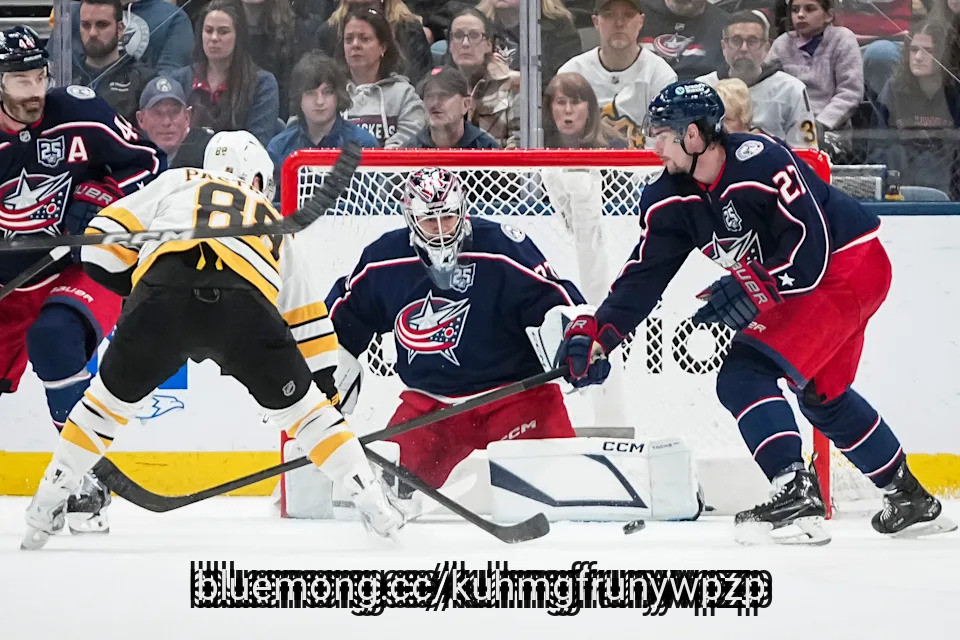
PITTSBURGH, PA - APRIL 27: Tommy Novak #18 of the Pittsburgh Penguins skates against the Philadelphia Flyers in Game Five of the First Round of the 2026 Stanley Cup Playoffs at PPG PAINTS Arena on April 27, 2026 in Pittsburgh, Pennsylvania. (Photo by Joe Sargent/NHLI via Getty Images)
PITTSBURGH (AP) — The Pittsburgh Penguins signed dependable forward Tommy Novak to a three-year contract extension on Friday. The deal, which begins during the 2027-28 season, carries an average annual value of $4.65 million.
The 29-year-old Novak collected 16 goals and 26 points in 82 games last season while helping the Penguins return to the playoffs following a three-year absence.
Novak, who bounced between the second and third line during his first full season in Pittsburgh, had been scheduled to become a free agent next summer. The extension instead keeps him in the fold for the rest of the decade and positions him to be part of the club's nucleus as it transitions out of the twilight of the Sidney Crosby/Evgeni Malkin/Kris Letang era.
#tommy
PITTSBURGH (AP) — The Pittsburgh Penguins signed dependable forward Tommy Novak to a three-year contract extension on Friday. The deal, which begins during the 2027-28 season, carries an average annual value of $4.65 million.
The 29-year-old Novak collected 16 goals and 26 points in 82 games last season while helping the Penguins return to the playoffs following a three-year absence.
Novak, who bounced between the second and third line during his first full season in Pittsburgh, had been scheduled to become a free agent next summer. The extension instead keeps him in the fold for the rest of the decade and positions him to be part of the club's nucleus as it transitions out of the twilight of the Sidney Crosby/Evgeni Malkin/Kris Letang era.
#tommy


2 months ago
It is time for another round of preseason over/under for the 2026-27 Pittsburgh Penguins.
This past week we looked at Ben Kindel and the team's youngest players (or potential young players). This week we are going to take a look at some of the newest offseason additions and what they might be capable of this season.
Let's get started.
Of all the players the Penguins brought in this offseason, I think Robertson is the one that has the best chance to really make a big impact, both now and in the long-term future.
He is still only 24 years old (soon-to-be 25) and has at least shown he has NHL skill, and perhaps still some untapped potential.
#penguins #kindel
This past week we looked at Ben Kindel and the team's youngest players (or potential young players). This week we are going to take a look at some of the newest offseason additions and what they might be capable of this season.
Let's get started.
Of all the players the Penguins brought in this offseason, I think Robertson is the one that has the best chance to really make a big impact, both now and in the long-term future.
He is still only 24 years old (soon-to-be 25) and has at least shown he has NHL skill, and perhaps still some untapped potential.
#penguins #kindel


2 months ago
Golf architect Kyle Phillips has broken ground on the course at the private Pandion Club in Estero, Florida. The new layout, intended to invoke the heathland courses of England with Lowcountry influences, is being built on the site of the former Old Corkscrew Golf Club that was closed earlier this year.
Phillips plans a par-71 course for Pandion Club, stretching to 7,220 with firm and fast playing conditions and a premium on strategic shotmaking. The new layout is scheduled to open in 2027 with membership capped at 280. The golf-only club will include a Lowcountry-inspired clubhouse and expansive practice facilities. The name Pandion is inspired by Pandion haliaetus, aka osprey.
The layout features sandy terrain that should promote Phillips' goals. Having built the top-ranked Kingsbarns Golf Links and Dundonald Links in Scotland and having studied courses around the world, Phillips said that heathland courses are situated on inland dunes, "like the ones we have in Florida."
Old Corkscrew and additional surrounding land was purchased in 2022 by The Hoffmann Family of Companies for $14.5 million, according to property records reported by the Naples Daily News. The Hoffmans purchased the Cottages at Old Corkscrew Golf Club for $4.5 million in a separate transaction. The Hoffmanns also own Old Collier Golf Club in Naples, as well as the Pittsburgh Penguins and Florida Everblades.
"Everything we do at Hoffmann Family of Companies, we want to provide a unique, best-in-class experience for our guests, and Pandion is going to be no exception" Geoff Hoffmann, CEO of HF Companies' private equity arm, said in a media release announcing the start of construction. "From the moment that you drive through our gates, you will know that you have arrived somewhere special. You are going to feel like you are in nature, and this is an escape. We knew that his experience presented an opportunity to preserve the natural landscape that was embedded on the site, and that's something we are going to build around."
#pandion #corkscrew #layout #courses
Phillips plans a par-71 course for Pandion Club, stretching to 7,220 with firm and fast playing conditions and a premium on strategic shotmaking. The new layout is scheduled to open in 2027 with membership capped at 280. The golf-only club will include a Lowcountry-inspired clubhouse and expansive practice facilities. The name Pandion is inspired by Pandion haliaetus, aka osprey.
The layout features sandy terrain that should promote Phillips' goals. Having built the top-ranked Kingsbarns Golf Links and Dundonald Links in Scotland and having studied courses around the world, Phillips said that heathland courses are situated on inland dunes, "like the ones we have in Florida."
Old Corkscrew and additional surrounding land was purchased in 2022 by The Hoffmann Family of Companies for $14.5 million, according to property records reported by the Naples Daily News. The Hoffmans purchased the Cottages at Old Corkscrew Golf Club for $4.5 million in a separate transaction. The Hoffmanns also own Old Collier Golf Club in Naples, as well as the Pittsburgh Penguins and Florida Everblades.
"Everything we do at Hoffmann Family of Companies, we want to provide a unique, best-in-class experience for our guests, and Pandion is going to be no exception" Geoff Hoffmann, CEO of HF Companies' private equity arm, said in a media release announcing the start of construction. "From the moment that you drive through our gates, you will know that you have arrived somewhere special. You are going to feel like you are in nature, and this is an escape. We knew that his experience presented an opportunity to preserve the natural landscape that was embedded on the site, and that's something we are going to build around."
#pandion #corkscrew #layout #courses


2 months ago
The Top 25 Under 25 countdown continues with a rising University of Denver freshman who made himself a prospect to watch with a strong campaign in the WHL last season.
Catch up on the previous entries for this year:
Pensburgh Top 25 Under 25: Graduates and Departed players in 2025
Top 25 Under 25: The best of the rest
No. 25: Chase Pietila, D
Elite Prospects resume:
The Penguins selected Miller in the fifth round of the 2025 draft. At the time, he had just recorded a career-high 31 points in 50 games of his second WHL regular season before helping the Portland Winterhawks reach the second round of the playoffs.
#university #pensburgh #departed
Catch up on the previous entries for this year:
Pensburgh Top 25 Under 25: Graduates and Departed players in 2025
Top 25 Under 25: The best of the rest
No. 25: Chase Pietila, D
Elite Prospects resume:
The Penguins selected Miller in the fifth round of the 2025 draft. At the time, he had just recorded a career-high 31 points in 50 games of his second WHL regular season before helping the Portland Winterhawks reach the second round of the playoffs.
#university #pensburgh #departed



2 months ago
The amount of young talent in the Pittsburgh Penguins organization is filling up quickly. CapWages has 21 players on Pittsburgh’s reserve list for unsigned drafted players and the team has 22 others under contract that will be playing in the pro ranks next season. Once upon a time, finding 25 players to even rank was a tall task, now there are some decent enough names that won’t draw a mention at all for this year’s list considering that there are over 40 options between signed players and the reserve list. Today hopes to appease that with an honorable mention of five players on the cusp of making the list, all of whom show the potential to be ranked next year with favorable upcoming seasons.
Earlier in the week we kicked off Top 25 Under 25 season by looking at the players that won’t be a part of this year’s list due to aging out, being traded or otherwise leaving the organization. As a loose rule, we’re saying for now that 2019 draftees like Elmer Soderblom (who turned 25 earlier this summer) and Nick Robertson (who has his 25th birthday in September) are ineligible this year. 2020 draftees that are under the age of 25 currently, like Hendrix Lapierre and Joel Blomqvist meet the cut-off as fair game this year.
The top 25 under 25 series was a staple within the SBN Hockey blogs a decade ago, around here it’s morphed into what I like to think about as a snapshot in time for value and importance within the organization. It’s not meant to be purely predictive of which player may be the best pro in three, five or seven years but show how the young players currently stack up against one another.
In many ways it’s an impossible task, and a very subjective one. How does one weigh a 24-year old that figures to have a short leash at making an NHL impact (like a Phil Tomasino or Sam Poulin last year) against a fresh-faced 18 year old that was just drafted and doesn’t figure to turn pro for several years? Not to mention everything in between. It’s certainly a balancing act where guaranteed contributions to the NHL level count for something, even with the real possibility of a short shelf life and some projections also have to be taken into account for expected/hoped for futures.
Since this is a value-based snapshot in time, another handy tool may be to consider a hypothetical trade. If you **** ume a trade is going to happen and the other side wants either prospect X or young player Y to finalize the deal, which **** et would the organization be better off holding onto? The answer to that judgement can go a long way towards determining where the young players will slot in against each other for this list, though it isn’t a strict rule of thumb since some player profiles (puck moving defenseman) might have more trade value than organizational value than other spots (goalie, small winger). That consideration is at least some factor in aligning the rankings.
#players #like #mention
Earlier in the week we kicked off Top 25 Under 25 season by looking at the players that won’t be a part of this year’s list due to aging out, being traded or otherwise leaving the organization. As a loose rule, we’re saying for now that 2019 draftees like Elmer Soderblom (who turned 25 earlier this summer) and Nick Robertson (who has his 25th birthday in September) are ineligible this year. 2020 draftees that are under the age of 25 currently, like Hendrix Lapierre and Joel Blomqvist meet the cut-off as fair game this year.
The top 25 under 25 series was a staple within the SBN Hockey blogs a decade ago, around here it’s morphed into what I like to think about as a snapshot in time for value and importance within the organization. It’s not meant to be purely predictive of which player may be the best pro in three, five or seven years but show how the young players currently stack up against one another.
In many ways it’s an impossible task, and a very subjective one. How does one weigh a 24-year old that figures to have a short leash at making an NHL impact (like a Phil Tomasino or Sam Poulin last year) against a fresh-faced 18 year old that was just drafted and doesn’t figure to turn pro for several years? Not to mention everything in between. It’s certainly a balancing act where guaranteed contributions to the NHL level count for something, even with the real possibility of a short shelf life and some projections also have to be taken into account for expected/hoped for futures.
Since this is a value-based snapshot in time, another handy tool may be to consider a hypothetical trade. If you **** ume a trade is going to happen and the other side wants either prospect X or young player Y to finalize the deal, which **** et would the organization be better off holding onto? The answer to that judgement can go a long way towards determining where the young players will slot in against each other for this list, though it isn’t a strict rule of thumb since some player profiles (puck moving defenseman) might have more trade value than organizational value than other spots (goalie, small winger). That consideration is at least some factor in aligning the rankings.
#players #like #mention

2 months ago
Original author: Joe Starkey: Sept. 19, 2006
The moment that Pittsburgh Penguins fans feared would never happen took place Sept. 5 in a packed Mellon Arena media room, when Mario Lemieux stepped to the podium and presented 20-year-old Russian hockey star Evgeni Malkin with a No. 71 Penguins jersey.
Malkin, the team's first round draft pick (second overall) in 2004, could not contain his smile as he draped the jersey over his ******* on-down shirt.
"I am really happy to be here today," he said through his interpreter, Olga McQueen. "It was my dream to come here and play for the Pittsburgh Penguins."
The Penguins' new marketing slogan – "Experience the Evolution" – might have to be changed to "Experience the Russian Evolution" in the wake of Malkin's incredible odyssey. In early August, he abandoned his hometown team, Metallurg Magnitogorsk, at the Helsinki Airport. He'd just signed a one-year deal with the club, but said he did so under extreme pressure from team management. He quickly realized his mistake.
#penguins #russian #experience #here
The moment that Pittsburgh Penguins fans feared would never happen took place Sept. 5 in a packed Mellon Arena media room, when Mario Lemieux stepped to the podium and presented 20-year-old Russian hockey star Evgeni Malkin with a No. 71 Penguins jersey.
Malkin, the team's first round draft pick (second overall) in 2004, could not contain his smile as he draped the jersey over his ******* on-down shirt.
"I am really happy to be here today," he said through his interpreter, Olga McQueen. "It was my dream to come here and play for the Pittsburgh Penguins."
The Penguins' new marketing slogan – "Experience the Evolution" – might have to be changed to "Experience the Russian Evolution" in the wake of Malkin's incredible odyssey. In early August, he abandoned his hometown team, Metallurg Magnitogorsk, at the Helsinki Airport. He'd just signed a one-year deal with the club, but said he did so under extreme pressure from team management. He quickly realized his mistake.
#penguins #russian #experience #here

2 months ago
Former Toronto Maple Leafs **** istant general manager Brandon Pridham will be joining the Pittsburgh Penguins as a hockey operations consultant.
According to a new report from Sportsnet inside Elliotte Friedman, Pridham is expected to handle contract, cap management, and planning responsibilities with the Penguins.
The duties Pridham is expected to take on were previously being handled by Vickie Mpofu, who recently departed the Penguins organization for Nashville.
Joining the Penguins will be a reunion of sorts for Pridham, who spent the past 12 seasons in Toronto with the Maple Leafs, with a number of those years working alongside Kyle Dubas.
Earlier this year, Pridham and the Maple Leafs mutually agreed to part ways after the team made changes at the management level, bringing in John Chayka as general manager.
According to a new report from Sportsnet inside Elliotte Friedman, Pridham is expected to handle contract, cap management, and planning responsibilities with the Penguins.
The duties Pridham is expected to take on were previously being handled by Vickie Mpofu, who recently departed the Penguins organization for Nashville.
Joining the Penguins will be a reunion of sorts for Pridham, who spent the past 12 seasons in Toronto with the Maple Leafs, with a number of those years working alongside Kyle Dubas.
Earlier this year, Pridham and the Maple Leafs mutually agreed to part ways after the team made changes at the management level, bringing in John Chayka as general manager.

2 months ago
This article originally appeared on PGHHockeyNOW.com.
Just a day after the arbitration hearing schedule was announced, the Pittsburgh Penguins and restricted free agent winger Nick Robertson won’t need their scheduled court date.
Tuesday, the Penguins and Robertson agreed to a two-year deal with a $3.25 million average annual value, thus avoiding arbitration and locking up the 24-year-old winger for a couple of seasons.
Robertson, 24, made just over $1.8 million last season.
Click here to read more from PGHHockeyNOW.com.
Just a day after the arbitration hearing schedule was announced, the Pittsburgh Penguins and restricted free agent winger Nick Robertson won’t need their scheduled court date.
Tuesday, the Penguins and Robertson agreed to a two-year deal with a $3.25 million average annual value, thus avoiding arbitration and locking up the 24-year-old winger for a couple of seasons.
Robertson, 24, made just over $1.8 million last season.
Click here to read more from PGHHockeyNOW.com.

2 months ago
This article originally appeared on PGHHockeyNOW.com.
When the Pittsburgh Penguins called his name, it was more than a little bit surprising. In two prior NHL drafts, all 32 teams passed on Czech defenseman Tomas Galvas until the Penguins finally called his name in his third draft.
But on June 28, with their second choice of the second round of the 2026 NHL Draft, the Penguins became the team to finally select Galvas (54th overall).
After getting a good look at the prospect during last week’s Development Camp, on Thursday, the team signed him to his three-year entry-level contract.
The 5-foot-10, 168-pound defender ranked fifth overall on his team in points and led the team’s defensemen in goals and ******* ists.
When the Pittsburgh Penguins called his name, it was more than a little bit surprising. In two prior NHL drafts, all 32 teams passed on Czech defenseman Tomas Galvas until the Penguins finally called his name in his third draft.
But on June 28, with their second choice of the second round of the 2026 NHL Draft, the Penguins became the team to finally select Galvas (54th overall).
After getting a good look at the prospect during last week’s Development Camp, on Thursday, the team signed him to his three-year entry-level contract.
The 5-foot-10, 168-pound defender ranked fifth overall on his team in points and led the team’s defensemen in goals and ******* ists.

2 months ago
Penguins want to trade for Elias Pettersson from Canucks, but Vancouver wants 1 tricky player originally appeared on The Sporting News. Add The Sporting News as a Preferred Source by clicking here.
The Pittsburgh Penguins have been heavily linked in trade rumors to Jason Robertson of the Dallas Stars.
If that can't happen, though, it sounds like the Pens have a different plan to use their cap **** e.
They're interested in Elias Pettersson of the Vancouver Canucks, according to local radio station 93.7 The Fan.
The report indicates that the Canucks want Ben Kindel in return, "and that's made the trade hard to make," it adds.
The Pittsburgh Penguins have been heavily linked in trade rumors to Jason Robertson of the Dallas Stars.
If that can't happen, though, it sounds like the Pens have a different plan to use their cap **** e.
They're interested in Elias Pettersson of the Vancouver Canucks, according to local radio station 93.7 The Fan.
The report indicates that the Canucks want Ben Kindel in return, "and that's made the trade hard to make," it adds.

2 months ago
Penguins Eye Canucks' $11.6 Million Center As Trade Target originally appeared on SportsNet Pittsburgh. Add SportsNet Pittsburgh as a Preferred Source by clicking here.
The Pittsburgh Penguins appear ready to take a big swing this offseason.
They just need to find a deal, and a trade partner, that makes sense.
For much of the rumors so far, the target has been Jason Robertson. He's the Dallas Stars forward coming off a season with 45 goals and 51 ****** ists.
The Stars, though, seem to stubbornly want to keep Robertson even though they pretty much don't have the cap ****** e to do it.
The Pittsburgh Penguins appear ready to take a big swing this offseason.
They just need to find a deal, and a trade partner, that makes sense.
For much of the rumors so far, the target has been Jason Robertson. He's the Dallas Stars forward coming off a season with 45 goals and 51 ****** ists.
The Stars, though, seem to stubbornly want to keep Robertson even though they pretty much don't have the cap ****** e to do it.

2 months ago
Penguins' Jason Robertson trade update is surprisingly good news originally appeared on The Sporting News. Add The Sporting News as a Preferred Source by clicking here.
The Pittsburgh Penguins apparently aren't giving up in their pursuit of Jason Robertson.
Robertson, the star winger from the Dallas Stars, is a restricted free agent and set to go to salary arbitration with his current team.
The Athletic's Josh Yohe, though, suggests that Robertson could still end up with the Penguins.
In a podcast appearance by Yohe, summed up by hockey ***** yst Matt Meaghar, Yohe made it quite clear Pittsburgh doesn't believe it's out of the picture here:
The Pittsburgh Penguins apparently aren't giving up in their pursuit of Jason Robertson.
Robertson, the star winger from the Dallas Stars, is a restricted free agent and set to go to salary arbitration with his current team.
The Athletic's Josh Yohe, though, suggests that Robertson could still end up with the Penguins.
In a podcast appearance by Yohe, summed up by hockey ***** yst Matt Meaghar, Yohe made it quite clear Pittsburgh doesn't believe it's out of the picture here:

3 months ago
This article originally appeared on PGHHockeyNOW.
Pittsburgh Penguins general manager Kyle Dubas had a busy afternoon, signing four restricted free agents to new contracts and avoiding arbitration with the RFAs.
First up was Egor Chinakhov.
Chinakhov handsomely rewarded the Pittsburgh Penguins’ belief that he could be more than a lightly used fourth-line player. Sunday afternoon, the Penguins rewarded him with a new three-year contract.
Click here to read more on PGHHockeyNOW.
Pittsburgh Penguins general manager Kyle Dubas had a busy afternoon, signing four restricted free agents to new contracts and avoiding arbitration with the RFAs.
First up was Egor Chinakhov.
Chinakhov handsomely rewarded the Pittsburgh Penguins’ belief that he could be more than a lightly used fourth-line player. Sunday afternoon, the Penguins rewarded him with a new three-year contract.
Click here to read more on PGHHockeyNOW.


3 months ago
Penguins free agency tracker: Live signings, trades, news, updates and more in 2026 NHL offseason originally appeared on The Sporting News. Add The Sporting News as a Preferred Source by clicking here.
The Pittsburgh Penguins are on the last legs of their Sidney Crosby, Evgeni Malkin and Kris Letang era.
But with some young talent around them, and a ton of salary cap ***** e as NHL free agency opens on July 1, there's still a chance for the Penguins to be pretty good.
That cap ***** e could also come in handy if Pittsburgh wants to get into the mix on any trades.
Regardless, it should be an active summer as the Penguins continue to mold their roster.
The Pittsburgh Penguins are on the last legs of their Sidney Crosby, Evgeni Malkin and Kris Letang era.
But with some young talent around them, and a ton of salary cap ***** e as NHL free agency opens on July 1, there's still a chance for the Penguins to be pretty good.
That cap ***** e could also come in handy if Pittsburgh wants to get into the mix on any trades.
Regardless, it should be an active summer as the Penguins continue to mold their roster.



3 months ago
Penguins Free Agency 2026: Latest News, Rumors & Offseason Signings for Pittsburgh originally appeared on SportsNet Pittsburgh. Add SportsNet Pittsburgh as a Preferred Source by clicking here.
Following a chaotic wave of blockbuster trades highlighted by Brady Tkachuk landing in Florida and Alex Tuch heading to Buffalo, the NHL offseason is shifting to the annual free agency period.
For teams looking to contend, the next few days are critical. General managers will look to use the market to either counter the massive upgrades made by their rivals or land the final pieces needed for a deep playoff run.
How will Pittsburgh improve its roster?
Here are the latest rumors surrounding the Penguins as NHL free agency begins.
Following a chaotic wave of blockbuster trades highlighted by Brady Tkachuk landing in Florida and Alex Tuch heading to Buffalo, the NHL offseason is shifting to the annual free agency period.
For teams looking to contend, the next few days are critical. General managers will look to use the market to either counter the massive upgrades made by their rivals or land the final pieces needed for a deep playoff run.
How will Pittsburgh improve its roster?
Here are the latest rumors surrounding the Penguins as NHL free agency begins.


3 months ago
Penguins get Jason Robertson trade update just before start of free agency originally appeared on The Sporting News. Add The Sporting News as a Preferred Source by clicking here.
Jason Robertson has immense talent, and he might cost too much for the Dallas Stars to keep.
If that's what happens, keep an eye on the Pittsburgh Penguins. They're trying to position themselves as the destination in what could be a sign-and-trade.
The Athletic's Josh Yohe reported Wednesday morning, just before the opening of free agency, that the Penguins are really going after Robertson.
"(Kyle) Dubas has long wanted to acquire Robertson," Yohe writes. "He felt similarly about star defenseman Erik Karlsson and landed him in Pittsburgh a few summers ago after trying to do the same in Toronto. Robertson was not willing to play in Seattle, but the Penguins believe the winger would be willing to play in Pittsburgh. Penguins sources said Dallas is more interested in Pittsburgh’s young **** ets than its veterans. Dubas admitted last weekend that he tried tirelessly to move up in the draft. By several accounts, he also tried to make quite a splash by landing Robertson. It didn’t happen, but Dubas has not given up."
Jason Robertson has immense talent, and he might cost too much for the Dallas Stars to keep.
If that's what happens, keep an eye on the Pittsburgh Penguins. They're trying to position themselves as the destination in what could be a sign-and-trade.
The Athletic's Josh Yohe reported Wednesday morning, just before the opening of free agency, that the Penguins are really going after Robertson.
"(Kyle) Dubas has long wanted to acquire Robertson," Yohe writes. "He felt similarly about star defenseman Erik Karlsson and landed him in Pittsburgh a few summers ago after trying to do the same in Toronto. Robertson was not willing to play in Seattle, but the Penguins believe the winger would be willing to play in Pittsburgh. Penguins sources said Dallas is more interested in Pittsburgh’s young **** ets than its veterans. Dubas admitted last weekend that he tried tirelessly to move up in the draft. By several accounts, he also tried to make quite a splash by landing Robertson. It didn’t happen, but Dubas has not given up."



3 months ago
Penguins Ranked As Second-Best Cap Situation, Claims ******* yst originally appeared on SportsNet Pittsburgh. Add SportsNet Pittsburgh as a Preferred Source by clicking here.
The Pittsburgh Penguins have one of the best cap situations in the NHL.
NHL ******* ysts Harman Dayal, Sean Gentille, and James Mirtle of The Athletic ranked all 32 teams' situations ahead of free agency beginning on July 1. The ******* ysts ranked the Penguins as the second-best cap situation in the NHL.
“Pittsburgh enters its offseason with some work to do before it even hits the salary floor, though new deals for RFA winger Egor Chinakhov, forward Hendrix Lapierre and goaltender Artūrs Šilovs should get them there. Chinakhov produced like a top-sixer after Pittsburgh acquired him from Columbus, and Šilovs figures to be at least a 1B option moving forward,” the article read. …
“Beyond that, the thought is that Kyle Dubas is gunning for higher-end pieces on the trade market — young NHL players who will help the Penguins both next season and into the post-Sidney Crosby era, whenever that may arrive. That’s what all that cap ******* e is earmarked for, though you can ******* ume there will be another round of buy-low lottery tickets on the roster eventually. Several of those have hit for Dubas over the past few years, with Mantha leading the way.”
The Pittsburgh Penguins have one of the best cap situations in the NHL.
NHL ******* ysts Harman Dayal, Sean Gentille, and James Mirtle of The Athletic ranked all 32 teams' situations ahead of free agency beginning on July 1. The ******* ysts ranked the Penguins as the second-best cap situation in the NHL.
“Pittsburgh enters its offseason with some work to do before it even hits the salary floor, though new deals for RFA winger Egor Chinakhov, forward Hendrix Lapierre and goaltender Artūrs Šilovs should get them there. Chinakhov produced like a top-sixer after Pittsburgh acquired him from Columbus, and Šilovs figures to be at least a 1B option moving forward,” the article read. …
“Beyond that, the thought is that Kyle Dubas is gunning for higher-end pieces on the trade market — young NHL players who will help the Penguins both next season and into the post-Sidney Crosby era, whenever that may arrive. That’s what all that cap ******* e is earmarked for, though you can ******* ume there will be another round of buy-low lottery tickets on the roster eventually. Several of those have hit for Dubas over the past few years, with Mantha leading the way.”


3 months ago
Penguins GM Makes Feelings Clear On Free Agency originally appeared on SportsNet Pittsburgh. Add SportsNet Pittsburgh as a Preferred Source by clicking here.
The Pittsburgh Penguins could be rather quiet in free agency.
Pittsburgh wasn’t a part of the big trades leading up to the 2026 NHL Draft and during the draft. So, ahead of free agency beginning on July 1, Penguins general manager Kyle Dubas isn’t sure the team will make any big moves as he believes the market will be expensive.
“We can be as aggressive as we want on July 1,” Dubas said. “But if you look at what’s available, it could be an expensive mistake. I try to learn from the past. We’ll try to steer clear of that. If it’s not a significant move in the short run, rather than do something for the sake of doing it, I’d rather say we aspired to do it, but the options weren’t there. We’ve had to check down and continue to build it up the way that we have.”
Although Dubas isn’t sure how aggressive the Penguins will be in free agency, he said he will be engaged in the free agent market, as well as trades.
The Pittsburgh Penguins could be rather quiet in free agency.
Pittsburgh wasn’t a part of the big trades leading up to the 2026 NHL Draft and during the draft. So, ahead of free agency beginning on July 1, Penguins general manager Kyle Dubas isn’t sure the team will make any big moves as he believes the market will be expensive.
“We can be as aggressive as we want on July 1,” Dubas said. “But if you look at what’s available, it could be an expensive mistake. I try to learn from the past. We’ll try to steer clear of that. If it’s not a significant move in the short run, rather than do something for the sake of doing it, I’d rather say we aspired to do it, but the options weren’t there. We’ve had to check down and continue to build it up the way that we have.”
Although Dubas isn’t sure how aggressive the Penguins will be in free agency, he said he will be engaged in the free agent market, as well as trades.